info@africanwildtrekkers.com

Tanzania Travel Guide: The Complete Destination Hub for East Africa’s Wildest Landscapes
Tanzania protects some of the largest stretches of wilderness left anywhere on earth. Open plains, a collapsed volcanic crater, and a snow-capped peak all sit inside one country’s borders. Few places bring together this much scale and variety in a single trip.
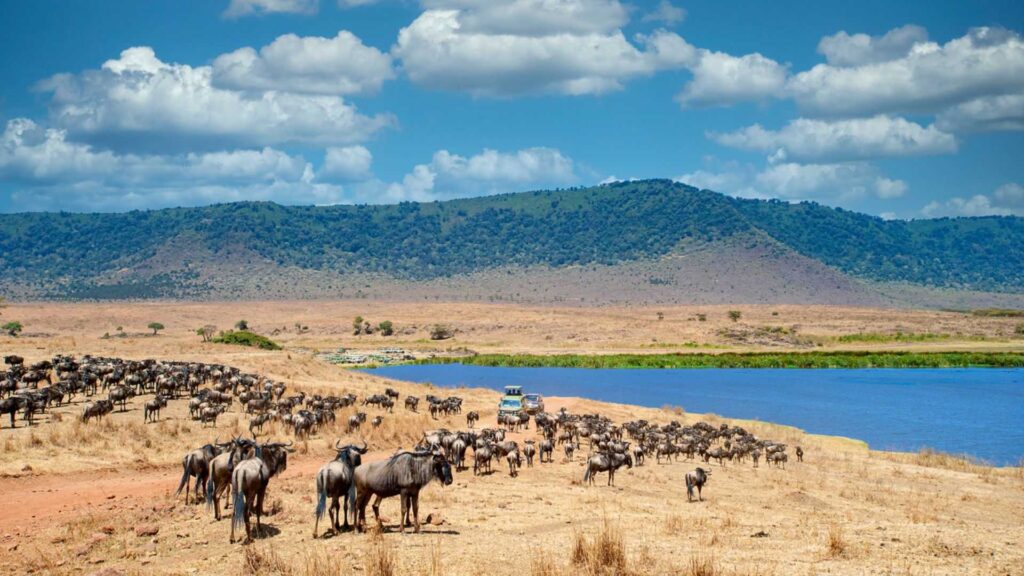
Most visitors come chasing the Great Migration. Millions of wildebeest and zebra sweep across the Serengeti each year, always moving toward fresh grazing. Many travelers then round off their trip with a few slower days on Zanzibar’s beaches.
This guide walks through everything needed to plan a Tanzania trip. It covers visas, regional highlights, activities, costs, and sample itineraries.
Why Visit Tanzania
Tanzania holds some of the most complete wildlife ecosystems left in Africa. The Serengeti stretches across nearly fifteen thousand square kilometers of open plains. A landscape this large supports predator and prey numbers found almost nowhere else.
Ngorongoro Crater offers something different within the same region. A collapsed volcanic caldera traps a self-contained ecosystem, packed with animals all year. Few places on the planet deliver such dependable game viewing in such a compact space.
Beyond the mainland parks sit Kilimanjaro and Zanzibar. Climbers travel from around the world to reach Kilimanjaro’s summit. Beach travelers head to Zanzibar for its sand and warm water. Both slot naturally onto the end of a safari.
Best Time to Visit
Tanzania sits just south of the equator, so it stays warm most of the year with some variation by region. Higher ground, including the Ngorongoro Highlands and Kilimanjaro, runs noticeably cooler. Rainfall, more than temperature, is what shapes the ideal travel window.
Dry season runs from June through October. Game viewing is at its easiest across nearly every park during these months. This period also lines up with the Serengeti’s river crossings, so it draws the biggest crowds of the year.
A second, shorter dry stretch falls between late December and February. The southern Serengeti plains host calving season in this window, with hundreds of thousands of wildebeest giving birth within a few weeks. Predators stay especially active near the herds during this time.
Longer rains fall from March through May, with a shorter rainy spell around November. Parks empty out and turn green during these months. Some camps shut temporarily, and a few roads become difficult after heavy rain.
The migration itself moves in a rough loop rather than sticking to a fixed schedule. Its exact position each year depends on where the rain has fallen. Guides and camps generally track the herds closely enough to point clients in the right direction.
Entry Requirements and Visas
Most nationalities need a visa for Tanzania, available online ahead of time or on arrival at major entry points. The online e-visa is usually the faster route and skips the airport queue. Processing generally takes a few business days.
Zanzibar sits under the same Tanzanian visa, so no extra document is needed for the island. Travelers flying straight into Zanzibar from abroad go through the identical visa process. Those arriving via the mainland instead clear a domestic connection.
A passport needs six months of validity left beyond the entry date. One blank page should be free for any stamps. Travelers arriving from yellow fever endemic countries may be asked for proof of vaccination.
Park and conservation fees sit outside the visa process entirely. These are usually charged per person per day and shift depending on the park. Booking through a tour operator typically folds these fees into one overall price.
Getting There and Getting Around
Kilimanjaro International Airport handles most arrivals for the northern circuit, covering the Serengeti and Ngorongoro. Dar es Salaam and Zanzibar each have their own international airports for travelers heading straight to the coast. All three connect directly to major hubs in Europe, the Middle East, and elsewhere in Africa.
Domestic flights remain the easiest way to move between Tanzania’s regions. Small aircraft link the northern circuit to Zanzibar, and also reach further-flung southern parks like Ruaha and the Selous. A short hop in the air often saves an entire day of driving on rough roads.
Road transfers work fine within the northern circuit, since Arusha, Lake Manyara, Ngorongoro, and the Serengeti all sit within a few hours of one another. Reaching the Serengeti’s more central plains from Ngorongoro can still take several hours depending on the camp. Southern and western parks sit far enough away that a flight becomes the practical choice.
Few visitors self-drive here, given the rough terrain and the value a local guide brings. Most book a driver-guide as part of the safari package from the start. Guides bring real skill in spotting wildlife and finding their way across largely unmarked plains.
Regions and Top Destinations
Serengeti National Park
The Serengeti is Tanzania’s best-known park and the stage for the migration’s most dramatic moments. Open plains run to the horizon in every direction. Predator sightings here compete with the best anywhere on the continent.
The park’s size means different areas suit different times of year. The northern Serengeti hosts river crossings during dry season. The southern plains host calving season earlier in the year.
Ngorongoro Conservation Area
Ngorongoro Crater sits inside a wider conservation area that also lets Maasai herders graze cattle. The crater floor holds one of the densest wildlife populations found anywhere in Africa, all within one enclosed space. Lions, elephants, and one of the continent’s last secure black rhino populations all live here.
Game drives drop into the crater each morning and climb back out by evening. The tight concentration of animals makes viewing efficient. Few places match this kind of reliable sighting rate in such a short window.
Tarangire National Park
Tarangire sits in northern Tanzania and is best known for its elephant herds and ancient baobab trees. The Tarangire River pulls in wildlife through the dry months, when water grows scarce elsewhere. Birdlife here also runs noticeably richer than in the other northern parks.
Fewer visitors make it to Tarangire compared to the Serengeti or Ngorongoro. That keeps game drives quieter, even at the height of the season. Many itineraries treat it as a first stop before pushing deeper into the northern circuit.
Lake Manyara National Park
Lake Manyara sits below the Rift Valley escarpment and packs a wide mix of habitats into a small park. Tree-climbing lions turn up here occasionally, though never as a guarantee. Flamingos gather along the shoreline in numbers that shift with the water level.
The park makes an easy stop between Arusha and Ngorongoro. Its small size suits a half-day or full-day visit without much planning. Forested stretches give it a different feel from the open plains nearby.
Zanzibar
Zanzibar is an island archipelago off Tanzania’s coast, shaped by centuries of Swahili and Omani history alongside its white sand beaches. Stone Town, the historic center, holds narrow lanes, carved wooden doors, and a dense architectural mix. Most visitors pair several beach days with at least one afternoon wandering Stone Town.
Spice tours draw on the island’s past as a major producer of cloves and other spices. Snorkeling and diving pull visitors toward the reefs off the northern and eastern coasts. A stay here fits naturally as the closing chapter after a northern safari.
Mount Kilimanjaro
Kilimanjaro stands as Africa’s highest peak, and one of the more approachable major summits worldwide since no technical climbing skill is needed. Several routes lead to the top, each different in length, scenery, and success rate. Most trekkers spend five to nine days climbing, and longer routes tend to raise the odds of a successful summit.
The mountain passes through several climate zones on the way up. Rainforest gives way to moorland, then alpine desert, before the glaciated summit zone. Many climbers tack the trek onto a safari either before or after, since Kilimanjaro sits close to the northern circuit.
Southern Circuit: Ruaha and the Selous
Ruaha National Park and the Selous Game Reserve, now partly renamed Nyerere National Park, make up Tanzania’s quieter southern circuit. Both hold strong wildlife numbers with a fraction of the visitors seen up north. Ruaha in particular carries one of East Africa’s largest elephant populations.
The Selous, or Nyerere, adds boat safaris along the Rufiji River on top of the usual game drives. That gives a different angle on wildlife than the northern circuit offers. Both parks suit travelers on a second or third Tanzania trip looking for something calmer.
Wildlife and Signature Experiences
The Great Migration remains Tanzania’s signature wildlife event. Wildebeest and zebra trace a rough yearly loop through the Serengeti ecosystem. River crossings, calving season, and simple large-herd movement all pull visitors depending on timing.
Predator sightings across the Serengeti and Ngorongoro stay strong throughout the year. Lions, cheetahs, and leopards all live here in healthy numbers. Guides in both areas often recognize specific prides and individual cats on sight.
Ngorongoro Crater delivers some of the densest game viewing found anywhere on the continent. A single morning drive can turn up lions, elephants, rhinos, and large herds of zebra and wildebeest. The enclosed setting makes it easier to tick off a long species list in one short visit.
Hot air balloon flights over the Serengeti offer sunrise views from above the plains. Floating silently over the herds shows off the migration’s scale in a way a vehicle can’t. A champagne breakfast usually follows the landing.
Climbing Kilimanjaro appeals to travelers after something beyond wildlife. Reaching Uhuru Peak rewards days of steady, high-altitude walking. Many climbers rank the sunrise from the crater rim among the best moments of the entire trip.
Zanzibar’s reefs reward travelers extending their trip to the coast with strong snorkeling and diving. Coral and marine life sit close to shore in several spots. Dhow sailing trips offer a slower, more traditional way to take in the water.
Culture and People
Tanzania holds more than one hundred ethnic groups, an unusually high number for one country. The Sukuma make up the largest group, though no single ethnicity dominates national identity the way it might elsewhere. Swahili unites the country as a shared language, spoken alongside English and many local tongues.
The Maasai stand out as one of the most visible communities to visitors, especially around Ngorongoro and the Serengeti. Many continue a traditional pastoral life while also taking on a growing role in tourism. Cultural visits to Maasai villages are a common add-on to a northern circuit safari.
Zanzibar’s culture reflects centuries of Indian Ocean trade, mixing African, Arab, Persian, and Indian influences. That blend shows clearly in the island’s architecture, food, and music. Tanzanians on both the mainland and the island tend to greet visitors with an easy, relaxed warmth.
Where to Stay
Tanzania’s camps and lodges span everything from ultra-luxury to solid mid-range comfort. High-end properties around the Serengeti and Ngorongoro offer private verandas, dedicated guiding, and full-board service. Several count among the most exclusive safari properties anywhere in the world.
Mobile tented camps shift position through the Serengeti to track the migration across the seasons. These offer a closer, more intimate feel than a fixed lodge. Mid-range lodges and permanent tented camps give a more affordable way into the same parks.
Zanzibar brings its own spread of options, from luxury beach resorts to simple guesthouses in Stone Town. Budget travelers can find backpacker-friendly stays on both the mainland and the island. Kilimanjaro climbs usually include mountain huts or tents, arranged as part of the trekking package.
Food and Drink
Mainland Tanzanian food shares a lot with the wider East African region. Ugali, a maize-based porridge, shows up alongside beans, plantains, and grilled meat. Meals stay simple and filling, built from whatever is locally in season.
Nyama choma, grilled meat, sits at the center of mainland food culture, usually shared among a group at an outdoor grill. Rice and stewed vegetables often round out the plate. Fresh fruit is easy to find, especially mango, pineapple, and banana grown across the country.
Zanzibar’s food carries a clear Swahili stamp, shaped by centuries of Indian Ocean trade. Coconut and spices, particularly clove, run through many dishes. Seafood stands out along the coast, often grilled or simmered in a spiced coconut sauce.
Health, Safety, and Practical Tips
Malaria risk runs across most of Tanzania’s lower-altitude areas, including the Serengeti, Zanzibar, and the southern parks. Prophylaxis, repellent, and mosquito nets are worth using for the whole trip. Risk falls off at higher elevation, including parts of the Ngorongoro Highlands and Kilimanjaro.
Routine vaccinations, along with hepatitis A and B and typhoid, come recommended before travel. Yellow fever vaccination may be required depending on where else a traveler has been. A visit to a travel clinic ahead of the trip covers most of this.
Tanzania’s main safari areas and Zanzibar’s tourist zones are generally safe and well set up for visitors. Standard precautions around belongings and transport apply, much as they would anywhere. Anyone climbing Kilimanjaro should take altitude sickness seriously and pick a route with enough acclimatization days built in.
Bottled or treated water beats tap water throughout the country. Sun protection matters on open savannah, where shade is often scarce during game drives. Mobile data holds up reasonably well across the northern circuit and Zanzibar, though the more remote southern parks can lose signal.
Money, Costs, and Budgeting
The Tanzanian Shilling is the local currency, though US dollars work fine for park fees, permits, and many lodges. Smaller day-to-day purchases are best paid in shillings. Cash machines turn up in larger towns but grow scarce near remote parks.
Park and conservation fees make up a large share of most Tanzania safari budgets. These are usually billed per person per day and shift by park. Ngorongoro in particular runs a higher daily fee, given its unique crater setup.
Domestic flights add convenience but cost more than road transfers, especially when reaching the southern circuit or Zanzibar. Kilimanjaro climbs are priced apart from a standard safari, based on route length and service level. Balloon flights and other extras are usually billed separately from the core safari price.
Tipping is expected for guides, drivers, porters, and lodge staff. It makes up a real part of local income in tourism. Overall costs in Tanzania swing widely, from moderate mid-range trips to high-end luxury circuits, with park fees and domestic flights as the biggest variables.
Sample Itineraries
A five-day northern circuit safari suits anyone tight on time. Day one covers arrival in Arusha or at Kilimanjaro, followed by a transfer to Tarangire or Lake Manyara. Days two and three move through Ngorongoro Crater and into the Serengeti, before heading back to Arusha on day four and flying out on day five.
An eight-day safari and Zanzibar trip adds a coastal ending. The first four or five days run through the full northern circuit, covering Tarangire, Ngorongoro, and the Serengeti. The rest of the trip shifts to Zanzibar for beach time and a walk through Stone Town before departure.
A fourteen-day Tanzania and Kilimanjaro trip blends trekking with safari. It opens with a seven-day Kilimanjaro climb on a route built for solid acclimatization. The following week covers a full northern circuit safari, closing with a few recovery days on Zanzibar before flying home.
This longer combination suits travelers chasing everything Tanzania offers in one go. It avoids the rushed feel of a shorter trip. Most people who take this route call it demanding, but well worth it.
Packing List
Neutral-colored, lightweight clothing suits game drives best, since bright colors can draw attention from wildlife. Layers matter more than heavy jackets, since mornings run cool even in warm regions. A wide-brimmed hat and strong sun protection help through long midday drives.
Kilimanjaro climbers need a separate, more technical kit, including insulated layers, a warm sleeping bag, and sturdy waterproof boots. Trekking poles help a lot on the steep summit night push. Most operators hand over a detailed gear list once a route is confirmed.
Swimwear and lighter clothing earn their place on a Zanzibar extension. Insect repellent still matters at the coast, given ongoing malaria risk in low-lying areas. Cash in small bills makes tipping and small purchases easier through the whole trip.
Frequently Asked Questions
Do I need a visa to visit Tanzania?
Most travelers need a visa, best arranged online ahead of time, though visas on arrival remain available at major entry points including Kilimanjaro International Airport.
When is the best time to see the Great Migration in Tanzania?
River crossings in the northern Serengeti tend to peak between July and September, while calving season on the southern plains runs from roughly January to March.
How difficult is climbing Kilimanjaro?
No technical climbing skill is required, but the trek is physically demanding due to altitude, and a longer route with more acclimatization days meaningfully improves the odds of reaching the summit.
Can I combine a Tanzania safari with a beach holiday?
Yes. Many itineraries pair a northern circuit safari with several days on Zanzibar, reached by a short domestic flight from the safari region.
Is Tanzania safe for tourists?
Tanzania’s main safari circuits and Zanzibar’s tourist areas are generally safe and well set up for visitors, and standard travel precautions cover most trips.