Grey Crowned Crane: East Africa’s Most Elegant Wetland Bird
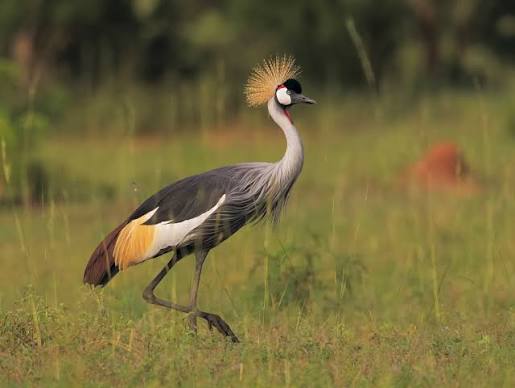
The grey crowned crane is one of East Africa’s most recognisable and most beautiful birds. The combination of grey body plumage, white cheek patches, a vivid red throat wattle, and the spectacular golden crown of bristle-like feathers makes it unmistakable at any distance. The species is Uganda’s national bird and appears on the country’s flag and coat of arms, reflecting the deep cultural significance this crane holds in the region.
The grey crowned crane is the only crane species that can roost in trees. This unique ability among the crane family separates it from all other cranes worldwide and allows it to exploit wetland-edge habitats where tree roosting provides security from ground predators overnight. The sight of a grey crowned crane roosting in an acacia tree at dusk is one of East Africa’s most memorable birding images.
Identification and Physical Features
The grey crowned crane stands approximately 1 metre tall. The body plumage is grey on the neck and body, white on the wings, and red on the wing coverts. The face shows a large white cheek patch and a bright red throat wattle that is inflated during display. The bill is short and grey. The legs are black and long.
The crown of golden bristle-like feathers fans outward from the top of the head in a full circle. These bristles are stiff and radiate outward in a way that gives the crown a sun-like appearance visible from considerable distances across flat grassland and marsh habitat. The crown is present in both sexes and in young birds, though it is less fully developed in juveniles.
In flight, the grey crowned crane shows a distinctive silhouette with the long neck extended straight ahead, the crown visible in profile, and the broad wings beating with a slow, deep rhythm. Groups of cranes in flight call with a resonant, trumpeting bugle that carries across kilometres of open landscape.
Breeding Display and Behaviour
Grey crowned cranes perform one of Africa’s most spectacular bird courtship displays. The display involves both members of the pair jumping, bowing, spreading their wings, and calling in a coordinated sequence. The red throat wattle is inflated during the display. Groups of cranes sometimes display together, creating a collective jumping and calling performance that is one of East Africa’s most dynamic wildlife spectacles.
The birds nest in wetland vegetation, constructing a large platform of grass and aquatic plants in or near water. Both parents incubate the 2 to 3 eggs for approximately 30 days. The chicks are mobile almost immediately after hatching and follow the parents through the wetland vegetation from the first day of life.
The grey crowned crane is monogamous and pairs remain together for life. Established pairs return to the same nesting territories year after year and defend these territories aggressively against neighbouring pairs from the arrival at the breeding site through to the fledging of the current year’s chicks.
Where to See Grey Crowned Cranes in East Africa
Uganda holds one of Africa’s most accessible grey crowned crane populations. The species is common in the grassland and wetland areas of Queen Elizabeth National Park, Murchison Falls National Park, and throughout the agricultural lowlands surrounding Kampala. Any Uganda safari that passes through open country will encounter grey crowned cranes without specialist searching.
Kenya’s Maasai Mara and Amboseli National Park both carry grey crowned crane populations in their wetland and open grassland zones. The cranes at Amboseli are particularly visible against the open, flat ground of the park’s famous marsh areas. Tanzania’s Ngorongoro Crater floor holds grey crowned cranes in the crater’s central marsh and open grassland sections.
The cranes are most spectacular in the early morning and late afternoon when they are most active in the open. Groups feeding in short grassland and wetland margins provide prolonged, close-range observation opportunities without any need for specialist access or dedicated searching.
Plan Your Birding Safari
Grey crowned crane sightings are guaranteed on any Uganda safari that includes the country’s open grassland and wetland habitats. The species is so common in Uganda’s countryside that it appears on roadsides and in agricultural areas outside national parks throughout the country.
Uganda’s Queen Elizabeth National Park provides the most productive grey crowned crane watching on the African continent, with groups of cranes feeding and displaying visible from the main game drive routes throughout the year.
African Wild Trekkers designs Uganda safari itineraries where grey crowned cranes are part of the daily wildlife experience. Contact us to plan a safari that celebrates the country’s national bird alongside the full diversity of East Africa’s wetland bird community.