Painted Snipe Africa: The Secretive Beauty With Reversed Sex Roles
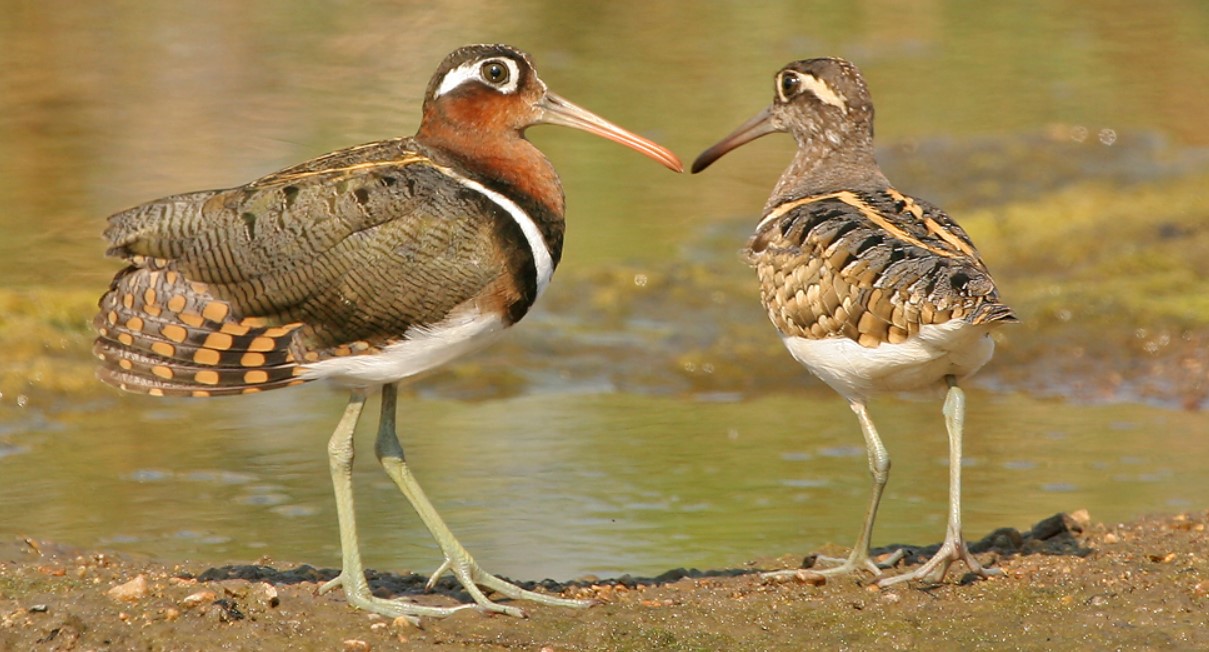
The African painted snipe is one of East Africa’s most unusual waterbirds for two reasons. First, its plumage is extraordinarily beautiful for a wading bird. The female in particular shows a rich combination of chestnut, white, and intricately patterned brown plumage that rivals any shorebird species on earth in visual complexity. Second, the species reverses the typical bird sex role pattern entirely. The female is larger and more brightly colored than the male, and she takes the active role in territorial defense and courtship display while the male incubates the eggs and raises the chicks alone.
This role reversal makes the African painted snipe a genuinely fascinating bird for anyone interested in animal behavior beyond simple species identification. Finding it in the wild, however, requires specific knowledge of its wetland habitat preferences and an understanding of its cryptic behavior.
Identification
The female African painted snipe measures approximately 25 centimeters. She shows a rich chestnut neck and upper breast, a white eye ring and supercilium, and intricate golden-buff spotting on the dark brown wings and back. The overall pattern is one of the most complex and beautiful plumage designs of any African wading bird.
The male is smaller and shows duller brown and buff plumage with similar but less vivid patterning. Both sexes show a white stripe down the center of the back that is visible when the bird walks. Both also show a long, slightly drooping bill adapted for probing in soft mud for invertebrates.
The species flies reluctantly when disturbed. When flushed, it rises slowly on rounded wings with legs dangling before dropping back into dense vegetation after a short flight. This slow, owl-like flight is a useful identification feature that distinguishes it from the true snipes, which rise fast and high with a zigzagging escape flight.
Habitat and Behaviour
African painted snipes inhabit the margins of swamps, ponds, flooded agricultural land, and any area of wet, muddy ground with nearby vegetation cover. They feed by probing in the mud for worms, snails, and other invertebrates. They are primarily crepuscular and nocturnal, which contributes to the difficulty of observing them despite their presence in accessible habitats.
The female performs a wing-spreading display to advertise her territory and attract males. She raises both wings to show the striking white and brown underwing pattern that would otherwise be invisible at rest. This display is performed from open perches and is the most visible behavior that the species shows at any time.
Outside the breeding season, painted snipes are almost entirely nocturnal. They roost in dense vegetation during daylight hours and emerge to feed only after dark. At productive sites where the species is known to be present, dusk visits produce the highest encounter rates as birds emerge from daytime roost cover to feed at the muddy margin.
Where to Find African Painted Snipe
The species is genuinely widespread across East Africa wherever suitable wetland margins exist. However, its cryptic habits and nocturnal tendencies make it one of the most frequently under-recorded birds in the region despite being relatively common in appropriate habitat.
Uganda’s Entebbe Botanical Garden wetlands, Kenya’s Lake Baringo and Naivasha margins, and Tanzania’s Lake Manyara wetland edges all provide potential painted snipe habitat. The species is most reliably found during the breeding season when the female’s display behavior makes it more visible during the day.
Any flooded agricultural land adjacent to wetland reserves in East Africa provides painted snipe habitat. Guides with specific knowledge of recently flooded fields or shallow pond systems near camp accommodation often know the most productive locations for finding this species in suitable conditions.
Plan Your Birding Safari
African painted snipe sightings require local guides knowledge of specific wetland locations where the species is currently active. The most reliable approach is to request a specific search at dusk at known sites rather than expecting to encounter the bird during standard daytime game drive activities.
Kenya’s Lake Baringo area combines painted snipe potential with a remarkable diversity of other waterbird species in a compact wetland destination accessible on the Kenya Rift Valley circuit between Nakuru and Baringo.
African Wild Trekkers includes specialist wetland birding sites in East Africa birding safari itineraries. Contact us to plan a safari that targets East Africa’s most secretive and most beautiful wetland bird species alongside the region’s more accessible waterbird community.