African Swamphen: The Vivid Purple Giant of East Africa’s Wetlands
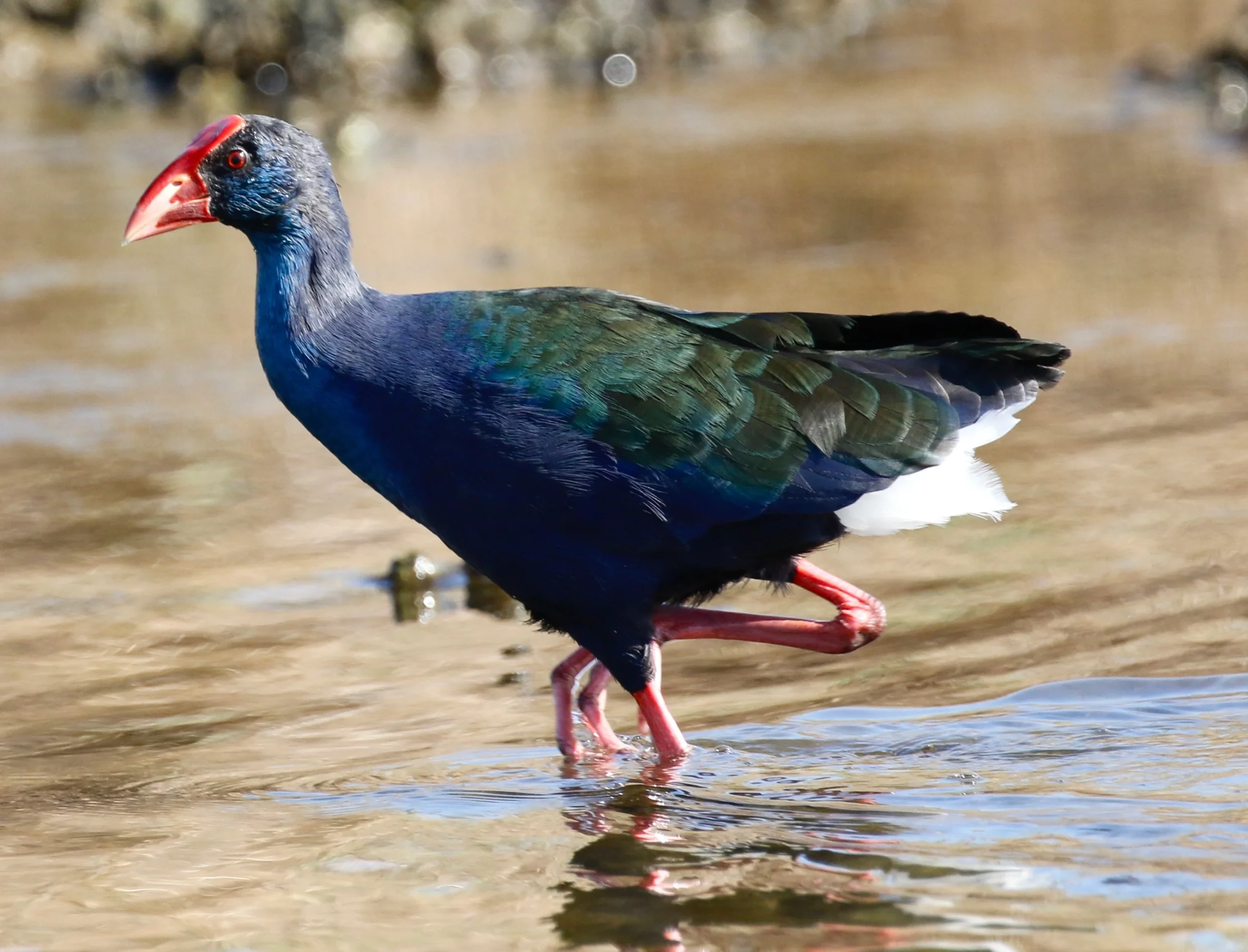
The African swamphen is one of the most visually striking waterbirds in East Africa. Its deep purple-blue plumage, brilliant red bill and frontal shield, red legs, and large size combine to create an appearance unlike any other bird in the region’s wetland communities. The species moves through reedbeds and papyrus margins at the water’s edge with a high-stepping, deliberate gait that makes it one of the easiest large waterbirds to observe and identify.
Despite its conspicuous plumage, the swamphen spends much of its time in dense reedbed and papyrus vegetation where it is heard more often than seen. The variety of loud clucking, screaming, and trumpeting calls it produces from within the vegetation can be startling in their volume and variety relative to the bird’s size.
Identification
The African swamphen measures 38 to 50 centimetres and is the largest member of the rail family in East Africa. The head and underparts are deep purple-blue. The mantle and wings are dark greenish-blue. The large, distinctive red frontal shield extends from the base of the bill onto the forehead. The bill is entirely red and heavy relative to the bird’s head size.
The legs are red and unusually long for a bird of this size. The toes are exceptionally large — the long toes spread the bird’s weight across floating vegetation and allow it to walk on lily pads and mats of aquatic vegetation without sinking. This adaptation is visible and distinctive when the bird walks across open floating vegetation.
Immature birds show dull, brownish plumage without the vivid purple of the adult. The frontal shield and bill of immatures are pinkish rather than red. Immature swamphens are considerably less conspicuous than adults and are more frequently overlooked by observers not aware of the difference.
Behaviour and Diet
African swamphens are omnivorous. They feed on the shoots, roots, and seeds of aquatic plants, supplemented by insects, frogs, small fish, and the eggs and chicks of other waterbirds when available. The birds use their large feet to hold food items against a branch or stem while they tear pieces off with the bill.
The species is territorial and lives in pairs or small family groups within defined territories in wetland habitats. Family groups defend their territory from neighbouring groups with loud calling and aggressive chasing. Multiple individuals call simultaneously in territorial disputes, creating one of the wetland’s most cacophonous bird sounds.
Furthermore, the African swamphen is a cooperative breeder. Non-breeding individuals from previous clutches help the dominant pair raise subsequent chicks within the family group territory. This cooperative system is well-documented in the closely related purple swamphen populations in Australasia and appears to operate similarly in the African populations.
Where to See African Swamphens
African swamphens are present wherever extensive reedbed or papyrus wetland exists in East Africa. Uganda’s wetland national parks, Kenya’s Rift Valley lakes, and Tanzania’s wetland margins all carry accessible populations.
The Kazinga Channel in Uganda’s Queen Elizabeth National Park provides reliable swamphen sightings from the park’s boat cruise. Birds feed along the papyrus margins throughout the day and are visible at close range from passing boats. Lake Naivasha in Kenya’s Rift Valley carries abundant swamphens in the papyrus margins around the lake’s edge.
Tanzania’s Lake Manyara National Park, with its extensive groundwater forest and lake margin wetlands, provides reliable swamphen sightings within easy reach of the northern Tanzania safari circuit. The species is present year-round at all of these destinations.
Plan Your Birding Safari
African swamphen sightings require wetland destinations with papyrus or reedbed habitat. They are achievable on standard safari activities at any of East Africa’s major wetland destinations without requiring specialist birding effort.
Uganda’s Queen Elizabeth National Park boat cruise provides the easiest close-range swamphen encounter in the region, combining the species with hippos, crocodiles, and a remarkable diversity of other waterbirds in a single two-hour activity.
African Wild Trekkers designs East Africa safari itineraries that include Uganda’s waterway boat activities for maximum waterbird diversity. Contact us to plan a safari that explores East Africa’s extraordinary wetland bird communities across Uganda, Kenya, and Tanzania.