African Finfoot Facts: One of East Africa’s Most Secretive Waterbirds
The African finfoot is one of East Africa’s most secretive waterbirds. It lives along rivers and streams with dense vegetation hanging over the banks. This cover helps it remain hidden throughout the day.
Unlike many waterbirds, the African finfoot rarely moves into open water. It spends most of its time swimming close to river edges beneath leaves, roots, and branches. This behavior makes it one of the most challenging birds to observe in East Africa’s waterways.
Many safari visitors travel along rivers and lakes without seeing this remarkable species. However, birdwatchers who understand its habitat and move quietly through suitable areas have better chances of finding it.
Identification of the African Finfoot
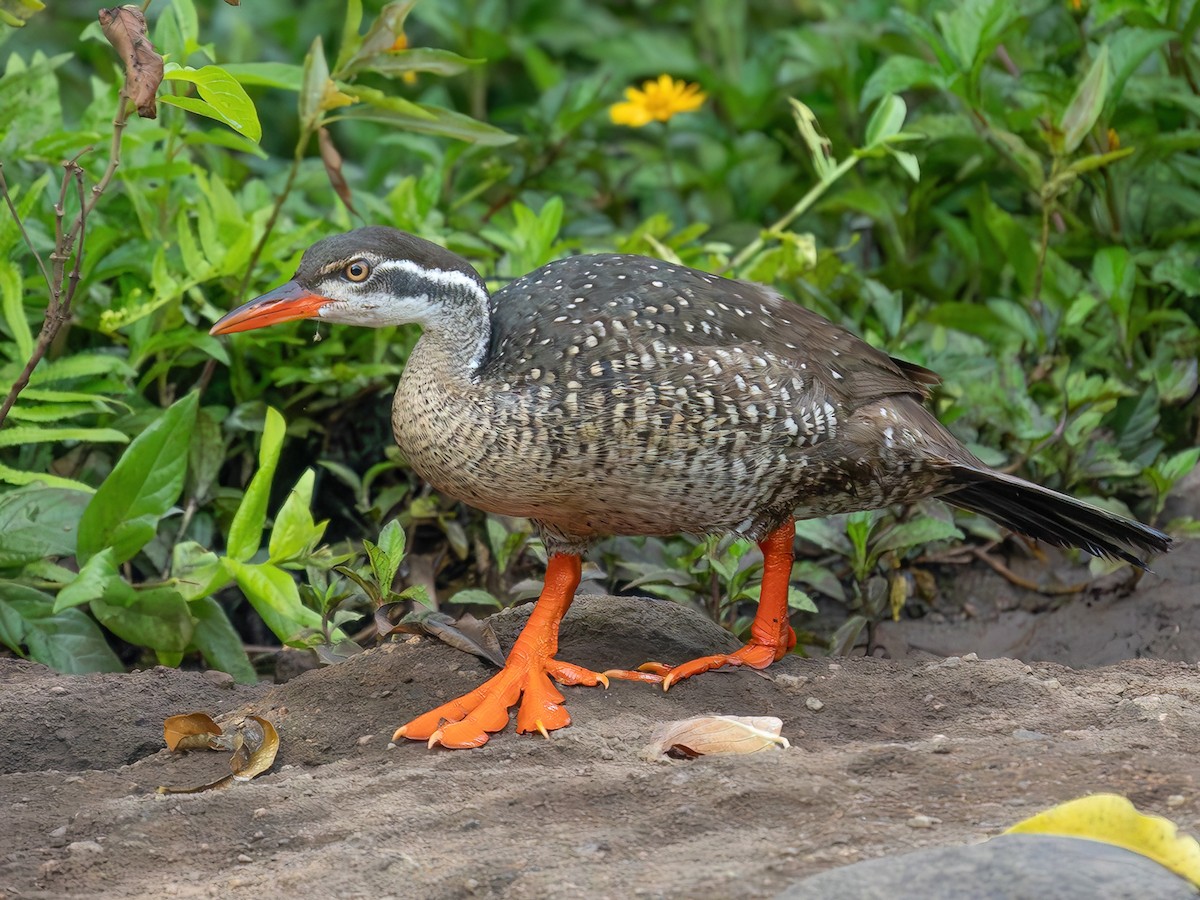
The African finfoot is a medium-sized waterbird that reaches about 53 centimeters in length. The male has a distinctive dark brown and white striped head and neck. A white stripe above the eye creates a noticeable facial feature.
The upperparts appear dark brown, while the underparts are white. The bird has a bright red bill and specially adapted lobed feet. These feet help it move efficiently through water, similar to grebes.
The female resembles the male but has a white throat instead of the male’s striped neck pattern. Both sexes show white spots on their dark wings, which become visible when they stretch or briefly open their wings.
The African finfoot swims low in the water with its head held forward. Its movement appears smooth and deliberate as it uses its lobed feet to move through slow currents.
When disturbed, the bird quickly moves across the water surface before disappearing into thick riverbank vegetation.
Habitat Preferences
African finfoots depend on very specific river habitats. They prefer slow-moving rivers and streams with dense vegetation along the banks.
Overhanging leaves, roots, and branches provide protection from predators. These areas also support the insects, small fish, and other small animals that make up the bird’s diet.
The species avoids open water because it relies on vegetation for security. Instead, it follows the edges of rivers while remaining hidden beneath cover.
Finding an African finfoot requires understanding its habitat rather than searching large areas of open water. Birders should focus on quiet river sections with thick vegetation and shaded banks.
In East Africa, suitable habitats include forest rivers in Uganda, wooded streams in Kenya, and riverine forests in Tanzania.
Where to See African Finfoots in East Africa
Uganda offers some of the best opportunities to observe African finfoots. Bigodi Wetland Sanctuary near Kibale National Park is one of the most reliable locations. The sanctuary’s narrow channels and thick vegetation create ideal conditions for this secretive bird.
Local guides at Bigodi understand the bird’s habits and know the areas where sightings occur most often. Their knowledge greatly improves the chances of a successful encounter.
In Kenya, African finfoots occur along forested rivers around Mount Kenya and the Aberdare Mountains. The upper Tana River and waterways near Kakamega Forest also provide suitable habitats.
Tanzania’s Rubondo Island National Park offers another excellent location. The island’s forested shoreline and quiet channels support good finfoot habitat. Its protected environment makes sightings more achievable than in many mainland locations.
Best Time to See African Finfoots
African finfoot sightings require patience and careful observation. Early mornings provide the best opportunities because birds are more active before human activity increases along waterways.
Quiet movement is essential. Sudden noise or disturbance can cause the bird to retreat into thick vegetation.
A local bird guide can make a major difference because experienced guides know suitable river sections and resident bird territories.
Plan Your Birding Safari
The African finfoot is a rewarding species for birders seeking rare and unusual wildlife encounters. Its secretive nature makes every sighting memorable.
Uganda’s Bigodi Wetland Sanctuary provides one of the most accessible opportunities to search for this elusive waterbird. Combining this experience with Kibale National Park and other Uganda safari highlights creates an excellent birding adventure.
African Wild Trekkers includes specialist wetland and river destinations in East Africa birding safari itineraries. Contact us to plan a safari focused on discovering the region’s rare and fascinating waterbirds.