Village Weaver Nest: The Art of Grass Architecture in East Africa’s Colonies
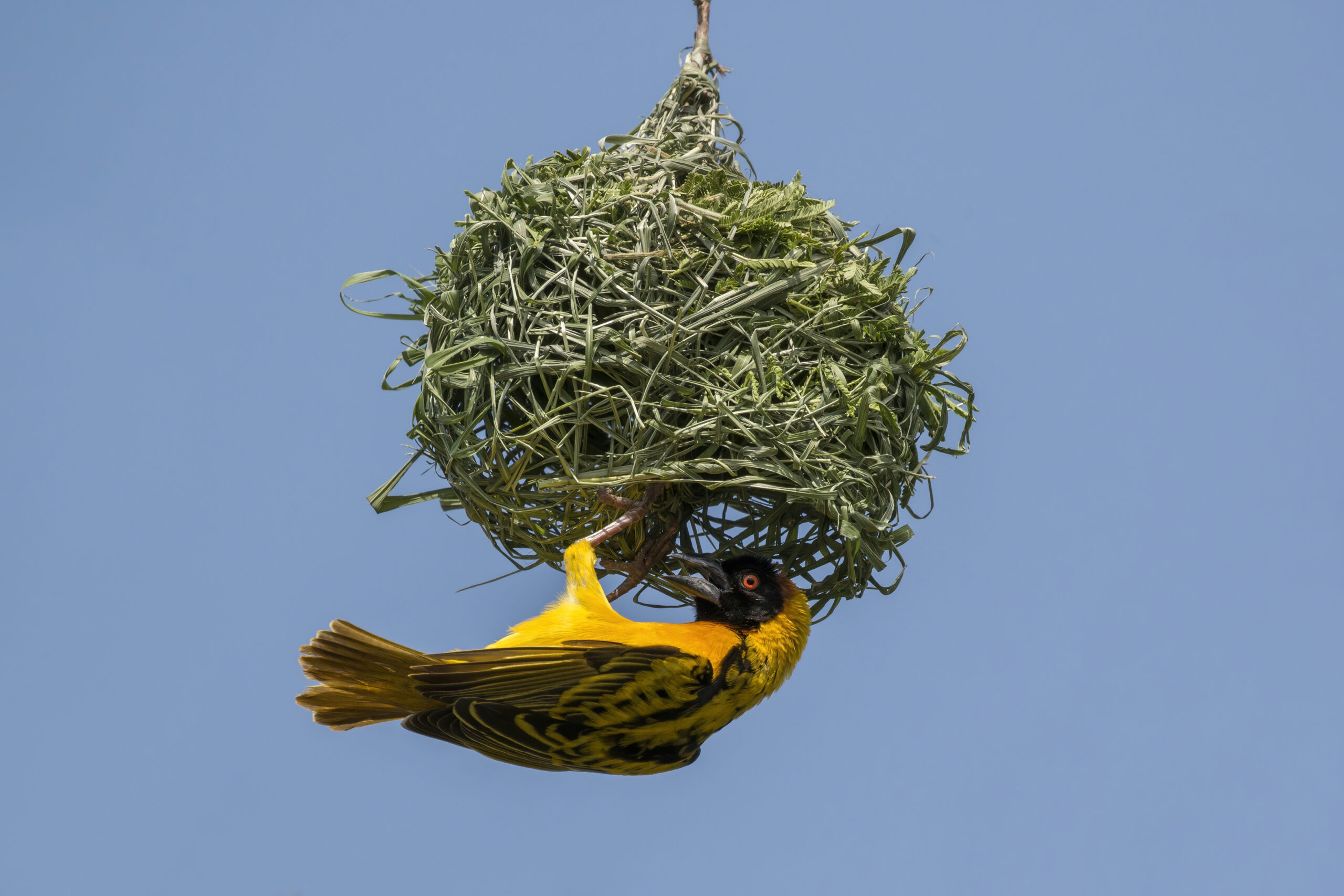
The village weaver creates one of nature’s most impressive bird nests. The male builds a carefully woven, kidney-shaped basket using strips of fresh grass leaves. He suspends the nest from a branch above water or places it on a thorny tree in an exposed location.
The construction process takes about 3 to 5 days. The male uses a precise sequence of looping, knotting, and tucking movements. This technique creates a strong structure that withstands heavy seasonal rains in East Africa’s wetland environments.
The village weaver’s nesting behavior offers one of East Africa’s most fascinating birding experiences. The bright yellow male builds the nest, performs displays, and waits for female approval. If a female rejects his work, he often destroys the nest and begins again.
How the Village Weaver Builds Its Nest
Nest construction begins when the male selects a suitable branch tip. He searches for fresh green grass with flexible blades. Using his strong bill, he strips the grass into long, thin fibers.
The male carries each grass strip individually to the nesting site. He first creates a small ring that attaches the nest to the branch. He then sits inside this ring while weaving the structure outward and downward.
Gradually, the nest develops into a complete woven sphere. It includes a narrow entrance tube that points downward. This design helps protect eggs and chicks from predators, including snakes that climb through trees.
The finished nest shows remarkable strength. The woven grass fibers work together to distribute pressure across the structure. The thick walls also help protect the egg chamber from temperature changes in East Africa’s open landscapes.
Female Inspection and Nest Rejection
After completing the nest, the male begins his courtship display. He hangs below the entrance while fluttering his wings and calling loudly. These actions attract females searching for suitable nesting partners.
An interested female approaches and carefully examines the structure. She enters the nest tunnel and tests the quality of the weaving. She may pull at grass strands and inspect the strength of the interior.
If she accepts the nest, she adds soft materials such as grass and feathers to create a comfortable lining. She then allows the male to mate.
However, females often reject nests that fail their inspection. When this happens, the male may remove the entire structure and start construction again. This process encourages males to produce strong, well-built nests.
Village Weaver Nesting Colonies
Village weavers are highly social birds that nest in large colonies. These colonies can contain between 20 and 200 breeding pairs. They usually choose trees near water or thorny vegetation that makes predator access difficult.
A busy village weaver colony creates an unforgettable wildlife scene. Dozens of males build nests at the same time. Meanwhile, females inspect completed structures while birds constantly call and move between branches.
Across East Africa, village weaver colonies appear wherever suitable trees grow near water. Uganda’s Lake Victoria shoreline, Kenya’s Rift Valley lakes, and Tanzania’s river systems all support active colonies.
In Uganda, the Kazinga Channel in Queen Elizabeth National Park provides excellent viewing opportunities. Boat safaris along the channel often pass close to nesting colonies. Visitors can watch males building nests while females inspect their work.
Best Time to See Village Weaver Nest Building
Village weaver activity increases during the breeding season. This period usually begins with the arrival of seasonal rains when food becomes more abundant. Across East Africa, peak activity often occurs between March and June.
However, breeding times vary between locations. Many wetland and riverside destinations offer opportunities to observe nesting behavior throughout the year.
A safari that includes lakes, rivers, and wetlands provides excellent chances to witness village weaver colonies. These encounters add a unique birding experience to any East African adventure.
Plan Your Birding Safari
The village weaver is one of East Africa’s most rewarding birds to observe. Its complex nest construction, social behavior, and colorful appearance make it a favorite among birdwatchers.
African Wild Trekkers includes wetland and riverside destinations in East Africa birding safari itineraries. Contact us to plan a safari that explores the region’s incredible bird diversity and unforgettable wildlife experiences.