Violet-backed Starling: East Africa’s Most Iridescent Small Starling
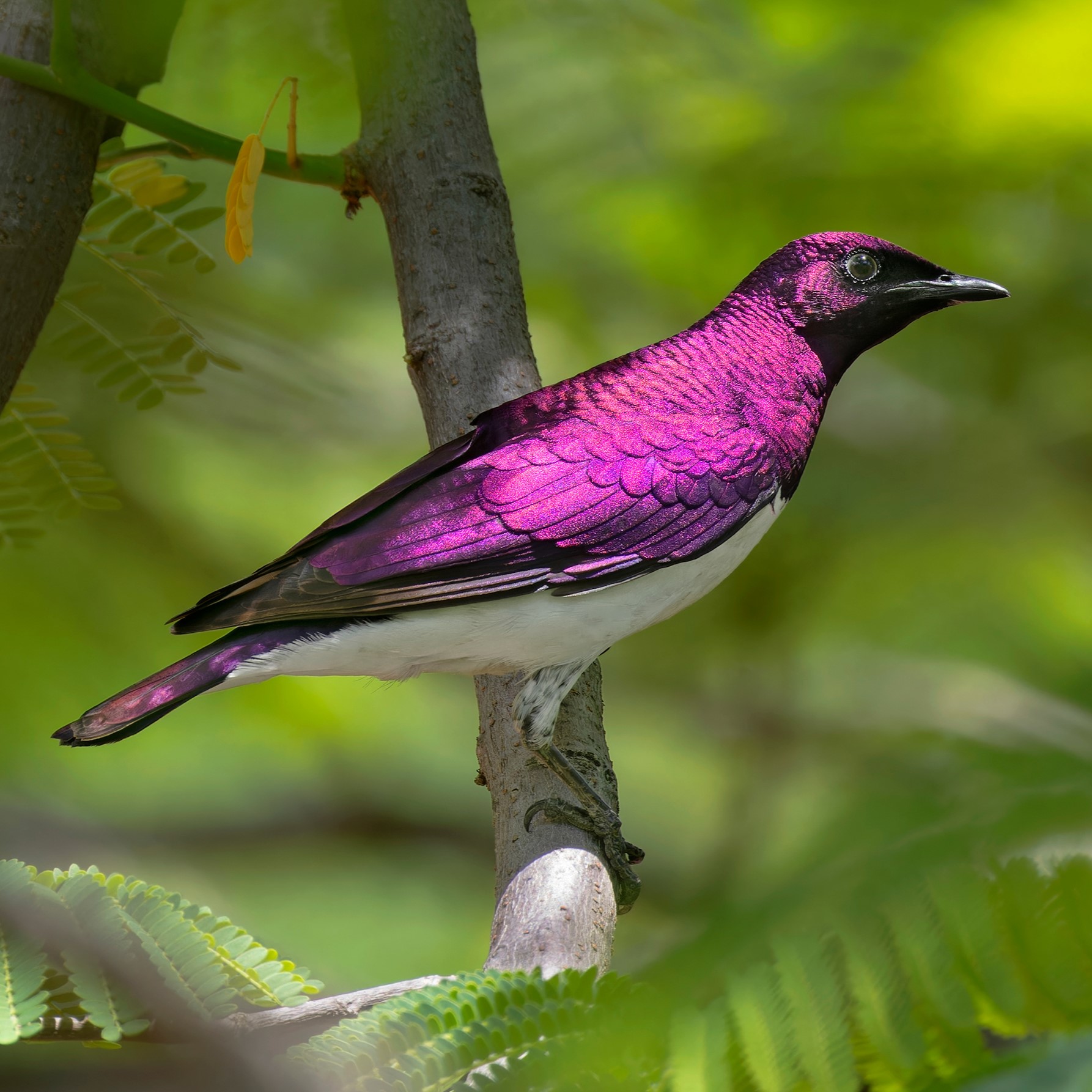
The violet-backed starling is considered one of Africa’s most beautiful birds by many birdwatchers. The male displays deep, iridescent violet-purple plumage that shifts between blue, purple, and green depending on the light angle.
This remarkable metallic shine does not come from pigments. Instead, microscopic structures within the feather barbules reflect light and create the glowing appearance. When the bird sits in direct sunlight, its feathers seem to shine from within.
The species lives in woodland, forest edges, and open savanna with scattered trees across sub-Saharan Africa. In East Africa, some populations remain throughout the year, while others move seasonally. Finding this stunning starling depends on visiting suitable woodland habitats during periods when food resources are available.
Identification of the Violet-Backed Starling
The male violet-backed starling is among the easiest African birds to recognise. Its head, neck, and back display intense violet-purple feathers with a metallic glow. The underparts are pure white, creating one of the strongest colour contrasts among small African birds.
The female looks completely different from the male. She has brown streaked upperparts and heavily streaked whitish underparts. Without seeing the two together, many observers may mistake them for different species.
The white tail base becomes visible during flight and provides a useful identification feature. Body shape and flight behaviour also help confirm the female’s identity.
The violet-backed starling produces a soft, wheezing call. This differs from the louder and more mechanical sounds of many other starlings. The call often comes from the tree canopy and can help locate birds hidden among dense leaves.
Habitat and Behaviour
Violet-backed starlings prefer open woodland areas with plenty of fruiting trees. They feed mainly on fruits and insects. Small groups usually move through the canopy while searching for food.
These birds often travel in groups of three to ten individuals. They visit fruiting trees and areas with high insect activity. Their movements depend heavily on seasonal food availability.
The species performs seasonal movements across much of Africa. Instead of following strict migration routes, it responds to rainfall patterns and fruiting cycles. This behaviour explains why the birds appear regularly at some locations while becoming scarce at others.
Violet-backed starlings also gather at communal roosts. Before sunset, groups arrive at traditional roosting trees and settle together for the night. These gatherings provide excellent viewing opportunities, especially when afternoon light highlights the male’s colourful feathers.
Where to See Violet-Backed Starlings in East Africa
East Africa offers several excellent destinations for finding violet-backed starlings. The species thrives in woodland habitats with mature trees and seasonal fruit sources.
In Kenya, the bird occurs in areas such as Tsavo National Parks and the Laikipia region. Woodland lodges often attract these starlings because fruiting trees provide reliable feeding areas.
Tanzania offers some of the best sightings in the Selous-Nyerere ecosystem and Ruaha National Park. Ruaha’s miombo woodlands support rich birdlife, especially during the green season when fruiting activity increases.
Uganda also provides opportunities to see violet-backed starlings in northern and eastern woodland areas. Kidepo Valley National Park offers suitable dry savanna habitat where these birds may appear around lodge gardens and woodland areas.
Best Time to See Violet-Backed Starlings
The best time to observe violet-backed starlings depends on food availability. Fruiting seasons often attract larger numbers of birds to suitable habitats.
Early morning game drives provide excellent opportunities because soft sunlight enhances the male’s metallic colours. Birds are also more active during cooler hours.
The green season can be particularly rewarding. Increased plant growth and fruit production attract many bird species, including violet-backed starlings.
Plan Your Birding Safari
The violet-backed starling adds unforgettable colour to any East African birding safari. Its glowing plumage, woodland behaviour, and seasonal movements make each encounter memorable.
African Wild Trekkers includes woodland destinations with reliable violet-backed starling sightings in East Africa birding safari itineraries. Contact us to plan a safari that reveals the incredible diversity of Africa’s colourful birds.