Wattled Starling Africa: The Nomadic Locust Follower of the Savanna
The wattled starling is one of Africa’s most nomadic bird species. It follows locust swarms across the continent’s savanna and grassland zones, exploiting the temporary abundance of food that swarms provide. The species moves in large, fast-flying flocks that appear suddenly at locust outbreak sites and disappear just as quickly once the food resource is exhausted.
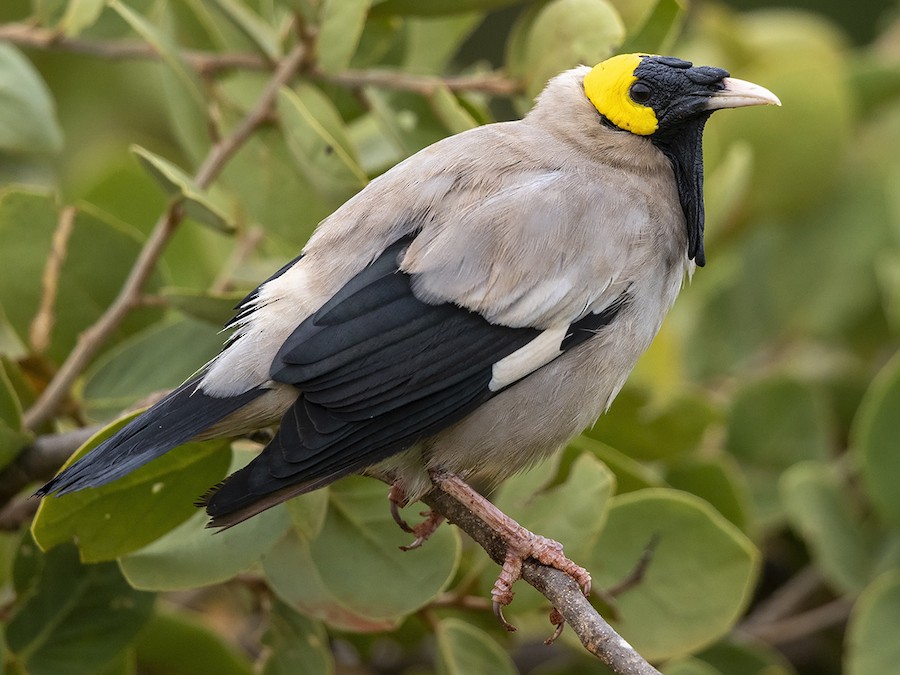
Breeding male wattled starlings in breeding condition carry extraordinary facial decorations. The forehead and face develop bright yellow and black bare wattles that hang from the face and give the species a bizarre, unmistakable appearance during the breeding season. Outside the breeding season, males lose these wattles and become considerably less distinctive in appearance.
Identification
The non-breeding wattled starling is a pale, washed-out bird by starling standards. The body plumage is grey-brown above and whitish below. The wings show a white patch visible in flight. The bill is pale and the overall impression is of a rather dull, pale starling that blends into the dry grassland landscape.
The breeding male transforms dramatically. The face develops prominent yellow wattles hanging from the forehead and cheeks. The crown becomes black and bare. The combination of yellow wattles, black bare crown, and the otherwise pale body plumage makes the breeding male one of the strangest-looking birds in the African savanna.
In flight, both sexes show the diagnostic white wing patch and white rump that distinguish the species from other pale starlings in the region. These features are visible at considerable distance and identify passing flocks quickly. The species flies in tight, fast-moving flocks that change direction rapidly in the manner typical of highly social, nomadic starling species.
Behaviour and Breeding Biology
Wattled starlings breed colonially and opportunistically. They nest in large colonies of hundreds or thousands of pairs when a good food source becomes available nearby. The colony assembles rapidly, builds nests in nearby trees within days, and can complete the entire breeding cycle in as little as 5 weeks.
The nests are domed structures of grass and plant material built in the outer branches of acacia and other thorn trees. A large colony nesting in a grove of acacias creates a remarkable spectacle of activity and noise that carries across the surrounding savanna.
Furthermore, the timing and location of wattled starling breeding events are entirely unpredictable. They are determined by the location of locust swarms and other grasshopper outbreaks. This nomadic breeding strategy makes the wattled starling one of the most difficult African birds to predict in terms of where a large gathering will occur in any given year.
Where to See Wattled Starlings in East Africa
Wattled starlings are present across much of East Africa’s drier savanna zones but are rarely seen in consistent numbers at predictable locations. Kenya’s Tsavo East National Park and the dry Maasai steppe in Tanzania produce the most reliable wattled starling encounters within standard safari circuits.
The species is most visible when large flocks associate with cattle herds or with recently burned grassland areas where disturbed insects provide temporary food abundance. Any dry season game drive through open grassland in northern Tanzania or southern Kenya has the potential to encounter a passing flock.
Tanzania’s Tarangire National Park during the dry season and the open plains between Tarangire and Lake Manyara regularly hold wattled starling flocks during locust outbreak years. The birds move constantly and cover large distances in a single day, so encounters are more often a matter of fortunate timing than of targeting a specific site.
Plan Your Birding Safari
Wattled starling encounters are most likely in East Africa’s drier savanna destinations during the dry season. Tanzania’s Tarangire and Kenya’s Tsavo East provide the most suitable habitat within the main safari circuit.
The species’ nomadic nature means that dedicated searches are less productive than keeping an eye on open grassland areas during game drives and remaining alert to the sudden appearance of large mixed-starling flocks that may include wattled starlings among other species.
African Wild Trekkers designs Tanzania and Kenya safari itineraries that cover dry savanna destinations with the right habitat for wattled starling encounters. Contact us to plan a safari that captures the full diversity of East Africa’s extraordinary starling community.