Superb Starling Tanzania: East Africa’s Most Brilliantly Coloured Common Bird
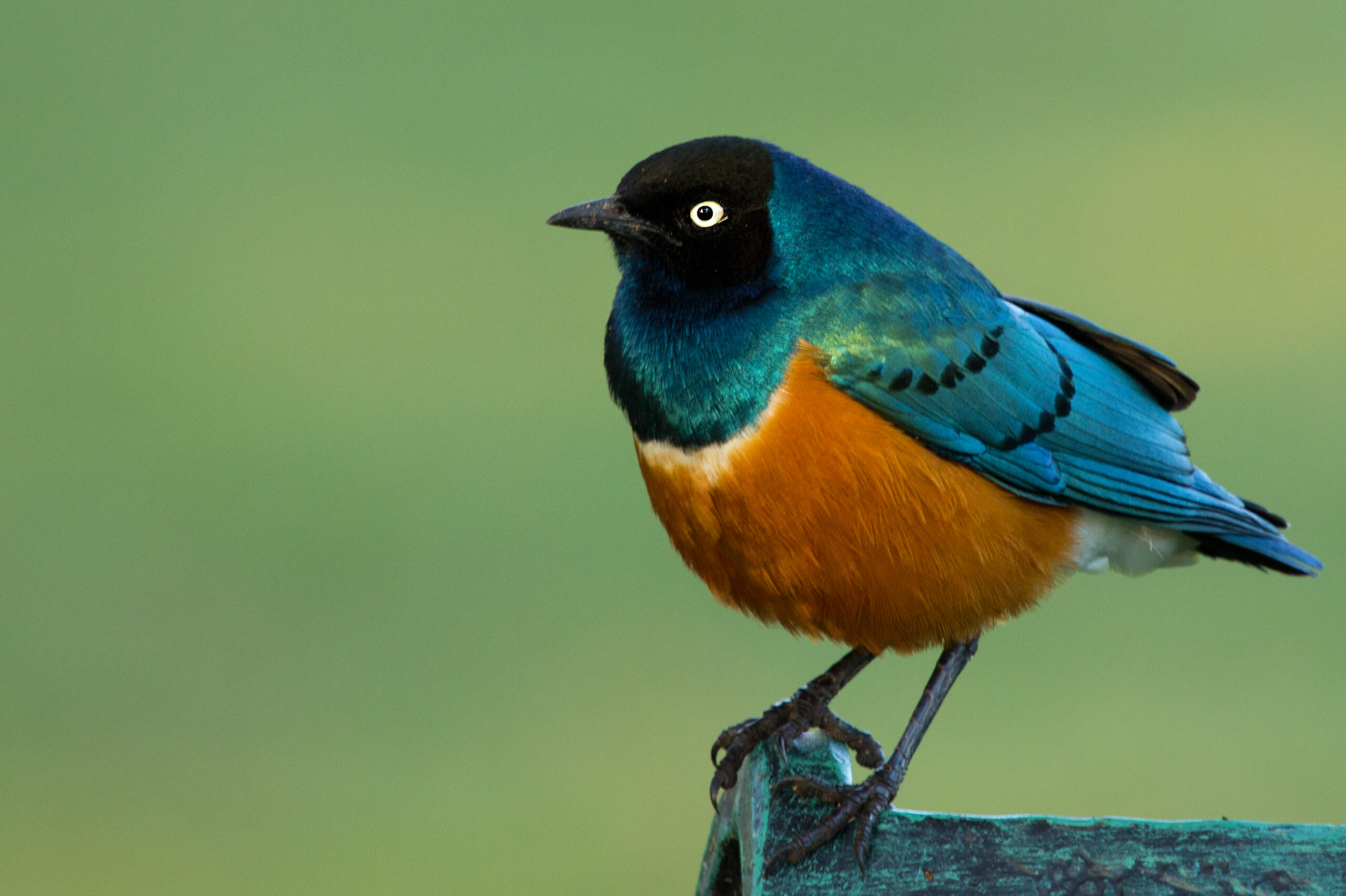
The superb starling is one of East Africa’s most striking and recognizable birds. Its combination of iridescent blue-green feathers, chestnut belly, white breast band, and bright yellow eye makes it unforgettable.
Unlike many beautiful birds that require patience and specialized birding skills, the superb starling is easy to find. It visits safari camps, sits near dining areas, and often approaches vehicles without fear. This accessibility makes it one of the most rewarding birds for first-time visitors to East Africa.
Many travelers remember the superb starling as their introduction to the region’s incredible bird diversity. In places like Tanzania and Kenya, a bird with such spectacular colors would be considered rare elsewhere. Here, it appears daily around lodges, camps, and open savanna landscapes.
Identification of the Superb Starling
The superb starling grows to around 19 centimeters in length. Its head, neck, and upperparts display a brilliant blue-green metallic sheen. The color changes slightly depending on the angle of sunlight.
A narrow white breast band separates the colorful upperparts from the rich chestnut-orange belly. The adult bird also has a bright pale-yellow eye that stands out against its dark head. Its bill and legs are black.
Both males and females show similar plumage. However, males often display slightly brighter colors. This difference can be difficult to notice during normal field observations.
Juvenile superb starlings look much duller than adults. Their feathers appear brownish, and they lack the strong metallic shine. The white breast band also appears less defined. As they mature, they gradually develop the vivid colors of adult birds.
Behaviour and Social Structure
Superb starlings are highly social birds. They usually move in groups of five to thirty individuals across savanna landscapes. They feed on the ground while searching for insects, berries, and food remains.
Their flocks remain in constant contact through soft calls and chatter. While feeding, individuals spread across open areas but continue communicating with other members of the group.
The superb starling also displays cooperative breeding behavior. Breeding pairs receive help from other group members during nesting. These helpers often come from previous generations and assist with chick care and nest activities.
The species builds a dome-shaped nest using dry grass and plant fibers. It usually places the nest inside thorny bushes or trees for protection. Thorny vegetation helps reduce access by predators.
Many pairs reuse successful nest sites for several breeding seasons. They add fresh materials each year to maintain the structure.
Distribution and Habitat in Tanzania and Kenya
The superb starling is one of the most common birds in East Africa’s safari destinations. It thrives in savanna, grasslands, and open woodland areas.
In Tanzania, it is widespread across the northern safari circuit. Visitors can see it in Tarangire National Park, the Serengeti, and around the Ngorongoro Conservation Area. It avoids dense forests and high-altitude mountain habitats.
Kenya also supports large superb starling populations. The species is common throughout the Maasai Mara ecosystem, the Rift Valley, and the Laikipia Plateau.
The birds often gather near safari camps and lodges where food sources are easily available. They also benefit from insect activity around large herbivore populations and fruiting trees.
Best Places to See Superb Starlings
Tanzania’s Serengeti and Tarangire National Parks provide excellent opportunities to observe superb starlings. Their open landscapes and abundant wildlife create ideal conditions for large flocks.
The Ngorongoro Crater also offers regular sightings. Visitors often see these colorful birds near picnic areas, viewpoints, and open grasslands.
In Kenya, the Maasai Mara provides some of the best encounters. Superb starlings frequently appear around camps and during game drives across the reserve.
Because they adapt well to human presence, these birds often provide close and memorable sightings during any East African safari.
Plan Your Birding Safari
The superb starling is one of the easiest and most rewarding birds to see during a Tanzania or Kenya safari. Its brilliant colors and confident behavior make every encounter special.
For many travellers, this bird becomes their first introduction to East Africa’s incredible birdlife. A simple sighting of a flock feeding in the morning light reveals the beauty and diversity of the region.
African Wild Trekkers designs Tanzania and Kenya birding safaris that explore both common and rare bird species across East Africa. Contact us to plan a safari that discovers the region’s most colorful wildlife.