Black-headed Weaver: East Africa’s Most Distinctive Yellow and Black Weaver
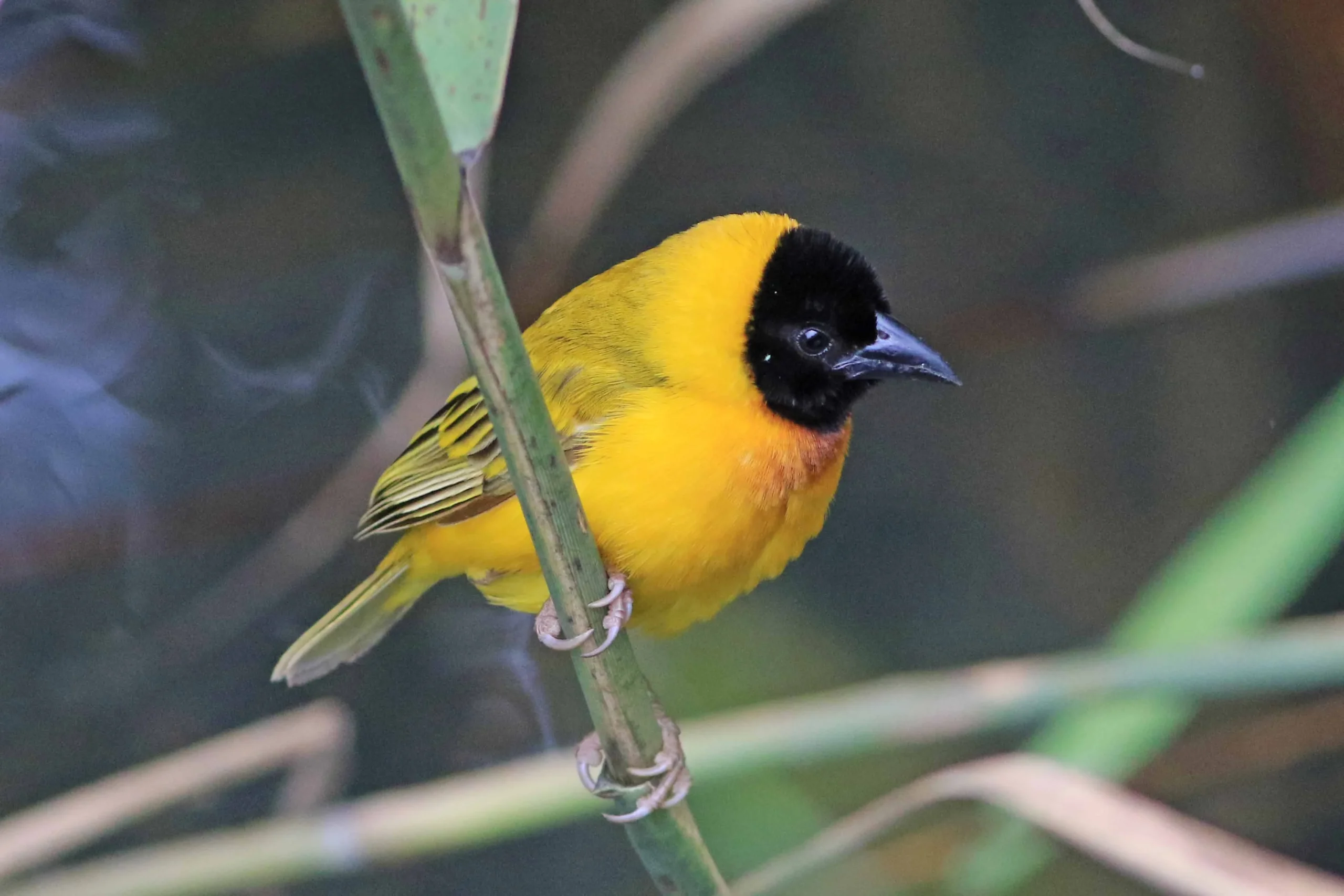
The black-headed weaver is one of East Africa’s most recognizable weaver birds. The breeding male displays a striking combination of a jet-black head, bright yellow body, and chestnut wing markings. This colorful appearance makes it easy to identify when perched in open vegetation near water.
The species occurs across forest zones and riverine habitats in East and Central Africa. It is common in suitable wetlands, forest edges, and lakeshore environments. Birdwatchers often encounter black-headed weavers during Ugandan birding safaris and forest exploration trips.
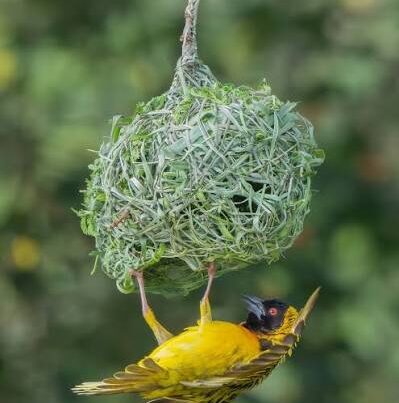
Like other weavers, the black-headed weaver builds woven nests in colonies. Males create complex nests over water or in thorny trees. These colonies provide protection because many birds can watch for predators. During the breeding season, a weaver colony becomes one of East Africa’s most active birding spectacles.
Identification and Similar Species
The breeding male black-headed weaver has a completely black head that extends from the crown to the upper breast. Its lower body shows bright yellow plumage, while the back has olive-yellow tones. The wings feature distinctive chestnut-brown markings. It also has a thick, dark bill suited for seed feeding.
The species can resemble the spectacled weaver and village weaver in areas where they occur together. However, key differences help with identification. The spectacled weaver has a yellow face with a dark eye stripe rather than a fully black head.
The village weaver also shows yellow facial markings with a black eye mask. In contrast, the black-headed weaver displays a solid black head. These differences become easier to notice during close sightings but may prove challenging in poor lighting.
Female and non-breeding males have less colorful plumage. They appear brown and buff with streaked patterns. Identifying them requires attention to size, bill shape, and overall structure.
Nesting and Colonial Behaviour
Black-headed weavers are colonial nesters and often form groups of 10 to 50 breeding pairs. They usually build colonies near rivers, streams, and lake shores. Many colonies appear in trees that hang over water because these locations offer extra protection from predators.
The male builds a woven nest using grass and plant fibers. He attaches the nest to a branch tip and performs hanging displays beneath the entrance. These displays help attract females during the breeding season.
Successful colonies may return to the same location for several years. Old nests often remain alongside new ones, creating dense clusters that stand out in the landscape.
Competition among males can become intense. Males with the best nesting positions attract more female attention. As a result, active colonies fill with constant calling, chasing, and territorial displays.
Distribution and Habitat
The black-headed weaver lives across forest zones and riverine woodland habitats in Central and East Africa. It prefers areas with trees, wetlands, and reliable water sources.
In Uganda, the species is widespread in the southern and western regions. It thrives along Lake Victoria shores and within riverine forests near several birding destinations. Forest areas around Kibale National Park and Budongo Forest offer excellent opportunities to observe this species.
In Kenya, the black-headed weaver occurs mainly in western forest zones and parts of the western Rift Valley. It does not occur widely in the dry northern and eastern regions because these areas lack suitable forest and wetland habitats.
In Tanzania, the species occurs around Lake Victoria and western woodland areas near Rwanda and the Democratic Republic of Congo. Birders visiting these regions can often find it near forest edges and water bodies.
Best Places to See the Black-Headed Weaver
Uganda provides some of the best opportunities to see black-headed weavers in East Africa. The species appears regularly in wetland and forest-edge habitats throughout the country.
The Entebbe lakeshore area offers convenient sightings, especially for travelers arriving through Uganda’s international airport. Several colonies live near wetlands and gardens around Lake Victoria.
Birding locations near Kibale Forest and Budongo Forest also provide excellent opportunities. These destinations combine weaver sightings with encounters with Uganda’s rich forest birdlife.
Plan Your Birding Safari
A Uganda birding safari offers excellent chances to encounter the black-headed weaver alongside many other colorful species. Wetlands, lakeshores, and forest edges provide the most reliable habitats for sightings.
African Wild Trekkers can include Uganda’s best birding destinations in customized safari itineraries. Contact us to plan a birding experience that explores East Africa’s incredible bird diversity.