Tanzania Walking Safari: The Best Parks for Getting Out of the Vehicle
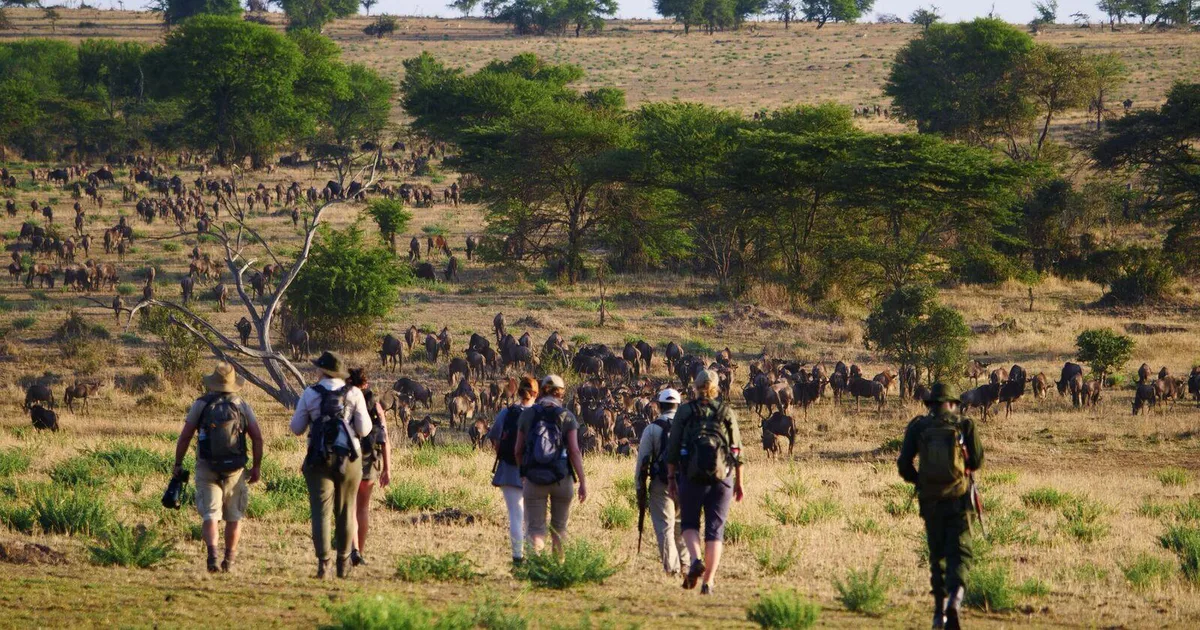
A Tanzania walking safari transforms the safari experience from passive observation to active participation in the landscape. When you leave the vehicle and walk through the bush with a trained guide, the quality of attention changes completely—sounds that were background noise from the vehicle become tracking clues, footprints that you drove past become evidence of last night’s lion, and the termite mound that looked like scenery from the road becomes a detailed micro-ecosystem alive with its own logic. Walking safaris are not available in all Tanzania parks, and the quality of the experience varies enormously depending on the guide, the terrain, and the park regulations. This guide covers the best Tanzania parks for walking safaris in 2026.
Why Walking Changes the Safari Experience
What a Walking Safari Delivers That a Vehicle Cannot
The Senses and the Landscape
Game drives in a 4×4 filter the bush through glass and steel, muffling sounds, removing smells, and creating a physical distance from the landscape that is so normalized after a day in the vehicle that most travelers stop noticing it. A walking safari removes this filter entirely. The smell of a lion—a musky, heavy scent that guides detect from twenty meters downwind—becomes a real alarm rather than a textbook description. The sound of an impala’s foot landing on dry grass at eighty meters becomes a direction indicator that guides you toward a predator at rest. The visual field on foot also differs from the elevated vehicle position—some animals invisible in long grass from the vehicle’s higher vantage point are visible to a standing human, while some animals the vehicle’s height reveals are hidden from a walker by the terrain’s folds and the vegetation’s density.
Walking also creates an intimate relationship with the smaller elements of the landscape that vehicles drive past without stopping. Dung beetle colonies working a fresh buffalo dropping, the geometric precision of a weaver bird’s nest suspended from an acacia tip, and the pheromone trails of safari ants crossing the path in an orderly column three centimeters wide—these details make the bush feel inhabited in ways that the vehicle, focused necessarily on the horizon and the large animals, can miss. A good walking guide uses all of these smaller details as entry points into the ecosystem’s complex interconnections, creating an educational depth that enriches the vehicle game drives that follow for the rest of the trip.
Safety Protocols and What Walking on Foot with Wildlife Means
Walking in the African bush where dangerous wildlife is present requires a qualified armed guide and, in most cases, a second guide or armed ranger who covers the group’s rear. Tanzania’s national parks require government-issued walking licenses and armed park rangers for walking safaris within national park boundaries. The armed escort is not theatrical—buffalo, elephants, and lions encountered on foot without the vehicle barrier require the guide’s ability to read animal behavior accurately and the group’s ability to respond correctly to the guide’s instructions. Standing firm, grouping tightly, and moving slowly away from a nervous elephant are actions that a walking guide drills before departing camp. The overwhelming majority of Tanzanian walking safaris are completed without incident precisely because the guides are competent, the protocols are followed, and the group behaves correctly in wildlife encounters.
The danger element of a walking safari is real but manageable, and the quality of the experience is directly proportional to the quality of the guide. African Wild Trekkers uses only walking guides with verified credentials, field experience, and a track record of safe walk facilitation. The team never books clients with walking operations whose guides’ qualifications cannot be confirmed. A well-managed walking safari in Tanzania’s bush is physically and intellectually demanding in the best possible way — it asks more of the participant than a game drive and rewards that participation with an understanding of the landscape that a vehicle alone cannot provide.
The Best Tanzania Parks for Walking Safaris
Where Walking Is Possible and Excellent
Ruaha National Park: Tanzania’s Best Walking Safari Destination
Ruaha National Park delivers what most experienced Tanzania guides consider the country’s finest walking safari experience. The park’s rugged terrain—rocky kopjes, dry riverbeds, baobab woodland, and open miombo—creates walking routes of dramatic physical character that the Serengeti’s flat plains cannot replicate. The diverse vegetation provides constant close-range interpretation opportunities: the guide demonstrates how a giraffe’s neck is proportionally short compared to its body, explains the significance of different termite mound architectures, and reads the elephant’s passage through a woodland section from the broken branches, disturbed soil, and fresh dung that document its recent movement. Ruaha’s relatively low visitor density means that walking groups rarely encounter other vehicles on routes that might disturb the guide’s ability to approach specific areas quietly.
Ruaha’s camps nearly all include walking safaris as standard activities, with morning walks scheduled before the vehicle game drive to take advantage of cooler temperatures and higher predator activity. The walk typically lasts two to three hours before returning to camp for breakfast, then a vehicle drive in the mid-morning before the midday rest. This structure fills the day with wildlife interaction across two complementary access methods—feet and vehicle—and creates a daily rhythm that many safari travelers find more satisfying than a full schedule of vehicle-only game drives. African Wild Trekkers specifically recommends Ruaha for clients whose primary interest in a Tanzania safari is getting out of the vehicle, and the team selects Ruaha camps based on the quality of their walking safari program.
Selous-Nyerere and Arusha National Park Walking Options
The Selous-Nyerere ecosystem’s private concession areas adjacent to the national park offer walking safaris that combine riverine terrain—riverbanks, oxbow lakes, and seasonally flooded channels—with pen woodland that gives good visibility for wildlife encounters on foot. Walking in the Selous-Nyerere area creates the possibility of approaching hippos from downwind along a riverbank at dawn—an experience both more dangerous and more extraordinary than any vehicle-based hippo encounter. Guides in the Selous concession areas are highly experienced in reading hippo behavior and position the group for approach only when the wind, terrain, and specific animal’s demeanor make the encounter safe. The Selous’s wild dog population means that walking in areas of recent dog activity sometimes results in encounters with the pack at a distance that the vehicle would have prevented.
Arusha National Park on the city’s outskirts offers accessible walking safari trails that do not require the same armed escort as Ruaha or the Selous because the park’s wildlife does not include large numbers of buffalo and the lion population is low. The Arusha walking trails deliver excellent birding, close encounters with giraffe and buffalo in the forest, black-and-white colobus monkey treetop viewing, and the distinctive experience of the Momella Lakes’ flamingo and waterbird colonies on foot along the lake shore. For Tanzaniann visitors spending a day in Arusha between connections, an Arusha National Park walking safari is the most rewarding half-day activity available within thirty minutes of the city center. African Wild Trekkers can arrange Arusha National Park walks as an addition to any itinerary that includes a pre-safari Arusha overnight.
Walking Safari Regulations and What to Expect
Rules, Equipment, and Physical Requirements
What to Wear and Carry on a Walking Safari
Walking safari clothing follows the same neutral color guidelines as vehicle safari—khaki, olive, and brown rather than white, blue, or red. Closed-toe shoes with ankle support are essential; sandals are not appropriate for walking in African bush where thorns, rocks, and uneven ground are constant underfoot. Long trousers protect legs from thorn scratches and reduce insect exposure that shorts make worse in the bush. A hat for sun protection, insect repellent applied before departure, a water bottle of at least 750ml, and a small daypack for carrying your camera and jacket are the complete walking kit. Leave bulky camera bags and handbags at camp—everything you carry on a walking safari should fit in a single small pack that does not impede your movement or create noise when you move quickly.
Walking safaris in Tanzania’s best parks typically last two to four hours in the cooler morning hours, rarely extending into the midday heat when both temperature and predator activity make walking less rewarding and more physically demanding. The pace is slow — far slower than a casual walk in a city park — because the guide stops frequently to point out tracks, interpret sounds, and observe wildlife at a distance before determining whether to approach or withdraw. Fitness requirements are modest: the walk covers four to eight kilometers over two to three hours but requires sustained attention and the ability to move quietly on the guide’s signal without advance notice. African Wild Trekkers briefs all walking safari clients on the physical requirements and specific protocols before the walk departs from camp.
Plan Your Safari
A Tanzania walking safari is available in several parks and at varying quality levels, and the guide you walk with makes a greater difference to the experience than any other factor. African Wild Trekkers books walking safaris with verified, experienced guides in the parks where walking is both permitted and excellent, integrating the walks into itineraries as a complement to vehicle game drives rather than a replacement for them. The team advises on which park and which camp deliver the best walking program for each client’s specific interests and physical capability.
Every Tanzania itinerary that includes walking safaris specifies the guide’s walking credentials, the expected duration and terrain of the walks, and the wildlife targets most relevant for that park section and season. The pre-departure briefing covers walking safari safety protocols, clothing, and what to expect at close-range encounters with large wildlife. The team confirms all camp reservations in writing before any deposit is requested.
Contact African Wild Trekkers at africanwildtrekkers.com/contact with your Tanzania travel dates and walking safari interest, and we will recommend the best parks and build a personalized itinerary within 24 hours.