Zanzibar’s Marine Environment and Water Activities
The Underwater World Around Zanzibar
Mnemba Atoll: The Island’s Premier Snorkelling Destination
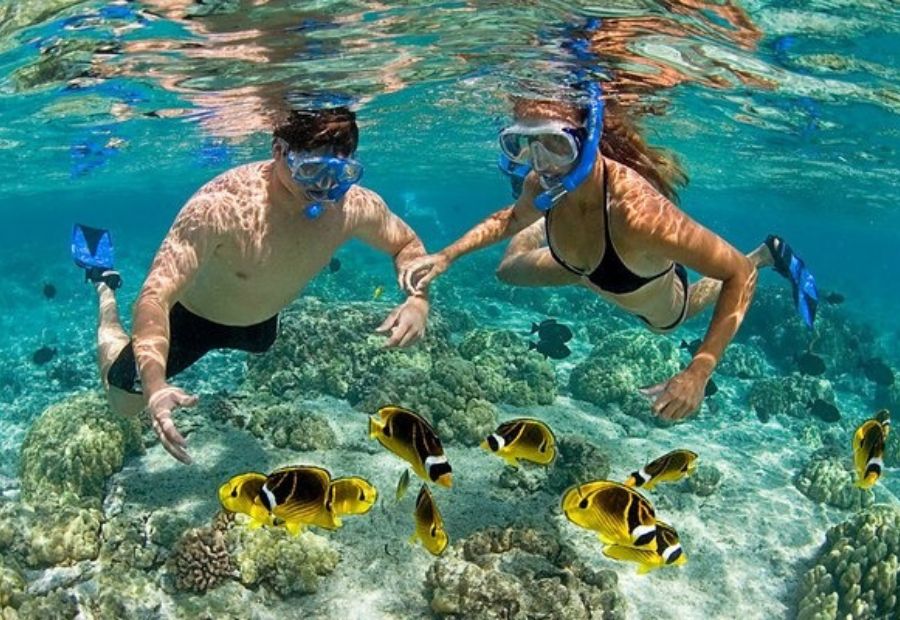
Mnemba Atoll sits approximately four kilometres off Zanzibar’s northeastern coast near Matemwe village and encloses a circular coral reef system covering approximately 10 square kilometres of protected marine habitat. The atoll ranks among the Indian Ocean’s most consistently praised snorkelling and diving destinations. Its enclosed geometry protects the interior from ocean swell and creates clear, calm water conditions with visibility of 15 to 25 metres through the reef’s water column — conditions that exposed outer reef sites on Zanzibar’s eastern coast cannot maintain against the southeast monsoon’s seasonal swell. Green sea turtles rest and feed among the seagrass beds at three to eight metres depth, delivering reliable turtle encounters on virtually every snorkelling visit.
The coral diversity on Mnemba’s reef slopes combines hard coral formations — brain corals, staghorn, and plate corals — with soft coral fans that shelter dense reef fish populations. Bumphead parrotfish cruise the reef in schools of twenty or thirty, their teeth audibly crunching coral as they graze. Dolphins regularly enter the atoll’s interior in the early morning hours and approach snorkellers of their own accord — a curiosity-driven interaction that boat-based dolphin encounters manipulate into a less natural format. Morning snorkelling at Mnemba between 06:30 and 09:00, before midday boat traffic increases, produces the highest probability of spontaneous dolphin interaction alongside the best turtle and fish density the atoll delivers.
Kizimkazi: Dolphin Watching in the Wild
Kizimkazi on Zanzibar’s southern coast hosts resident populations of both bottlenose and humpback dolphins that inhabit the channel between the island’s southern tip and the open Indian Ocean year-round, feeding on the fish schools that upwelling currents concentrate in the channel waters. Boat-based dolphin watching from Kizimkazi’s fishing village runs morning excursions from approximately 07:00 and positions visitors in the water alongside free-swimming dolphin pods. The quality of the interaction depends significantly on the operator’s behaviour — responsible operators maintain a respectful distance and allow dolphins to approach the swimmers voluntarily, while irresponsible operators drive directly at the pods and produce panicked avoidance rather than curious interaction.
Careful operator selection through your accommodation or a recommended company matters significantly at Kizimkazi rather than booking at the harbour from any available boat. The dolphins are wild animals whose presence in the channel on any specific visit is not guaranteed, though responsible operators with daily channel experience guide visitors to interactions on most mornings. The humpback dolphins — larger and less acrobatic than spinner dolphins — feed in the channel’s shallower areas and allow closer approach. Spinner dolphins’ speed and directionality make sustained in-water contact more difficult to maintain across the full encounter.
Island Hopping by Dhow
Prison Island, Chumbe Island and Changuu
Prison Island sits approximately six kilometres northwest of Stone Town and provides a half-day excursion that combines history with the giant Aldabra tortoise population that has inhabited the island since 1919 and now numbers approximately a hundred individuals. The tortoises range freely across the island’s interior and reach ages exceeding a century — some individuals alive today were already adult tortoises during the Second World War. This encounter with living historical continuity is something very few wildlife experiences can match for pure individual lifespan. The colonial-era prison building, constructed in 1893 and used briefly as a quarantine facility, provides architectural context alongside the tortoise encounter that the half-day timing allows without sacrificing either element.
Chumbe Island Coral Park south of Stone Town operates as Tanzania’s most rigorously managed marine protected area and allows limited-capacity snorkelling visits to a reef that the conservation programme has maintained in exceptional condition through strict no-fishing and no-anchoring enforcement since 1994. The Chumbe reef represents the closest thing to a pristine coral ecosystem that non-technical snorkellers can access on the Zanzibar coast. Day visit capacity is limited to approximately forty people — a restriction that maintains snorkelling quality but means advance booking directly through Chumbe Island Coral Park is essential rather than the walk-up availability that most Zanzibar water activity operators provide.
Dhow Sunset Cruises and Traditional Sailing
The traditional dhow sailing culture of Zanzibar’s Indian Ocean heritage survives in modified form as the primary vehicle for sunset cruises from Stone Town’s waterfront and for excursion dhows that carry snorkelling passengers to offshore reefs and outer islands. Wooden dhows running sunset cruises from the Stone Town waterfront cover the channel between the island and the mainland in the late afternoon, providing views of the Stone Town skyline in warm declining light alongside the experience of a traditional sailing vessel. Drinks and fresh fruit accompany the sunset cruise in formats that range from simple cooler-box operations to elaborate catered experiences depending on the operator and the price point.
A full-day spice island dhow trip around Zanzibar’s northern reefs, departing from Nungwi or Matemwe at 08:00 and returning at 17:00, combines snorkelling at multiple reef sites, a sand bank picnic lunch, and dolphin watching in the channel between the main island and outer reefs. The dhow’s slower pace, lower deck height, and quieter engine profile create a different relationship with the sea surface than faster motor boats that standard snorkelling excursions use. The crew’s handling of the sail in suitable wind conditions adds a sailing education dimension that motor trips cannot provide — a format that suits travellers who want to experience Zanzibar’s Indian Ocean heritage most authentically.
Practical Water Activity Information
Booking, Timing and What to Know
When and How to Book Marine Activities
Mnemba Atoll snorkelling and Kizimkazi dolphin watching operate year-round with conditions varying by season. The calm northwest monsoon from December through March produces the clearest Mnemba water and most reliable Kizimkazi dolphin conditions. The southeast monsoon from June through September creates rougher conditions on the eastern coast and at Kizimkazi, while the northern beaches remain calm. Most marine operators reroute snorkelling excursions to northern reef sites during this period rather than sticking rigidly to eastern coast locations. Operators who explain this seasonal flexibility before booking demonstrate the local knowledge that reliable marine activity management requires.
Booking marine activities through your accommodation rather than independently from waterfront operators provides quality control that comes from the hotel’s ongoing relationship with specific operators and their accountability for the guest experience. Accommodation staff who manage guest marine activity bookings over years know which operators maintain good equipment, responsible dolphin interaction protocols, and reliable boat safety standards — and know which operators to avoid. The price premium of booking through accommodation is typically modest and represents genuine value compared to selecting an unfamiliar operator from a harbour full of boats without any third-party quality assessment.
Plan Your Safari
Zanzibar’s marine activity programme — Mnemba snorkelling, Kizimkazi dolphins, Chumbe reef, Prison Island tortoises, and dhow sunset cruises — delivers the island’s full Indian Ocean experience when coordinated across the beach stay’s available days. African Wild Trekkers incorporates marine activity bookings into all Zanzibar extension packages alongside Stone Town cultural visits and spice tours.
The marine activity coordination covers Mnemba Atoll snorkelling day trips, Kizimkazi dolphin excursions, Chumbe Island Coral Park advance booking, dhow sunset cruise reservation, and transport between beach accommodation and each activity’s departure point. Activity scheduling uses the best daily timing — dawn Mnemba dolphin windows, mid-morning turtle snorkelling, afternoon spice tours — across the available beach days.
Contact African Wild Trekkers at africanwildtrekkers.com/contact with your Zanzibar dates and marine activity priorities and we will design your island programme within 24 hours.