Bwindi Night Sounds: Uganda’s Forest After Dark
Bwindi night sounds transform the ancient Impenetrable Forest into a completely different sensory experience after the last daylight gorilla trekking groups return to their lodges. The Bwindi night sounds begin as the sun drops behind the Virunga ridge and the forest’s diurnal community falls silent. Tree hyraxes produce their extraordinary escalating screams from the canopy. Forest nightjars begin their churring calls from the understory. The combined nocturnal soundscape creates one of the most atmospheric wildlife experiences available in East Africa. A guided evening walk into Bwindi’s night sounds produces encounters with owls, potoos, and small nocturnal mammals that daytime trekkers never experience.
The Bwindi night sounds experience begins immediately after sunset from the lodges that sit on the forest boundary at Buhoma, Ruhija, Rushaga, and Nkuringo. Tree hyraxes are the dominant and most startling element of Bwindi night sounds from any forest-edge position. Their call builds from a low churring to an explosive, agonized scream that echoes across multiple ridges simultaneously. First-time visitors who have never heard tree hyrax inevitably ask their guide what animal produces such an extreme sound. The answer consistently surprises because nothing in most visitors’ prior wildlife experience prepares them for a rabbit-sized mammal that screams like that.
Bwindi Night Sounds on Guided Walks
What You Hear on a Bwindi Night Walk
Guided night walks in Bwindi Impenetrable Forest reveal the full depth of Bwindi night sounds beyond what reaches the lodge veranda. The African wood owl calls from the dense mid-story with a series of deep hoots answered by its mate from further along the ridge. Fraser’s eagle owl is one of Bwindi’s most sought-after nocturnal birds and produces a dramatic territorial call from exposed branches near the forest edge. The Albertine owlet, endemic to the Albertine Rift Mountains, calls from undergrowth thickets and is specifically sought by birders who request night walk permits at the forest gate. Identifying each call with the guide transforms the forest darkness from intimidating to deeply rewarding.
The forest floor during Bwindi night sound walks produces small mammal encounters entirely absent from daytime forest activities. The African civet moves along the forest floor trails using scent marking, and the guide’s spotlight reveals its distinctive spotted pattern at close range. The African palm civet climbs through the lower canopy and produces a distinctive series of yelps as part of Bwindi night sounds. The giant forest squirrel is active in the canopy from dusk, and the guide’s ear picks up its movement sound before the spotlight locates it in the leaves above. The combination of owl calls, mammal encounters, and continuous forest sound creates a wholly different Bwindi experience from the daylight gorilla trek.
Bwindi Night Sounds: Tree Hyrax
Tree hyrax is the defining element of Bwindi night sounds for most visitors and one of the most remarkable acoustic experiences in African wildlife. These small, rabbit-sized mammals produce a call of extraordinary volume and emotional intensity for their body size. The call sequence begins with a series of quiet clucks that build over one to two minutes into the full escalating scream. Multiple individuals calling simultaneously from different positions in the canopy create an overlapping acoustic landscape that can last for 30 minutes or more. The tree hyrax’s nearest evolutionary relative is the elephant, a fact that the guides use to great effect when introducing the sound to skeptical first-time listeners.
The tree hyrax call is one of the most difficult sound identifications for first-time Bwindi visitors. Nothing in temperate wildlife experience prepares the ear for its character. The call sits between a bird, a mammal, and something less easily categorized in the listener’s initial perception. Experienced guides explain the tree hyrax acoustic biology during the Bwindi night sounds experience. Many guides can locate calling individuals by spotlight after they have identified the call position. Seeing and hearing tree hyrax simultaneously is one of the most satisfying wildlife identification moments in the entire Bwindi forest experience.
Nocturnal Wildlife Beyond the Sounds
Night Walks for Bwindi Owls
Bwindi Impenetrable Forest holds six to eight owl species across its altitude range. Guided night walks targeting owls are the most productive way to find them beyond the Bwindi night sounds acoustic experience. The African barred owlet inhabits the lower forest and forest edge near Buhoma and responds readily to guide call playback in appropriate habitat. Verreaux’s eagle owl is the largest owl in the forest, and its deep, resonant call carries through the canopy on still nights. Finding a Verreaux’s eagle-owl on a Bwindi night walk is one of the most sought-after encounters for birding visitors to the forest. The guide’s knowledge of current owl territories makes the difference between a successful night walk and a disappointing one.
Standard Bwindi night walks depart from the forest gate between 18:30 and 19:00 for the most productive nocturnal activity period. Walks last between 90 minutes and two hours and cover two to three kilometers of trail through accessible forest sections. Head torches and a guide spotlight are the essential equipment. Quiet movement and patient spotlighting produce significantly more encounters than hurried walking through the forest. Groups of four or fewer people make the most productive night walk teams for both the guide’s effectiveness and the quality of individual wildlife encounters.
Night Sounds at Bwindi Lodges
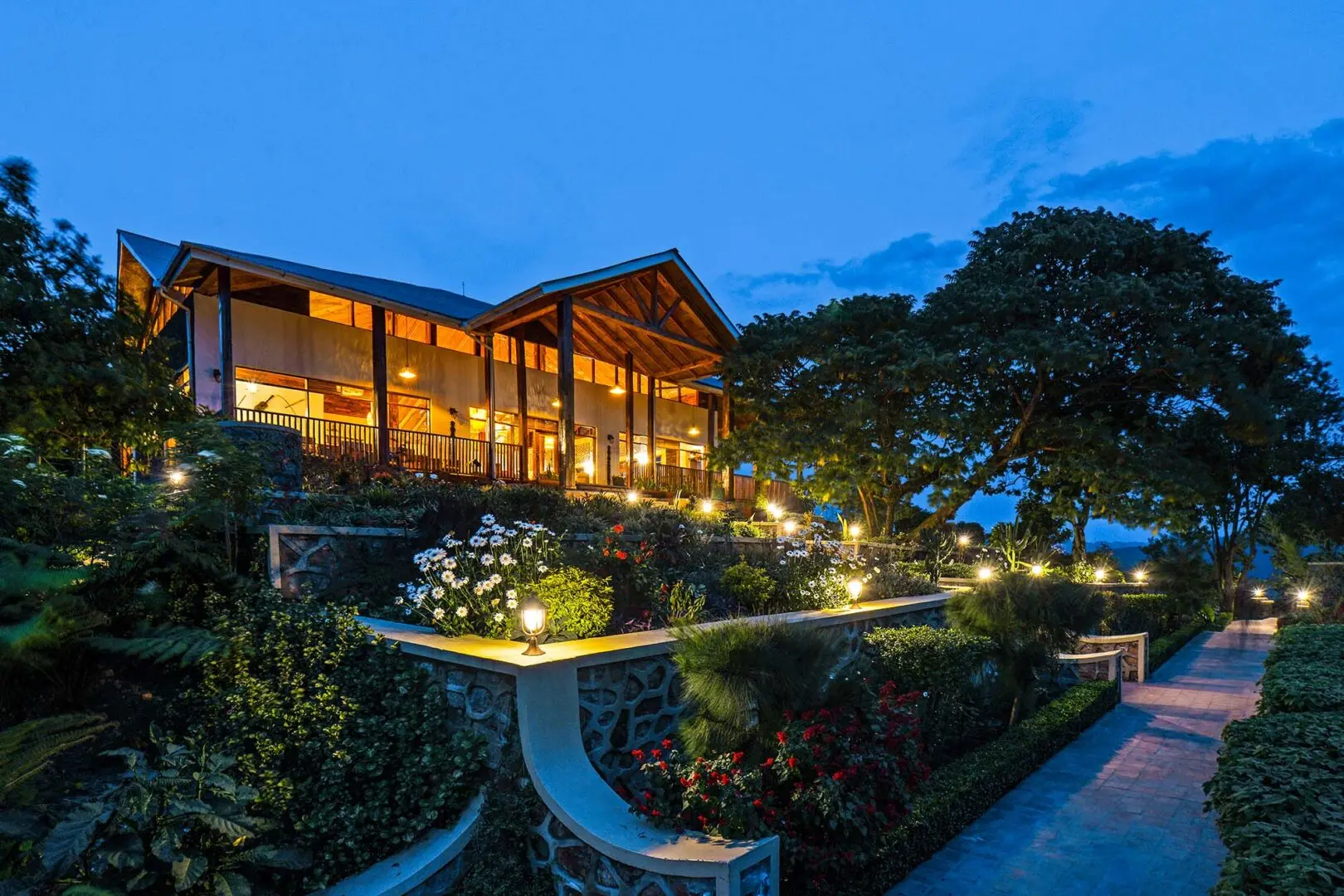
Many Bwindi lodges on the forest edge deliver an acoustic Bwindi night sounds experience from the veranda without requiring a formal night walk. Lodges at Buhoma and Ruhija sit close enough to the forest boundary that the full nocturnal soundscape reaches the accommodation area after dark. Tree hyrax calls, nightjar churring, and occasional primate vocalizations make up the Bwindi night sounds audible throughout the night from most lodge positions. Several lodges provide a short interpretation guide to the Bwindi night sounds specific to each property’s location. Sitting on the veranda after dinner and working through the guide’s sound descriptions while the forest performs them live is one of Bwindi’s most memorable low-effort wildlife experiences.
Gorilla sounds that some accounts include in descriptions of Bwindi night sounds are less commonly heard from the lodges. Gorilla families typically nest deep within the forest away from human habitation. On rare occasions when a gorilla group nests unusually close to the forest boundary, contact grunts and nest-building activity carry to lodge positions. The Bwindi Forest management team occasionally receives reports of gorilla sounds reaching lodge areas during unusual nest site selections. These are exceptional rather than typical Bwindi night sound encounters, which makes them all the more memorable when they do occur.
Plan Your Safari
Book a guided night walk through your lodge or directly at the forest gate office at Buhoma, Ruhija, Rushaga, or Nkuringo. Night walks require advance booking and a small permit fee. Plan the night walk for your second evening at Bwindi after the gorilla trek to maximize recovery from the daytime trekking effort. Bring a head torch with red light capability to preserve night vision and dress in layers for the cool Bwindi Forest temperature after dark.
African Wild Trekkers includes guided night walks in Bwindi itineraries for clients who want the full forest experience beyond the gorilla trek. We pre-book night walk permits and provide a briefing on Bwindi night sounds and nocturnal wildlife before the walk’s departure from the forest gate each evening.
Contact African Wild Trekkers to include the Bwindi night sounds experience in your Bwindi Impenetrable Forest safari. We respond within 24 hours and design itineraries that cover both the day and night dimensions of this extraordinary ancient forest.