Bat Hawk Africa: East Africa’s Most Specialised Twilight Raptor
The bat hawk is one of Africa’s most extraordinary raptors. It is entirely crepuscular, hunting exclusively in the brief twilight window between sunset and full darkness and again at dawn. During this narrow hunting window, it targets bats emerging from roost sites in a specialised hunting strategy found in no other African raptor. Outside this twilight period, the bat hawk roosts motionlessly in dense tree cover where it is effectively invisible and rarely encountered by observers searching in daylight hours.
The species is associated with caves, old buildings, bridges, and other bat roost structures where large numbers of bats emerge simultaneously at dusk. The bat hawk positions itself near the roost entrance and intercepts emerging bats in fast, direct stoops as they funnel out of the roost in the minutes around sunset.
Identification
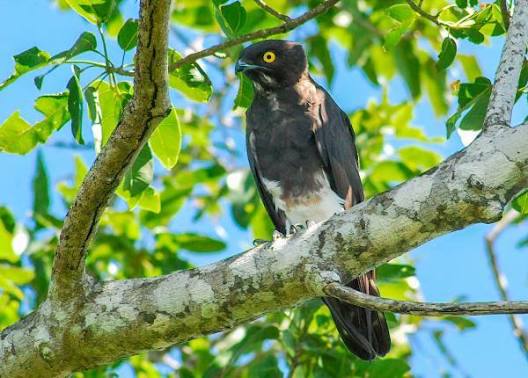
The bat hawk measures 43 to 45 centimetres. The plumage is almost entirely dark brown to dark chocolate-brown, making it very difficult to see against a dark sky or in the shadowed forest canopy where it roosts during the day. The only pale marking is a white spot behind the eye and a white patch on the belly visible from below in flight.
The large eye is a key structural feature. The eye is proportionally much larger than that of other similarly-sized raptors, reflecting the species’ adaptation to hunting in low-light conditions at twilight. The large pupil captures sufficient light during the minutes of true twilight to allow precise prey detection and targeting that smaller raptor eyes cannot achieve in the same light conditions.
The bat hawk’s flight silhouette is distinctive at dusk. The wings are long and pointed in a profile that resembles a large swift or a falcon but with a slightly heavier body and a more powerful wingbeat rhythm. The silhouette against the twilight sky is the most common way the species is first detected at roost-site locations.
Hunting Method
The bat hawk positions itself near a bat roost exit point in the minutes before sunset. When bats begin emerging, the hawk makes fast, direct stoops into the emerging stream of bats. The bat is captured in the talons and transferred immediately to the bill in flight so the talons are free for the next strike. The bat is swallowed whole in flight without the hawk needing to land.
The ability to swallow prey whole in flight is essential for this species. The hunting window of 15 to 20 minutes at dusk is too brief to allow time for landing and consuming each prey item individually. Swallowing bats whole in flight allows the hawk to make multiple captures within the hunting window.
Studies of bat hawk hunting efficiency show that the species can capture and swallow a bat every 2 to 3 minutes during the peak hunting window. A single bird can consume 10 to 15 bats during a single dusk hunt. This caloric intake from one short hunting session meets the species’ full daily energy requirement, explaining why it has no need to hunt at other times of day.
Where to See Bat Hawks in East Africa
Bat hawk sightings require visiting known roost sites near large bat colonies at dusk. The species is present throughout East Africa’s forest and tall woodland zones wherever sufficient bat prey is available, but locating it requires specific knowledge of the sites where it habitually hunts.
Uganda’s Makerere University in Kampala and the Old Kampala Mosque area host large bat colonies that attract bat hawks in the evenings. The Nile River bridge at Jinja and several other bridge structures in Uganda host bat colonies that reliably attract hunting bat hawks at dusk during the right season.
Kenya’s Kitum Cave on Mount Elgon and the caves in the Shimba Hills carry bat populations that have historically supported bat hawk hunting activity in the surrounding forest at dusk. Tanzania’s Selous-Nyerere forest section along the Rufiji River provides bat hawk habitat in the tall woodland near the river.
Plan Your Birding Safari
Bat hawk sightings require a specific evening visit to a known bat roost site in the 20 minutes around sunset. The species cannot be found during daylight hours without specific knowledge of its daytime roost tree. An experienced local guide who knows active hunting sites is essential for planning a productive bat hawk watch.
Uganda provides the most accessible bat hawk encounters in East Africa, with specific sites near Kampala and along the Nile River that experienced Uganda birding guides visit routinely during the evening dusk period on multi-day Uganda birding itineraries.
African Wild Trekkers includes Uganda’s specialist nocturnal and crepuscular bird sites in dedicated birding safari itineraries. Contact us to plan a Uganda birding safari that targets this extraordinary twilight raptor alongside the country’s exceptional daytime bird diversity.