Ranger Training Day Africa: Experience the Skills Behind East Africa’s Wildlife Protection
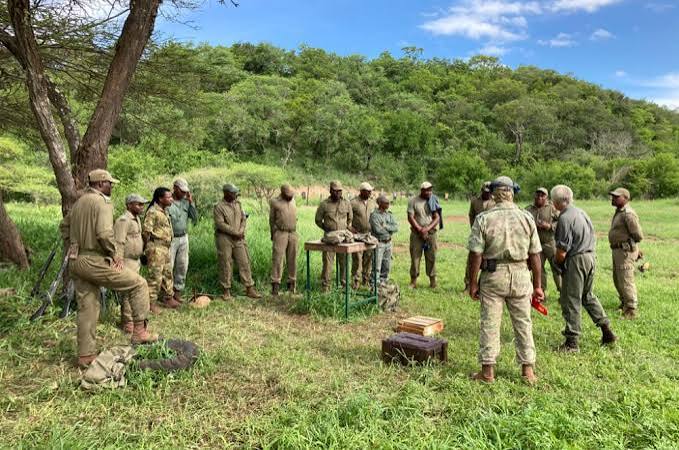
A ranger’s job requires a broader skill set than most visitors to East Africa’s national parks and conservancies understand. Rangers must navigate complex terrain without GPS dependence, administer first aid in remote locations far from medical facilities, identify wildlife species and interpret their behaviour accurately, collect and record field data systematically, manage human-wildlife conflict situations with appropriate restraint, and when absolutely necessary, respond to armed poachers with the tactical discipline of a law enforcement officer. The ranger training curriculum covers all of these domains — a demanding combination of naturalist knowledge, physical fitness, data management, and operational skill. Ranger training days offered to safari visitors provide a structured introduction to the most accessible of these skills — tracking, navigation, first aid, and conservation data collection.
Tracking Skills in Ranger Training
Tracking forms the foundation of every ranger training curriculum in East Africa. Rangers must identify the footprints, droppings, feeding signs, and territorial markings of at least 50 species before completing basic training. They must age tracks under various substrate and weather conditions, follow a trail across substrate changes, and distinguish between natural animal movement and the suspicious patterns left by humans walking in single file — the giveaway sign of a poaching group attempting to minimise tracks. Furthermore, rangers learn to identify the specific snare types used by different poaching communities in their area — each community has preferred materials and construction techniques that a trained ranger identifies immediately. A ranger training day session for visitors covers species print identification, track aging, and trail following across a defined patch of bush terrain.
Navigation and Patrol Skills
Rangers navigate without GPS as a core competency — electronics fail, batteries run out, and the most remote patrol areas often lack satellite signal. Map and compass navigation at the level required for cross-country patrol route planning and position reporting constitutes a standard curriculum element. Additionally, celestial navigation using the Southern Cross and sun angle provides a backup bearing system for rangers whose map and compass are lost or damaged. Patrol methodology — systematic coverage of defined areas, documentation of routes completed, and communication protocols with base camp — forms the operational framework within which individual navigation skills operate. Visitors participating in ranger training sessions practice basic compass navigation exercises across a defined terrain area with ranger trainers.
Community Relations and Human-Wildlife Conflict
Rangers in community-adjacent protected areas spend as much time managing human-wildlife conflict as they do patrolling against poaching. An elephant that raids a farming community’s crops at night, a lion that kills a herder’s cattle, or a hippo that destroys a season’s vegetable garden creates immediate conflict between the community and the protected area it surrounds. Rangers respond to these incidents driving the animal back into the protected area, documenting the damage for compensation processing, and maintaining the community’s trust that the wildlife authority values their livelihoods as well as the wildlife. As a result, community relations skills communication, mediation, and cultural fluency — are as important to ranger effectiveness as any technical skill. Visitor ranger training days include a component on human-wildlife conflict response scenarios.
Plan Your Safari
Ranger training day experiences operate at several Kenya conservancies Ol Pejeta Conservancy runs a structured Junior Ranger programme accessible to visitors. Lewa Wildlife Conservancy offers conservation education days that include ranger skill demonstrations. Tanzania’s African Wildlife Foundation camps provide conservation education sessions covering ranger patrol methodology. Uganda’s Uganda Wildlife Authority runs ranger training events at Bwindi and Queen Elizabeth that occasionally include visitor participation through specific education programmes. These experiences require advance booking through the camp or tour operator.
African Wild Trekkers includes conservation education and ranger training participation in East Africa itineraries. Contact us to plan a safari that reveals the human infrastructure behind East Africa’s extraordinary wildlife protection.