African Openbill Stork: The Snail Specialist With the Unique Gapped Bill
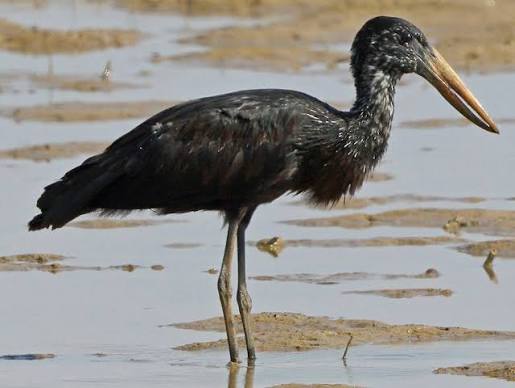
The African openbill stork carries one of the most distinctive bills in East Africa’s bird community. When the bill is closed, a clear gap remains between the upper and lower mandibles through most of their length. Only the tips touch when fully closed. This permanent gap is not a deformity — it is a precise anatomical adaptation for extracting freshwater snails and mussels from their shells without crushing the shell first. The openbill inserts its bill tip between the shell and the snail’s body, severs the muscle attaching the body to the shell, and withdraws the snail cleanly through the gap.
This specialisation for freshwater mollusc feeding makes the African openbill dependent on wetland habitats with large apple snail and freshwater mussel populations. Where these habitats exist, the openbill can occur in large and conspicuous numbers. Flocks of hundreds and occasionally thousands of birds gather at productive snail habitats during the post-rain period when freshwater snail populations peak.
Identification
The African openbill stork measures 83 to 94 centimetres. The adult plumage is entirely dark — a glossy greenish-black that appears black in most light conditions and shows iridescent green and purple in strong direct sunlight. The bill is dark brown-grey with the characteristic gap visible from the side at any viewing angle.
The gap in the bill is visible even in flight views from a reasonable distance and immediately identifies the species from all other stork species in the region. No other stork or large wading bird in East Africa shows the open gap in the closed bill that distinguishes the openbill from the yellow-billed, saddle-billed, and marabou storks sharing its wetland habitat.
The legs are dark red-brown. The eye is grey-white in adults. Immature openbills show brown-grey plumage in place of the adult’s dark iridescent black. Young birds also show a paler bill than adults. The gap is still present in young birds and provides reliable species identification at all ages.
Colonial Nesting
African openbill storks nest in large mixed-species heron colonies in trees over water. Hundreds to thousands of pairs may nest simultaneously in a single colony shared with herons, egrets, and cormorants. The colonial nest sites are used repeatedly across multiple breeding seasons as long as the tree structure remains intact and the surrounding wetland continues to provide adequate food resources.
Active openbill colonies are extraordinary spectacles of sound, movement, and smell. Hundreds of nesting pairs simultaneously incubating eggs, feeding chicks, and defending nest territories from neighbouring birds create a continuous level of activity that is audible and visible from hundreds of metres away.
Uganda’s Lake Victoria shore, Lake George, and the Kazinga Channel area carry some of East Africa’s most accessible openbill stork colonies. The combination of large wetland areas with rich snail populations and abundant suitable nesting trees has allowed the Uganda population to remain one of the largest in East Africa.
Where to See African Openbill Storks in East Africa
Uganda provides East Africa’s most reliable and most numerous openbill stork populations. The shallow wetland margins of Lake Victoria, Lake George, and Lake Kyoga all carry large feeding flocks when freshwater snail populations are at their post-rain peak.
The Kazinga Channel in Queen Elizabeth National Park produces reliable openbill encounters on the park’s boat cruise. Feeding groups wade in the channel margins throughout the day and are visible at close range from the boat. The boat cruise also passes through the areas where openbills gather in mixed-species wetland feeding assemblages alongside herons, egrets, and yellow-billed storks.
Tanzania’s Lake Manyara and the shallow lakes of the Rift Valley system also carry openbill stork populations. Kenya’s Lake Naivasha and Lake Baringo both produce openbill sightings at the lake margins and in the wetland vegetation surrounding the lake shores.
Plan Your Birding Safari
African openbill stork sightings are most reliable at Uganda’s wetland destinations and Tanzania’s shallow Rift Valley lakes. The species requires no specialist access in Uganda, where it is encountered on standard boat activities and game drives through wetland areas.
Uganda’s Queen Elizabeth National Park Kazinga Channel boat cruise is the most productive single activity for openbill stork encounters in East Africa, providing close-range views of feeding birds alongside the channel’s extraordinary hippo and crocodile populations.
African Wild Trekkers includes Uganda’s wetland boat activities in East Africa safari itineraries for maximum waterbird diversity. Contact us to plan a safari that explores East Africa’s full stork community from the marabou’s scavenging power to the openbill’s precision snail-extraction skill.