Semuliki Hot Springs: Uganda’s Boiling Geothermal Spectacle
The Semuliki hot springs are Uganda’s most dramatic geothermal feature. They rise from the flat Semliki Valley floor near the Semuliki River on the DRC border. These boiling water vents reach temperatures close to 100 degrees Celsius and produce continuous columns of steam visible from a considerable distance. Local communities have used the Semuliki hot springs for cooking and bathing for generations. Semuliki National Park protects the surrounding Congo Basin rainforest extension into Uganda’s Albertine Rift Valley. The park combines the geological spectacle of the hot springs with one of Uganda’s most biodiverse forest ecosystems.
Congo Basin species reach their easternmost distribution limit in Semuliki National Park. This makes the forest around the Semuliki hot springs extraordinarily valuable for birders seeking Congo Basin species unavailable elsewhere in Uganda. The park’s bird list exceeds 400 species and includes numerous species found nowhere else in the country. Visiting the Semuliki hot springs delivers geological spectacle and exceptional birdwatching in a single remote and rewarding destination. Few other Uganda national parks combine a natural wonder of this scale with a bird list of this quality.
The Semuliki Hot Springs Experience
Visiting the Semuliki Hot Springs
The main Semuliki hot springs lie just inside the national park boundary and reach by a short walk from the roadside parking area. Two main spring clusters rise from the flat valley floor, with the male and female springs separated by a short distance. The male spring is the most powerful, producing a continuous boiling geyser one to two metres above ground level. The female spring is a more diffuse series of smaller vents with a broader boiling area. Both Semuliki hot springs produce a strong sulphur smell that intensifies as visitors approach the vents.
The local Batwa and Bwamba communities have traditionally cooked food in the Semuliki hot springs water for centuries. Guides demonstrate this practice using eggs that visitors provide at the start of the walk. Lowering a string-tied egg into the Semuliki hot springs takes approximately ten minutes to cook the egg through. The cooked eggs are fully edible and the demonstration vividly illustrates the spring temperature without a thermometer. Photography at the springs in the morning produces the most dramatic steam column images as early light backlights the rising vapour.
Semuliki Hot Springs Geology
The Semuliki hot springs result from volcanic activity within the Western Rift Valley system. Groundwater percolates down through rock fissures and geothermal energy heats it before it rises back to the surface. Minerals dissolved during this underground journey precipitate on the surface around the vents. These mineral deposits create the distinctive terrace formations visible at the spring outlets. The Semliki Valley floor surrounding the springs was a former lake bed during a wetter Pleistocene period. The valley walls expose ancient sediments that contain evidence of the region’s dramatic geological and climatic history.
Palaeontological surveys in the Semliki Valley have recovered hominin bone fragments nearby. This makes the valley one of Africa’s most important fossil localities. The Semuliki hot springs sit at the intersection of Uganda’s geological, evolutionary, and ecological heritage. A knowledgeable guide explains this broader significance and transforms what might seem like a steam vent into one of Africa’s most layered natural history sites. Visitors who engage with the guide’s explanations leave with a very different understanding of what they have experienced.
Semuliki National Park Wildlife
Birds at Semuliki Hot Springs
Semuliki National Park is Uganda’s most important birding destination for Congo Basin species. The African piculet, African dwarf kingfisher, and lyre-tailed honeyguide are among the Congo Basin specialities that draw serious birders specifically to Semuliki. The forest adjacent to the Semuliki hot springs holds several target species in accessible positions near the visitor trail. The Batoro Trail from the Ntandi ranger station is the most productive birding route in the park and regularly produces 80 to 100 species in a morning walk with a specialist guide. White-crested hornbill, African long-tailed hawk, and Congo serpent eagle all occur along this trail.
Birders visiting Semuliki specifically to extend their Congo Basin species list consistently rate the park as one of Uganda’s most rewarding birding experiences. The species that draw them here simply do not appear at Kibale, Bwindi, or any other Uganda park. Planning a Semuliki visit as part of a western Uganda birding circuit produces a country trip list that rivals any East African specialist birding itinerary. Advance guide booking is essential because specialist Semuliki guides know the specific territory locations of the most sought-after Congo Basin targets.
Primates and Mammals Near Semuliki
Semuliki National Park supports six primate species. These include the Ugandan red colobus, black-and-white colobus, red-tailed monkey, central chimpanzee, olive baboon, and the distinctive de Brazza’s monkey. The de Brazza’s monkey is the most sought-after primate at Semuliki because of its distinctive white beard and orange forehead patch. It inhabits papyrus and riverine forest near the Semuliki River. Guided walks near the river edge provide the best de Brazza’s encounter probability of any site in Uganda.
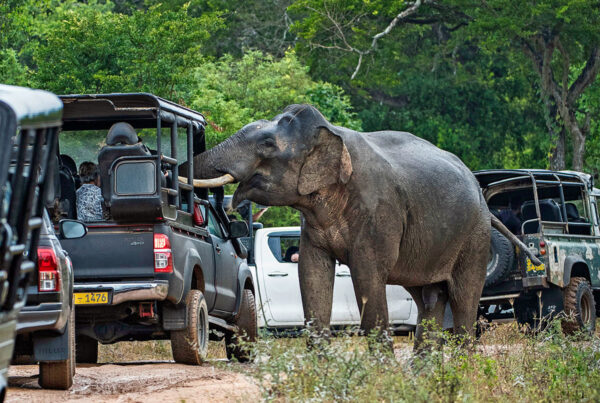
Forest elephant inhabits Semuliki National Park and signs of elephant activity including dung and footprints are common near the park trails. Actual elephant sightings are less predictable and tend to occur in the early morning. African buffalo inhabits the forest interior and occasionally the forest edges near the hot springs trail. The mammal list at Semuliki concentrates on forest species absent from Uganda’s savanna and montane parks. This complements the western Uganda safari circuit for visitors who want Congo Basin mammals alongside the Rwenzori and Kibale species.
Plan Your Safari
Semuliki hot springs and Semuliki National Park work best as a one to two night extension to a western Uganda safari based from Fort Portal. The drive from Fort Portal to Ntandi, the park’s main access point, takes two to two and a half hours. Budget one night at a park-edge lodge to allow a full birding morning on the Batoro Trail and an afternoon hot springs visit. Combine Semuliki with Fort Portal, Kibale, and the crater lakes for the complete western Uganda circuit.
African Wild Trekkers includes Semuliki hot springs and national park birding in specialist Uganda birding itineraries and western Uganda safari circuits. We book birding guides in advance and design Semuliki visits that target Congo Basin specialities alongside the hot springs and primate experiences.
Contact African Wild Trekkers to include Semuliki hot springs in your Uganda safari. We respond within 24 hours and design a western Uganda itinerary that makes the most of this exceptional and rarely visited corner of the country.