Bigodi Wetland Sanctuary: Community Conservation Beside Kibale Forest
Bigodi Wetland Sanctuary is one of Uganda’s most celebrated community-run conservation and ecotourism projects. The sanctuary sits on the boundary of Kibale National Park in western Uganda. This papyrus and forest swamp covers approximately 4.5 square kilometers and supports exceptional wildlife diversity. The Kibale Association for Rural and Environmental Development, known as KAFRED, manages the Bigodi wetland sanctuary entirely at the community level. KAFRED uses tourism revenue to fund schools, health services, and environmental education in the Bigodi village area. This direct link between conservation and community benefit defines what makes the sanctuary genuinely special.
Bigodi wetland sanctuary attracts dedicated birders from across the world who combine it with Kibale National Park chimpanzee trekking. The sanctuary’s papyrus beds, forest patches, and open marsh create a habitat mosaic supporting over 200 recorded bird species. Eight primate species inhabit the sanctuary, including the striking red colobus monkey, Bigodi’s most photographed resident. The walking trail through the sanctuary takes two to three hours and covers the most productive sections for both birds and primates. No other small community reserve in Uganda delivers comparable wildlife diversity per hour of walking time.
Birding at Bigodi Wetland Sanctuary
Papyrus Specialist Birds of Bigodi
Bigodi Wetland Sanctuary is one of Uganda’s most reliable sites for papyrus specialist bird species. The papyrus yellow warbler inhabits the dense papyrus beds and calls persistently but requires patience to observe above reed level. The white-winged warbler is another papyrus endemic that occurs in the Bigodi swamp margins. The papyrus gonolek is a brilliantly colored and vocal species that perches up in the papyrus canopy regularly throughout the morning. This trio of papyrus specialists makes Bigodi a must-visit site for any serious Albertine Rift birder.
Carruthers’s cisticola skulks in the lower papyrus and reed margins at the Bigodi wetland sanctuary. This specialized cisticola has a restricted Albertine Rift range, and Bigodi is one of its most accessible Uganda locations. Blue-headed coucal and black-headed lapwing inhabit the open marsh sections between papyrus stands. An African jacana walks across floating vegetation on open water areas near the trail. The combination of papyrus specialists, open water birds, and forest edge species at Bigodi makes it exceptional value for a two-hour walk.
Forest Birds of Bigodi Wetland Sanctuary
The forest patches bordering the Bigodi wetland sanctuary support a rich community of forest birds. The great blue turaco is conspicuous and loud in the canopy and is one of the first species most visitors photograph at Bigodi. Hairy-breasted barbet and yellow-rumped tinkerbird are common in the mixed forest sections. The black-and-white casqued hornbill calls loudly from the forest canopy throughout the morning. The African emerald cuckoo and yellow-billed barbet inhabit the middle story of the taller forest patches adjacent to the swamp.
Kingfisher diversity at Bigodi wetland sanctuary is impressive for a small freshwater site. The malachite kingfisher perches on low vegetation above water margins. The giant kingfisher patrols the deeper channels and open water sections. The African pygmy kingfisher inhabits the forest edge close to the papyrus. Pied kingfisher hovers over open water areas throughout the sanctuary morning. Seeing four kingfisher species on a single Bigodi walk is an exceptional concentration for such a compact site.
Primates at Bigodi Wetland Sanctuary
Red Colobus at Bigodi
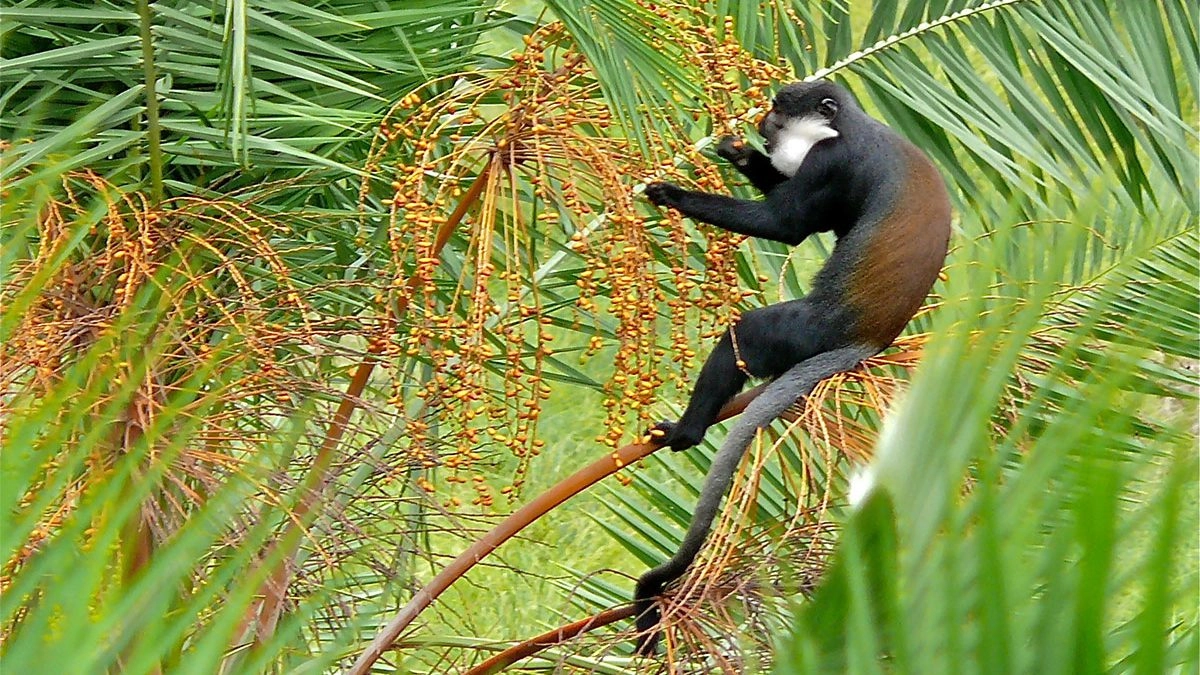
The red colobus monkey is the signature primate of the Bigodi Wetland Sanctuary. Large troops of 30 to 100 individuals move through the forest canopy between the sanctuary and the Kibale park edge. Troops appear reliably in the Bigodi area throughout the year. The Ugandan red colobus is visually striking with its chestnut back and pale underparts. The sound of a large red colobus troop crashing through the canopy above the trail is one of Bigodi’s most exciting wildlife moments. Guides can predict troop movements based on recent sighting records, which significantly improves encounter probability.
Eight primate species inhabit the Bigodi wetland sanctuary and its immediate surroundings. Black-and-white colobus, red-tailed monkey, grey-cheeked mangabey, L’Hoest’s monkey, olive baboon, blue monkey, and vervet monkey all occur alongside the red colobus. Chimpanzee visits from Kibale National Park are documented but infrequent. The primate diversity at Bigodi is one of the highest of any small community reserve in Africa. A morning walk at Bigodi can produce five or more primate species without entering the main Kibale park.
Community Benefit at Bigodi Wetland Sanctuary
KAFRED reinvests guide fees, entry charges, and craft sales directly into Bigodi village community projects. Sixteen permanent guides work at the sanctuary and provide livelihoods for sixteen families. Each guide receives ongoing training in bird identification, primate ecology, and visitor management. Their knowledge and enthusiasm for the sanctuary’s wildlife consistently impress visiting birders and naturalists. The KAFRED model demonstrates that community ownership of tourism creates more durable conservation outcomes than external management approaches.
The Bigodi Women’s Group operates a craft shop and cultural program adjacent to the sanctuary entrance. Visitors can purchase locally made crafts and engage with cultural demonstration activities between the morning and the and the wildlife walk. The women’s group income supplements the KAFRED community fund and has financed construction of a community health clinic in the village. Spending time and money at Bigodi wetland sanctuary creates a direct and traceable positive impact on the surrounding community’s quality of life.
Plan Your Safari
Visit Bigodi Wetland Sanctuary as a half-day activity on the same day as a Kibale National Park chimpanzee trek.A morning chimp trek combined with an afternoon Bigodi walk makes a full and varied western Uganda wildlife day. Book the Bigodi specialist bird guide in advance through KAFRED at the sanctuary entrance or through your safari operator. Afternoon walks are equally productive for primates if mornings are taken by chimp tracking at Kibale.
African Wild Trekkers includes the Bigodigodi wetland sanctuary as a standard component of every Kibale National Park itinerary. We book specialist bird guides in advance and pair the sanctuary visit with afternoon crater lake walks for clients who want maximum biodiversity from their Kibale days.
Contact African Wild Trekkers to include the Bigodi Wetland Sanctuary in your western Uganda safari. We respond within 24 hours and build an itinerary that combines the sanctuary’s community birding experience with Kibale chimp trekking and the Fort Portal crater lakes circuit.