Uganda Crater Lakes: The Volcanic Highland Scenery of Fort Portal
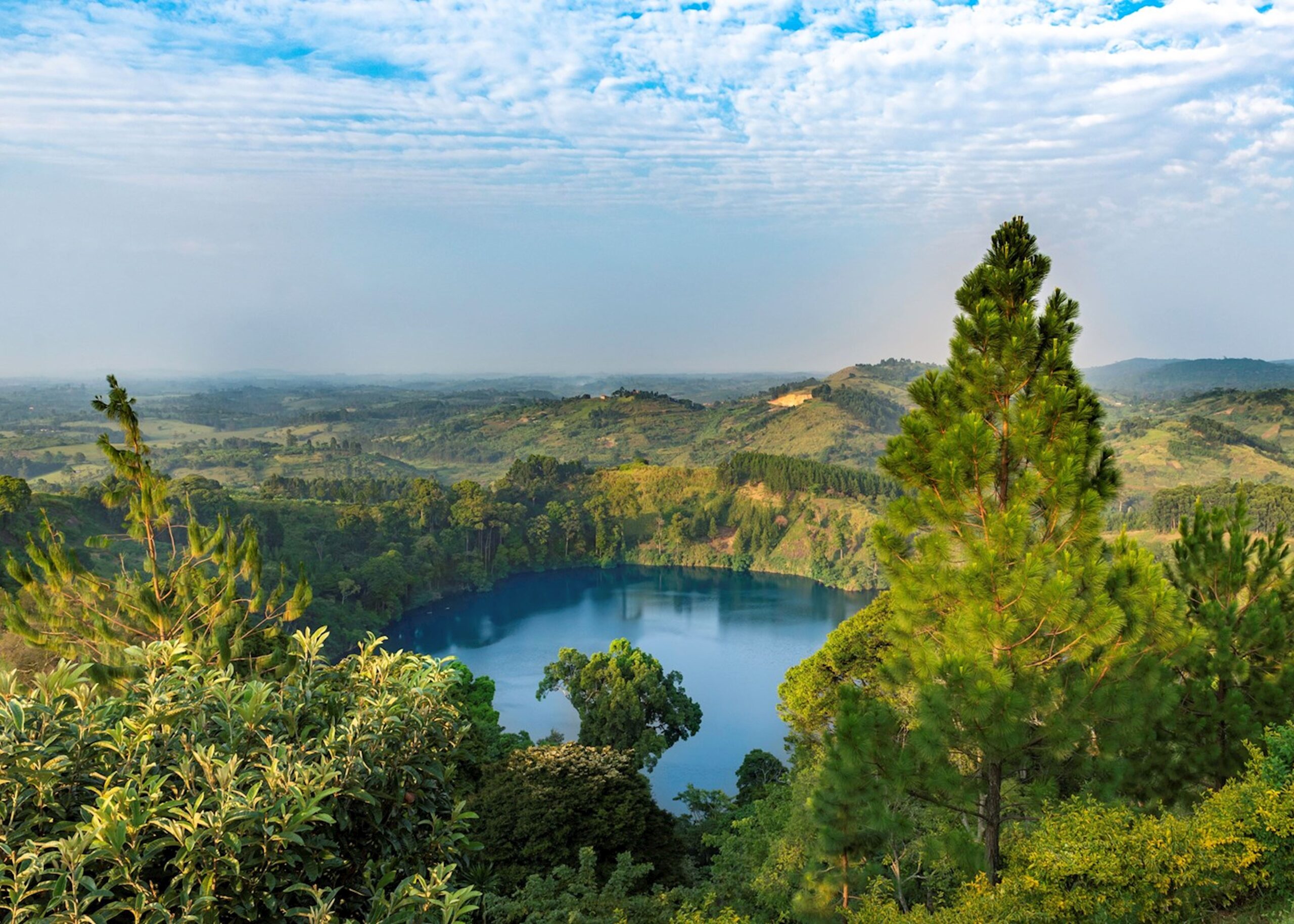
Uganda crater lakes are among the most striking landscape features in East Africa. More than 50 volcanic craters filled with brilliantly coloured lakes dot the hills and valleys between Fort Portal and the Queen Elizabeth National Park boundary. Uganda crater lakes range from small, deep blue pools to broad shallow basins tinted green by algae. Each lake occupies a distinct volcanic crater of a different age, depth, and mineral composition. The colour variation between adjacent lakes reflects these geological differences in a way that aerial photographs capture brilliantly. Ground-level views from the crater rims are equally dramatic in the late afternoon light.
The Uganda crater lakes region covers roughly 200 square kilometres of highland landscape at elevations between 1,000 and 1,600 metres. Tea estates and subsistence farms surround most of the Uganda crater lakes and integrate the volcanic landscape into the working agricultural identity of the Fort Portal area. The combination of green hills, dramatic crater rims, and vividly coloured lake surfaces creates a visual experience unlike any other region in East Africa. Sunrise and sunset from the crater rims produce extraordinary light effects across the water surfaces below.
Exploring the Uganda Crater Lakes
Driving the Uganda Crater Lakes Circuit
The crater lakes circuit south of Fort Portal links the most accessible Uganda crater lakes in a half-day or full-day driving tour. Nyinambuga, Nkuruba, Nyabikere, and Kasenda crater lakes are all reachable on unpaved roads within 30 kilometres of Fort Portal. Each lake provides a different vista and a different experience of the volcanic landscape. The drive between lakes passes through banana and tea plantations with regular Rwenzori Mountain views in clear weather. Stopping at each lake rim for 20 to 30 minutes delivers the most rewarding photographic perspectives on the circuit.
A knowledgeable local guide significantly enhances the Uganda crater lakes circuit. The different colours of the lakes reflect variations in salinity, algae type, and depth. Some lakes support community fishing, others serve as livestock watering points, and a few remain unused because of extreme salinity. The guide explains these distinctions and identifies the most productive birdwatching positions at each stop along the route. Without a guide, the geological and cultural context of the lakes remains largely invisible to the visitor.
Canoe Trips on Uganda Crater Lakes
Several Uganda crater lakes offer guided canoe trips that deliver a water-level perspective unavailable from the rim. Lake Nyabikere near Kibale National Park supports a community canoe programme for visitors crossing the crater lake surface. The canoe experience brings visitors into close contact with the lake’s waterbird community. Kingfishers, herons, cormorants, and fish eagles all appear at close range from the canoe seat. The steep crater walls visible from the water surface amplify the volcanic character of the lake dramatically.
The Nkuruba Community Campsite beside Lake Nkuruba is one of the most popular Uganda crater lakes canoe destinations. This community-managed site offers canoes, guides, and basic accommodation on the lake rim. Resident troops of L’Hoest’s monkey and black-and-white colobus at Nkuruba are an additional wildlife attraction alongside the canoe activity. Waking to the sound of colobus calling across the crater lake is one of western Uganda’s most atmospheric dawn experiences. The campsite income supports community conservation work in the crater lake buffer area.
Wildlife Around Uganda Crater Lakes
Birds of the Uganda Crater Lakes
The Uganda crater lakes and their surrounding vegetation provide habitat for a rich bird community. African fish eagle perches at virtually every lake that supports fish. Great blue turaco moves through forest patches connecting the crater lake rims. Papyrus-associated species including papyrus gonolek and white-winged warbler inhabit the swampy lake margins. Yellow-billed duck and red-knobbed coot float on the open water surfaces. A full Uganda crater lakes circuit can produce 80 to 120 bird species in one day of careful observation.
Forest patches on the steeper crater walls at some Uganda crater lakes shelter species not easily found in the surrounding agricultural landscape. Blue-breasted kingfisher inhabits dense streamside vegetation near lake outflows. Narina trogon and African pygmy kingfisher occur in the thicker forest sections near Nkuruba and Kyaninga lakes. Black-and-white casqued hornbill is conspicuous and loud in the forest canopy at several lake sites. Birders combining the Uganda crater lakes with Kibale National Park record impressive species lists across both destinations.
Primates at the Uganda Crater Lakes
Several Uganda crater lakes host resident primate troops habituated to visitor presence over many years of community tourism activity. L’Hoest’s monkey is the most distinctive primate of the crater lake forest patches and reliably appears at Nkuruba. Black-and-white colobus inhabits the taller forest on crater slopes at multiple sites. Olive baboon troops forage in the farmland surrounding many Uganda crater lakes and regularly appear from the road. Red-tailed monkey inhabits the denser forest sections near Kibale National Park.
The Bigodi Wetland Sanctuary, located just south of the Uganda crater lakes area near Kibale, adds further primate diversity to the circuit. Red colobus monkey is most reliably found at Bigodi alongside the crater lake primates. Combining a morning crater lake drive with an afternoon Bigodi wetland walk creates a full-day primate and community tourism experience. This combination maximises wildlife diversity and community tourism income across the Kibale-Fort Portal landscape in a single well-structured day.
Plan Your Safari
A Uganda crater lakes circuit works best as a half-day or full-day add-on to a Fort Portal base during a western Uganda safari. Allocate one day for the southern crater lakes drive and canoe trip at Nkuruba, and combine this with Kibale chimpanzee trekking on adjacent days. The crater lakes circuit requires a vehicle with moderate ground clearance on unpaved sections between lakes. Book a local guide in advance through Fort Portal-based operators for the most informative experience.
African Wild Trekkers includes the Uganda crater lakes in western Uganda safari itineraries combining Fort Portal, Kibale, Queen Elizabeth National Park, and Bwindi Impenetrable Forest. We design crater lake excursions as structured day programmes with community canoe bookings, local guide arrangements, and birdwatching positions built in from the start.
Contact African Wild Trekkers to include Uganda crater lakes in your western Uganda safari. We respond within 24 hours and build itineraries that make the most of Fort Portal’s exceptional concentration of wildlife, landscape, and cultural experiences.