Rwanda Akagera Birding: 500+ Species in East Africa’s Savanna
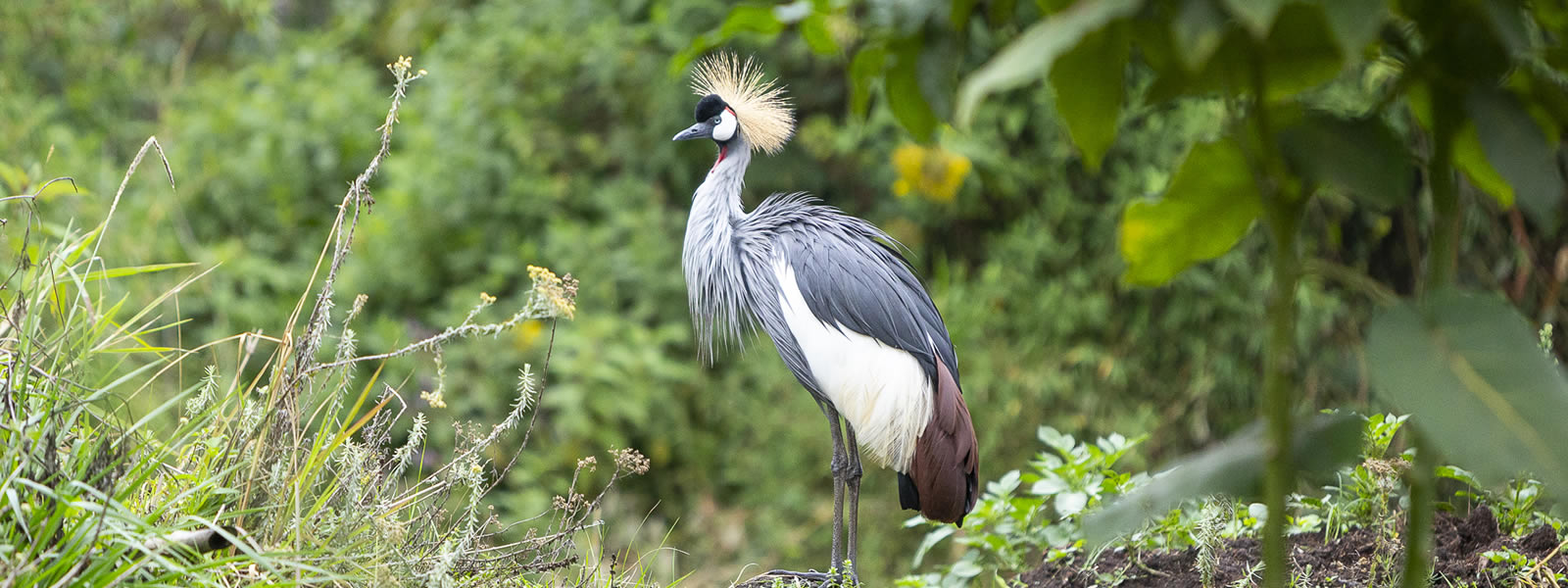
Akagera National Park is one of East Africa’s premier birding destinations. The park’s diverse habitats, including open savanna, papyrus swamps, open-water lakes, and riverine woodland, support more than 500 recorded bird species. This habitat mosaic creates one of the most species-rich birding environments in Rwanda. Serious birders who combine Akagera with Nyungwe Forest and Volcanoes National Park can record an extraordinary total for a compact country visit.
Akagera’s bird diversity reflects its position at the intersection of East African savanna species and Central African forest and wetland species. Species from both biogeographic zones occur here. The result is a bird list that includes familiar East African species alongside more unexpected Central African records that are difficult to find elsewhere in the region.
Wetland and Water Species
The shoebill stork is Akagera’s most sought-after bird target. This massive, prehistoric-looking waterbird inhabits the papyrus swamps along the park’s eastern lakes. It is one of Africa’s most celebrated and most challenging birds to find. Akagera’s papyrus areas hold a reliable shoebill population. Early morning boat trips on the lakes provide the best access to the swamp edges where shoebills hunt.
The Africanican fish eagle is abundant throughout Akagera’s lake system. Their distinctive call is one of the defining sounds of the park’s lakeside habitats. Giant kingfisher, malachite kingfisher, pied kingfisher, and half-collared kingfisher all occur along the park’s water bodies. The kingfisher diversity at a single lakeshore viewpoint can be extraordinary in Akagera. Four or five species within a short section of lakebank is typical for an attentive morning observer.
The papyrus swamps support specialist species, including the papyrus yellow warbler, white-winged warbler, and papyrus gonolek. These swamp specialists require papyrus habitat and are restricted in Rwanda to Akagera’s extensive swamp systems. Boat access to the swamp edges is essential for finding these target species. The park’s boat trips on Lake Ihema give the most productive access to the papyrus birding in Akagera.
Savanna and Woodland Species
The open savanna sections of Akagera support classic East African savanna birds. The lilac-breasted roller is abundant and conspicuous throughout the savanna, perching on exposed branches and fence posts. Red-and-yellow barbet, white-headed buffalo weaver, and D’Arnaud’s barbet all occur in the drier thornbush zones. Ostriches forage in the most open grassland sections in the south of the park.
The secretary bird is found in Akagera’s open grassland. This large raptor walks through the grass searching for snakes and other prey. Its distinctive plumes and upright posture make it unmistakable in the field. White-backed vultures soar over the savanna in substantial numbers. Lappet-faced vulture and Rüppell’s vulture also occur in the park.
The riverine woodland along the Akagera River and the lake margins supports a different bird community from the open savanna. The grey-backed camaroptera, white-browed robin-chat, African paradise flycatcher, and numerous warbler species occur in the riverine thickets. The transition zones between savanna and woodland are particularly productive for variety during early morning birding walks and drives.
Planning an Akagera Birding Visit
A dedicated Akagera birding visit requires a minimum of two nights to cover the main habitats adequately. Three nights allow morning and afternoon drives in the savanna, a boat trip on the lakes, and a dawn walk in the riverine woodland. That combination gives thorough coverage of the park’s main bird habitats.
Early morning is the most productive birding period in Akagera. Birds are most active in the two hours after dawn. The lake boat trips also work best in the early morning before the wind picks up and before the shoebill retreats from exposed positions. Booking a boat trip for the first morning of any Akagera visit gives the best shoebill encounter probability.
Plan Your Akagera Birding Safari
Akagera birding combines naturally with the park’s big game experience. Birding from the game drive vehicle alongside the mammal watching creates a highly productive two-in-one safari day. A dedicated boat trip adds the wetland dimension that the drive-based birding cannot access. Two to three nights covers both dimensions adequately for a comprehensive Akagera birding visit.
African Wild Trekkers designs Rwanda birding safari itineraries that cover Akagera’s wetlands and savanna alongside Nyungwe Forest and Volcanoes National Park. Contact us to plan a Rwanda birding safari that targets the country’s full species diversity across its three main birding ecosystems.