Grey Crowned Crane Uganda: The National Bird in Its Natural Home
Grey crowned crane Uganda occupies a special position in the country’s wildlife identity as Uganda’s national bird. The grey crowned crane Uganda appears on the Ugandan national coat of arms and flag, reflecting its deep cultural and natural significance. Uganda’s wetlands, grasslands, and national parks support a large and healthy grey crowned crane population. Grey crowned crane Uganda pairs and family groups live throughout the country at altitudes from 0 to 3,000 metres. The species is currently listed as Endangered globally due to habitat loss and the illegal pet trade in other parts of Africa. Uganda’s grey crowned crane population remains relatively healthy due to the country’s extensive wetland protection.
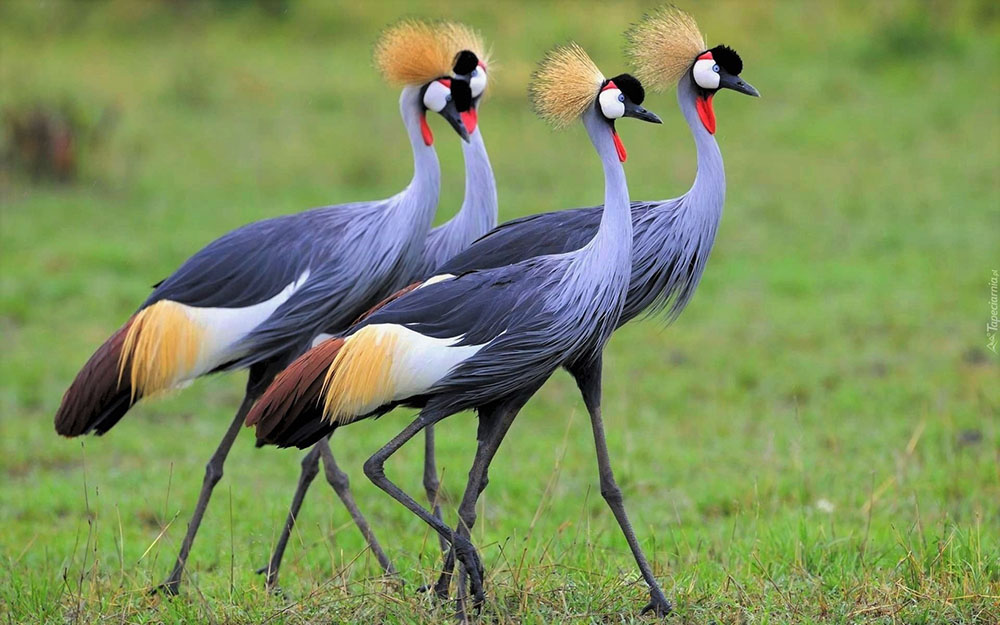
Grey crowned crane Uganda is immediately recognisable from any distance by its brilliant golden crown of stiff feathers. The red gular pouch inflates during calling and display behaviour. White and red facial patches frame the head with distinctive contrast. Grey crowned crane Uganda stands 100 centimetres tall and has a wingspan exceeding two metres. The species calls with a loud, resonant honking that carries far across wetland habitats. Uganda visitors frequently hear grey crowned crane Uganda before they see it flying overhead with long necks extended.
Where to Find Grey Crowned Crane Uganda
Grey Crowned Crane Uganda in National Parks
Queen Elizabeth National Park holds one of Uganda’s most accessible grey crowned crane Uganda populations. Open grassland in the Kasenyi plains hosts resident pairs throughout the year. Grey crowned crane Uganda pairs display and breed in the wetland margins of the Kazinga Channel. Lake Mburo National Park also holds a reliable and well-habituated grey crowned crane Uganda population. The open grassland sections of Lake Mburo provide easy observation of foraging pairs and family groups. Murchison Falls North Bank holds grey crowned crane Uganda in the grassland sections near water sources.
Grey crowned crane Uganda are most visible in the early morning when pairs move from roost trees to grassland feeding areas. The flight call of grey crowned crane Uganda reveals the bird as it passes overhead before it lands in the grassland. Family groups of three to five birds occur from October to January when young have recently fledged. These family groups with juveniles provide the most complete grey crowned crane Uganda behavioural observation. Young birds carry brownish head coloration rather than the fully developed golden crown of the adult grey crowned crane Uganda.
Grey Crowned Crane Uganda in Wetlands
Uganda’s papyrus wetlands provide the most important breeding habitat for grey crowned crane Uganda. The Lutembe Bay wetland near Entebbe is a designated grey crowned crane Uganda Important Bird Area. Mabamba Swamp near Entebbe holds nesting grey crowned cranes in the papyrus and grass margins. Lake Bunyonyi in southwestern Uganda holds a significant grey crowned crane Uganda population in its swamp margins. Visiting any major Uganda wetland during the morning hours produces a grey crowned crane Uganda encounter in most cases. The species concentrates at wetland edges at dawn before dispersing to adjacent grassland for the morning feeding period.
Grey crowned crane Uganda nests in tall grass or papyrus reed stands near open water. The nest is a large grass platform built at or near water level. Both parents incubate a clutch of two to five eggs over 30 days. Chicks leave the nest within hours of hatching and follow the parents into the grassland. Family groups maintain contact through quiet contact calls distinct from the loud territorial honking. Observing grey crowned crane Uganda family groups with small, striped chicks in the wetland edge is one of Uganda’s most charming wildlife experiences.
Grey Crowned Crane Uganda Conservation
Threats to Grey Crowned Crane Uganda
Grey crowned crane Uganda faces threats from wetland drainage, habitat loss, and illegal capture for the pet trade. The illegal pet trade captures wild chicks for sale to private collectors inside and outside Uganda. Uganda Wildlife Authority enforcement reduces but does not eliminate this trade pressure. Wetland drainage for agriculture reduces the breeding habitat available to grey crowned crane Uganda in the farming landscape. Community education programmes near key grey crowned crane Uganda wetland sites build local protection attitudes. The long-term future of grey crowned crane Uganda depends on maintaining Uganda’s existing wetland systems and strengthening enforcement against wildlife trafficking.
The grey crowned crane Uganda population within national parks is effectively protected by park status and ranger presence. The national park populations at Queen Elizabeth and Lake Mburo are stable and breeding successfully. Wetland grey crowned crane Uganda populations outside protected areas are more vulnerable to disturbance and capture. The Crested Crane Conservation Project manages community education and nest monitoring programmes for grey crowned crane Uganda outside the parks. Supporting community tourism projects near grey crowned crane Uganda wetland sites contributes to local conservation incentives.
Photographing Grey Crowned Crane Uganda
Grey crowned crane Uganda is one of Uganda’s most photographed bird species due to its spectacular appearance and accessible habitat. The open grassland habitat at Queen Elizabeth and Lake Mburo allows vehicle approach to within 30 to 50 metres. At this range a 300mm telephoto lens produces frame-filling grey crowned crane Uganda portraits. The golden crown, red gular pouch, and white facial patches provide exceptional colour contrast for photography. Early morning light on grey crowned crane Uganda in open grassland delivers the warmest colour tones. Backlit grey crowned crane Uganda in flight against a sunrise sky creates a very dramatic Uganda wildlife image.
Dancing display behaviour is the most spectacular grey crowned crane Uganda photography opportunity. Pairs display by jumping, wing spreading, and bowing in an elaborate coordinated performance. Display occurs most frequently at the beginning and end of the breeding season in March to May and August to October. Photographing display requires patience at known pair territories rather than following the bird. A telephoto lens of 400mm or longer allows comfortable photography from the vehicle without disturbing the displaying birds. Grey crowned crane Uganda display photography is one of Uganda’s finest wildlife photography opportunities for any visitor with a long lens.
Plan Your Safari
Include a Queen Elizabeth or Lake Mburo visit for reliable grey crowned crane Uganda grassland encounters. Add a dawn boat on the Kazinga Channel for the crane family group experience at the water edge. Visit Mabamba Swamp near Entebbe at the start or end of the safari for wetland-nesting grey crowned crane Uganda observation.
African Wild Trekkers includes grey crowned crane Uganda encounters in all Uganda safari itineraries. We position clients at the most reliable morning grassland sites and include Kazinga Channel boat trips for the water edge crane experience at Queen Elizabeth National Park.
Contact African Wild Trekkers to include grey crowned crane Uganda in your safari. We respond within 24 hours and design itineraries that access Uganda’s national bird in its finest grassland, wetland, and national park settings.