Shaba National Reserve: Joy Adamson’s Last Home in Kenya’s Arid North
Shaba National Reserve covers 239 square kilometers of striking volcanic and spring-fed terrain in northern Kenya. This reserve sits adjacent to Samburu and Buffalo Springs as part of the northern Kenya wildlife cluster. Shaba National Reserve is famous as the location where Joy Adamson was raising Penny the leopard before her murder in 1980. The reserve’s extraordinary desert spring system creates a productive wildlife habitat in an otherwise arid landscape. Shaba National Reserve holds the special five northern species that distinguish this cluster from southern Kenya’s parks. The volcanic Mount Shaba dominates the landscape and gives the reserve its name.
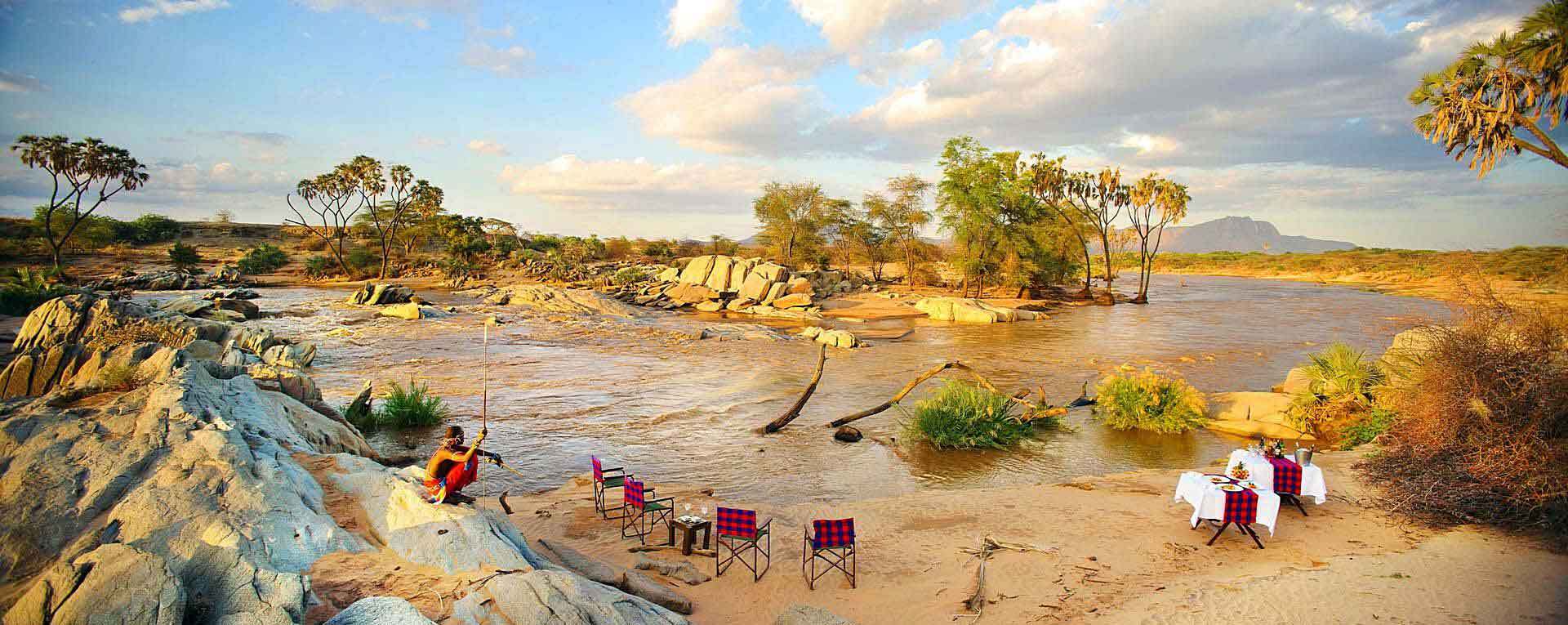
Shaba National Reserve occupies the eastern section of the Samburu ecosystem. The Ewaso Ng’iro River flows through Shaba National Reserve along its southern boundary. This perennial river is the lifeblood of the Shaba National Reserve wildlife community. Springs emerging from the lava flows at the base of Mount Shaba create permanent water sources across the reserve interior. These springs feed palm groves and dense riverine forest patches that attract wildlife throughout the dry season. Shaba National Reserve visitors often find it less crowded than adjacent Samburu National Reserve.
Shaba National Reserve Wildlife
Special Five at Shaba National Reserve
The reticulated giraffe is the most conspicuous large mammal at Shaba National Reserve. Its bold geometric pattern distinguishes it from the Maasai giraffe of southern Kenya. Reticulated giraffe graze along the Ewaso Ng’iro River banks and the Shaba National Reserve interior palm groves. Grevy’s zebra inhabits the open grassland of Shaba National Reserve alongside the Ewaso Ng’iro River floodplain. This endangered zebra has a narrow, closely spaced stripe pattern very different from the common plains zebra. Beisa oryx tolerates the arid interior of Shaba National Reserve more than any other large antelope in the ecosystem.
The gerenuk is the fourth of five special species at Shaba National Reserve. This long-necked antelope browses, standing on its hind legs, at acacia and commiphora shrubs throughout the reserve. The Somali ostrich is the fifth of the Special Five species and inhabits the open, dry terrain at Shaba National Reserve. These five exclusive northern Kenya species together create the Shaba National Reserve’s primary wildlife distinction from any southern Kenya safari. All five can be recorded in a single productive game drive through the reserve interior and along the Ewaso Ng’iro riverbank.
Predators at Shaba National Reserve
Lion prides at Shaba National Reserve hunt along the Ewaso Ng’iro River and at the spring-fed palm groves. The Shaba National Reserve lion population benefits from the high prey density at the river and springs. Leopards are regularly encountered at Shaba National Reserve in the riverine forest and rocky volcanic terrain. Cheetahs inhabit the open grassland sections and produce some of Shaba National Reserve’s most exciting predator encounters. Wild dog packs occasionally pass through Shaba National Reserve on their large-ranging circuits. Spotted hyena clans inhabit the reserve in healthy numbers and are regularly encountered on dawn and dusk drives.
Crocodiles inhabit all permanent water sections of Shaba National Reserve. The Ewaso Ng’iro River holds large crocodile populations at the crossing points used by wildlife. Watching reticulated giraffe and Grevy’s zebra navigate a crocodile-inhabited river crossing at Shaba National Reserve is one of the reserve’s most dramatic wildlife events. Hippos inhabit the deeper Ewaso Ng’iro pools within Shaba National Reserve. The spring-fed pools deeper in the reserve also hold smaller groups of hippo year-round. These water-dependent Shaba National Reserve mammals concentrate the predator and prey interactions at each permanent water source.
Shaba National Reserve Practical Information
Accommodation at Shaba National Reserve
Joy’s Camp is the flagship accommodation at Shaba National Reserve. This luxury tented camp sits beside the Ewaso Ng’iro River at the spring location where Joy Adamson worked. Joy’s Camp at Shaba National Reserve provides 10 luxury tents with private terraces overlooking the river. The camp is named in direct honor of Joy Adamson’s conservation legacy at Shaba National Reserve. Sarova Shaba Garden Resort is the second main accommodation option. This larger resort property sits at the Shaba National Reserve main springs with a unique pool fed by the natural spring system. Both properties provide game drives and guided walks within Shaba National Reserve.
Shaba National Reserve combines efficiently with Samburu and Buffalo Springs on a three-park northern Kenya circuit. The three reserves share the Ewaso Ng’iro River and form a single ecosystem despite separate reserve boundaries. A Shaba National Reserve visit of two nights complements two nights each at Samburu and Buffalo Springs for the most complete northern Kenya circuit. Game drives crossing between all three reserves on a single day are possible with appropriate crossing permits. This multi-reserve Shaba National Reserve approach delivers the widest possible species diversity across the full northern Kenya ecosystem.
Getting to Shaba National Reserve
Shaba National Reserve is accessible by charter flight from Nairobi Wilson Airport to the Samburu airstrip. The flight takes approximately one hour. Road access from Nairobi via Isiolo to the Shaba National Reserve gate takes approximately five to six hours. The last 60 kilometers of road from Isiolo to Shaba National Reserve are unpaved and require a 4WD vehicle. Most Shaba National Reserve visitors fly in to save the rough-road section’s travel time. Driving from Nairobi suits visitors incorporating Shaba National Reserve into a wider northern Kenya expedition combining Marsabit and Lake Turkana.
The best time to visit Shaba National Reserve is the dry season from July to October and January to March. Dry season Shaba National Reserve game drives produce the most concentrated wildlife at the river and spring water sources. The wet season from April to June brings heavy rain that makes Shaba National Reserve game drive tracks very difficult. Vegetation growth during the rains also reduces wildlife visibility across the Shaba National Reserve open terrain. A dry-season Shaba National Reserve visit reliably produces all five special species plus the predator and river wildlife community within two to three game drive days.
Plan Your Safari
Plan two nights at Shaba National Reserve as part of a three-reserve northern Kenya circuit with Samburu and Buffalo Springs. Book Joy’s Camp for the most atmospheric Shaba National Reserve stay at the historical Joy Adamson spring location. Fly from Nairobi Wilson Airport to save the rough-road journey and maximize game drive time.
African Wild Trekkers designs Shaba National Reserve itineraries as part of the Northern Kenya Special Five circuit. We book Joy’s Camp and Sarova Shaba, arrange charter flights, and design three reserve game drive programs that cover all the Shaba National Reserve Special Five species.
Contact African Wild Trekkers to include Shaba National Reserve in your northern Kenya safari. We respond within 24 hours and design complete Northern Kenya circuits that access the special wildlife of the Ewaso Ng’iro ecosystem.