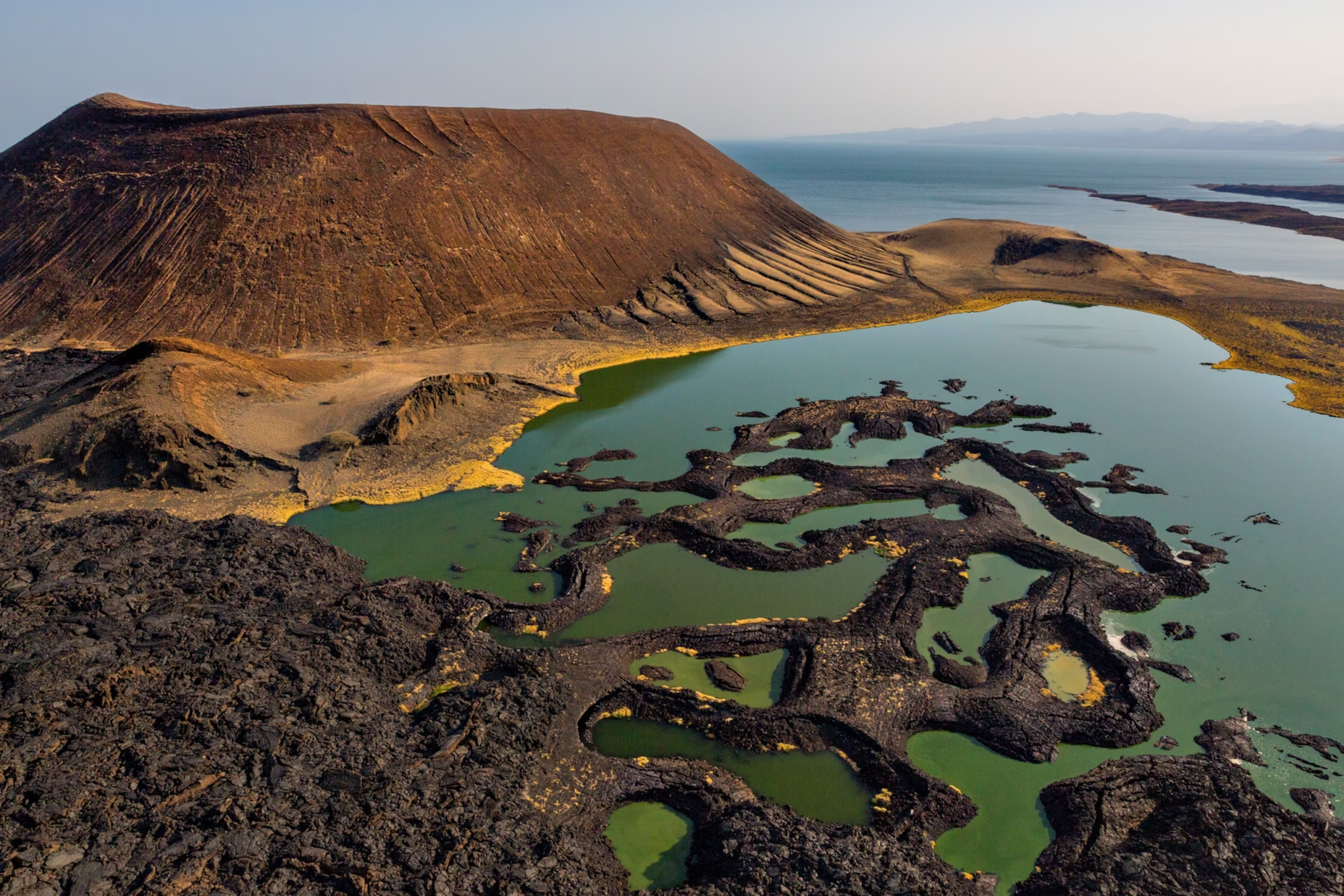
Lake Turkana Jade Sea: The World’s Largest Desert Lake
Lake Turkana, often called the Jade Sea, ranks among Africa’s most extraordinary natural wonders. Its striking green colour comes from blue-green algae that flourish in the lake’s alkaline waters. Covering 6,405 square kilometres, the lake stretches across northern Kenya’s dramatic desert landscape at 360 metres above sea level. Three volcanic islands rise from its surface, while Central Island National Park protects one of Africa’s largest Nile crocodile breeding colonies. UNESCO also recognises the lake for its geological, ecological, and archaeological importance.
The Omo River in Ethiopia supplies around 90 percent of the lake’s water and carries nutrients that sustain the algae responsible for its vivid colour. Since the lake has no outlet, evaporation remains its only means of losing water, creating slightly alkaline conditions. These waters support specialised fish species, including tilapia. Meanwhile, the Turkana and El Molo communities have depended on the lake’s resources for thousands of years despite its harsh environment.
Wildlife at Lake Turkana
Nile Crocodiles
Central Island National Park supports Africa’s densest breeding population of Nile crocodiles. Three volcanic crater lakes provide ideal nesting habitat for more than 12,000 crocodiles. During the breeding season, visitors often see crocodiles covering large sections of the shoreline. Consequently, a visit to Central Island offers one of the continent’s most remarkable wildlife experiences. Reaching the island usually requires a two- to three-hour boat journey across the open waters of Lake Turkana.
The wider lake supports an estimated 14,000 crocodiles, making caution essential near the shoreline. Fishing villages and campsites remain constantly alert because crocodiles frequently patrol shallow waters. However, local El Molo fishermen safely navigate these conditions by applying generations of traditional knowledge about crocodile behaviour. Their experience demonstrates how people and wildlife have coexisted along the lake’s shores for centuries.
Flamingos and Birdlife
The southern reaches of Lake Turkana, especially around Ferguson’s Gulf, attract large numbers of flamingos. Although populations vary each year, peak numbers can exceed 100,000 birds. Lesser flamingos feed on algae thriving in the alkaline water, creating spectacular displays of pink against the lake’s distinctive green surface. Photographers achieve the best results by using telephoto lenses from boats or carefully positioned vehicles.
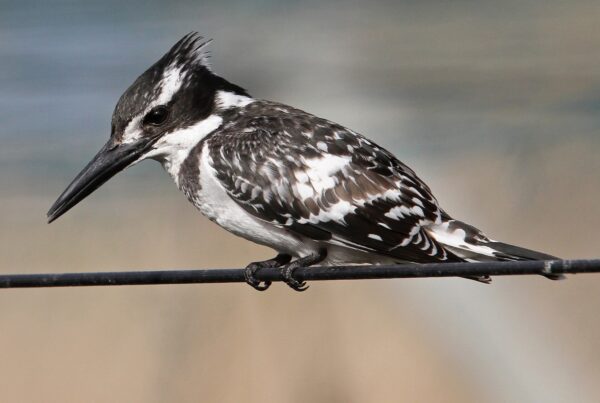
In addition to flamingos, the lake supports African skimmers, pink-backed pelicans, African fish eagles, and many other waterbirds. The remote northern shoreline near Ileret protects an important African skimmer breeding colony. Birdwatchers often visit this region to observe the birds gliding across the water while catching fish. Altogether, roughly 350 bird species make Lake Turkana one of Kenya’s most rewarding birding destinations.
Archaeology Around Lake Turkana
Koobi Fora
Koobi Fora, on the eastern shore, ranks among the world’s most significant palaeontological sites. During the 1960s and 1970s, Richard Leakey’s research team uncovered fossils of Homo rudolfensis and Homo ergaster, transforming our understanding of human evolution. Today, the Koobi Fora Research Project continues this work, while the site museum displays fossil casts and explains the region’s extraordinary archaeological discoveries.
The surrounding sediments preserve nearly four million years of evolutionary history. Wind and erosion continually expose new fossils across the desert landscape, making each visit unique. Guided walks with researchers sometimes reveal newly uncovered fossil material, offering visitors an exceptional educational experience. Standing where some of humanity’s earliest ancestors once lived gives the surrounding wilderness remarkable historical significance.
Visiting Lake Turkana
Most visitors reach Lake Turkana by charter flight from Nairobi’s Wilson Airport to Loiyangalani in about 90 minutes. Although road access remains possible, the overland journey from Maralal usually takes two or three days across rough desert tracks. Loiyangalani serves as the main visitor hub, while Eliye Springs provides a more comfortable base for exploring the lake. Additional flights or boat transfers connect travellers with Ileret, Koobi Fora, and Central Island.
The lake’s weather remains hot and demanding throughout the year. Strong afternoon winds often generate large waves that make boat travel difficult, so most crossings begin before 9:00 a.m. Visitors should carry plenty of drinking water, wear protective clothing, and apply high-factor sunscreen. Nevertheless, these challenging conditions contribute to the region’s unforgettable sense of isolation and adventure.
Plan Your Safari
Spend at least three or four nights exploring Lake Turkana to experience Central Island, Ferguson’s Gulf, and the Koobi Fora fossil sites. Because accommodation and transport options remain limited, booking well in advance is essential. Many travellers also combine Lake Turkana with Samburu and the Matthews Range to create a comprehensive northern Kenya adventure.
African Wild Trekkers designs customised Lake Turkana expeditions that combine crocodile viewing on Central Island, guided fossil walks at Koobi Fora, and cultural visits in Loiyangalani. We arrange charter flights, boat transfers, accommodation, and personalised itineraries for one of Kenya’s most remote and rewarding safari destinations.
Contact African Wild Trekkers to visit Lake Turkana jade sea. We respond within 24 hours and design northern Kenya expedition programmes accessing this extraordinary remote wilderness at the cradle of human evolution.