Bonobo Facts DRC: Discover the Peaceful Great Ape of the Congo
The bonobo is one of the world’s most fascinating great apes and one of Africa’s most unique wildlife treasures. Found only in the Democratic Republic of Congo (DRC), bonobos share about 98% of their DNA with humans.
Known for their intelligence, peaceful social behavior, and strong family connections, bonobos provide valuable insights into primate evolution and human history.
Unlike chimpanzees, their closest relatives, bonobos are known for more cooperative communities and less aggressive social interactions. They live deep within the forests of the Congo Basin, one of the most important ecosystems on Earth.
Where Do Bonobos Live?
Bonobos are found only in the Democratic Republic of Congo. They live south of the Congo River in tropical rainforests, where they depend on dense vegetation for food and shelter.
Their main habitat includes the forests of the Congo Basin, especially areas such as the Lomako Yokokala Faunal Reserve and Salonga National Park. The Congo rainforest provides everything bonobos need, including fruits, leaves, nesting sites, and protection from many threats.
What Do Bonobos Look Like?
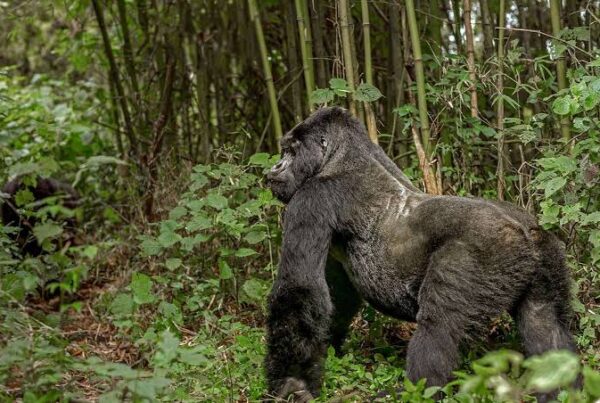
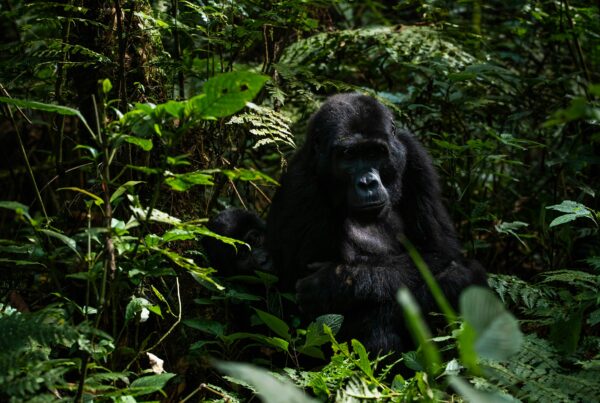
Bonobos have dark black hair, long limbs, and expressive faces. They are generally smaller and slimmer than chimpanzees. They have a dark face, rounded shoulders, and long legs that help them move through the forest canopy.
Bonobos usually walk on all fours but can also walk upright for short distances. Their hands are highly developed, allowing them to collect food and interact with their environment.
Bonobos and Chimpanzees’ Differences
Bonobos and chimpanzees are closely related but have different lifestyles and behaviors.
Chimpanzees often live in more competitive social groups, while bonobos are known for more peaceful relationships within their communities. Bonobo societies are usually led by strong female relationships. Females form close bonds and often play important roles in group decisions.
Both species are highly intelligent and use tools, communicate through sounds, and show complex emotions.
Bonobo Social Behavior
Bonobos are famous for their cooperative and social nature. They live in groups called communities, which may include several dozen individuals. They spend time grooming, playing, feeding, and caring for one another. These activities strengthen relationships and reduce tension within the group.
Female bonobos often form powerful alliances, creating a unique social structure among great apes.
What Do Bonobos Eat?
Bonobos are mainly fruit eaters, but their diet also includes leaves, flowers, seeds, insects, and small animals. Fruit provides most of their energy, especially during seasons when food is abundant in the rainforest.
Their feeding habits help spread seeds throughout the forest, making them important contributors to ecosystem health.
Bonobo Intelligence and Communication
Bonobos are highly intelligent animals with advanced problem-solving abilities. They use different sounds, facial expressions, and body movements to communicate.
Researchers have discovered that bonobos can learn symbols, understand simple instructions, and show empathy toward others.
Their ability to cooperate and communicate makes them one of the most studied animals in the world.
Bonobo Family Life
Female bonobos usually have strong bonds with their young. Mothers provide protection, guidance, and support for several years.
Young bonobos spend a long time learning social skills through play and observation. This extended childhood helps them develop the behaviors needed to survive within their communities. Bonobo mothers often maintain close relationships with their offspring even after they become independent.
Threats Facing Bonobos
Bonobos are endangered because of habitat destruction, illegal hunting, and human activities. Deforestation reduces the forests they depend on for survival. Hunting remains a major threat because bonobos are sometimes targeted for bushmeat or captured illegally.
Their limited range makes conservation especially important because they exist only in one country.
Bonobo Conservation in the DRC
Conservation efforts in the DRC focus on protecting forests, supporting local communities, and preventing illegal hunting.
Protected areas provide safe habitats where bonobos can live and reproduce. Research programs also help scientists understand bonobo behavior and population changes.
Organizations and local communities work together to protect these rare great apes and the forests they call home.
Interesting Bonobo Facts
Bonobos are only found naturally in the Democratic Republic of Congo. They are one of humanity’s closest living relatives, along with chimpanzees.
Bonobos build nests in trees where they sleep every night. They can recognize themselves and show signs of empathy toward others. Female bonobos often have strong influence within their social groups. They use play and cooperation to strengthen relationships.
Why Bonobos Matter
Bonobos are more than rare animals. They are an important part of the Congo rainforest ecosystem and provide valuable knowledge about primate behavior.
Protecting bonobos also protects one of the world’s largest tropical forests, which supports thousands of other species. Their survival depends on conservation actions that respect both wildlife and the communities living near their habitats.
Plan Your Congo Wildlife Experience
A journey to discover bonobos offers a rare opportunity to explore one of Africa’s most unique ecosystems. Meeting these intelligent great apes reveals the beauty, complexity, and importance of Congo’s forests.
Protecting bonobos means protecting a living connection between humans, wildlife, and the natural world.