Chalbi Desert Tour: Crossing Kenya’s Only True Desert
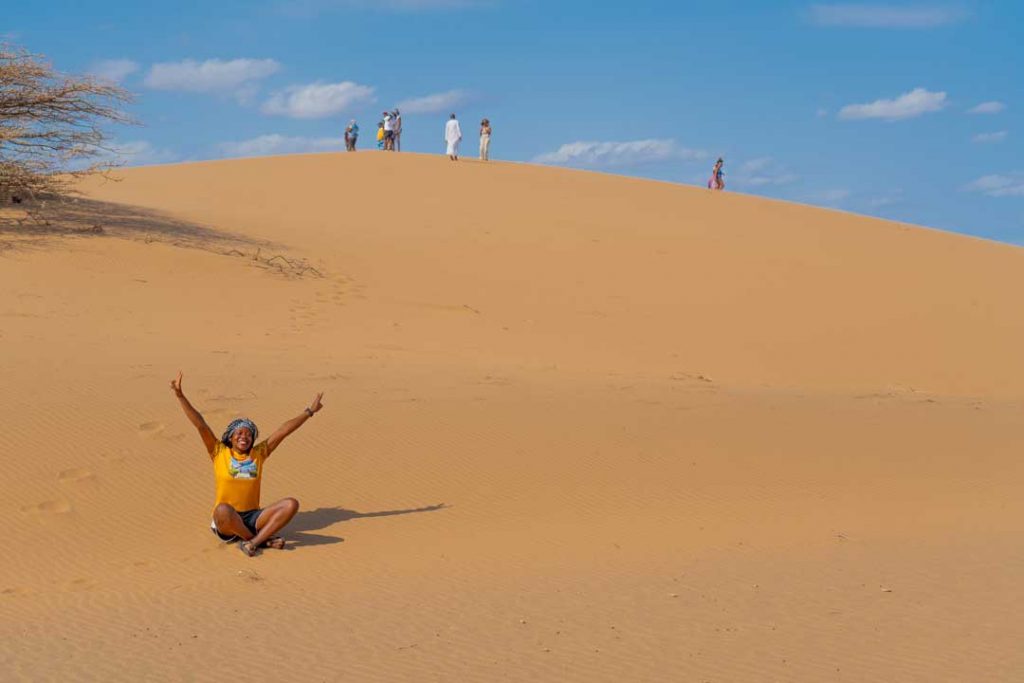
A Chalbi Desert tour crosses Kenya’s only genuine desert landscape between Marsabit and Lake Turkana. The Chalbi Desert is a vast salt flat measuring approximately 100 kilometers by 50 kilometers. A Chalbi Desert tour delivers an entirely different Kenya landscape from any other safari destination in the country. The salt surface shimmers in the desert heat and creates extraordinary mirage effects across the flat expanse. Oryx, Grévy’s zebra, and camels inhabit the desert edges on a productive Chalbi Desert tour. The Chalbi is one of Africa’s most visually dramatic semi-arid landscapes for photography.
A Chalbi Desert tour requires a 4WD expedition vehicle with experienced Northern Kenya navigation capability. The Chalbi Desert has no maintained roads across its central section. Chalbi Desert tour drivers navigate by GPS and landmark knowledge across the salt flat surface. The crossing from Marsabit to North Horr takes six to nine hours depending on conditions. The Chalbi Desert tour season is the dry months of January to March and June to September. Rain transforms the Chalbi into a shallow seasonal lake that prevents vehicle crossing.
Chalbi Desert Tour Landscape
Salt Flat Photography on a Chalbi Desert Tour
The Chalbi Desert tour’s salt flat is one of Kenya’s finest landscape photography locations. A flat, white salt surface extends to the horizon in all directions at the desert center. Mirage effects over the Chalbi Desert tour’s salt flat create extraordinary visual phenomena throughout the day. Heat shimmer distorts the silhouettes of Grévy’s zebra groups drinking at distant water points. Wide-angle lens landscape photography at the Chalbi Desert tour center produces images unlike any other Kenyan location. Dawn and dusk light on the salt surface creates deep orange and purple color gradients across the flat ground.
The Chalbi Desert tour’s surrounding landscape also includes extraordinary volcanic features. The Badda Hurri volcano at the desert’s eastern edge creates a dramatic backdrop for Chalbi Desert tour photography. Lava flows extend from the volcano down to the desert edge. The contrast between the white salt flat and the black lava creates one of Africa’s most striking single photographic compositions. A Chalbi Desert tour that includes a Badda Hurri crater rim walk adds geological adventure to the landscape photography program.
Wildlife on a Chalbi Desert Tour
Grévy’s zebra inhabits the semi-arid scrubland surrounding the Chalbi Desert tour route. This endangered zebra species has a very limited range in northern Kenya. The Chalbi Desert tour edge habitat is among the most reliable Grévy’s zebra locations in the country. Beisa oryx tolerates the harshest Chalbi Desert tour conditions of any large mammal. Large oryx groups often cross the salt flat in long single files during early morning movement. This oryx crossing image is one of the iconic Chalbi Desert tour wildlife photographs.
Camels are the most characteristic mammals of the Chalbi Desert tour’s human landscape. Gabbra and Rendille pastoralists graze large camel herds on the desert edge vegetation. A Chalbi Desert tour encounter with a camel caravan moving between water points creates an extraordinary cultural and wildlife photography moment. The gerenuk inhabits the acacia scrub edge of the Chalbi Desert tour approach routes. This long-necked antelope stands on hind legs to browse acacia leaves. Both gerenuk and camel encounters on a Chalbi Desert tour produce uniquely northern Kenyan safari images unavailable anywhere south of the equator.
Chalbi Desert Tour Communities
Gabbra Community on a Chalbi Desert Tour
The Gabbra people inhabit the Chalbi Desert tour territory on the desert’s western and northern edges. This camel-herding community lives in portable dome-shaped huts made from matting and sticks. Gabbra settlements move with their herds across the Chalbi Desert tour landscape seasonally. Meeting a Gabbra community at a seasonal settlement is one of the Chalbi Desert tour’s finest cultural encounters. The Gabbra maintain elaborate camel management traditions adapted to the Chalbi Desert’s harsh conditions over centuries. Traditional healers, elders, and warriors all play specific roles in the Gabbra community social structure.
North Horr is the main town on the Chalbi Desert tour’s western approach route. This small desert town serves as a resupply and overnight point for Chalbi Desert tour expeditions. The North Horr market on Monday provides a cultural encounter point for the Gabbra, Turkana, and Rendille communities who converge for trade. Visiting the North Horr market during a Chalbi Desert tour adds vibrant community interaction to the wilderness landscape experience. Fuel and basic supplies are available at North Horr. Advance fuel arrangements from Marsabit ensure sufficient supplies for the complete Chalbi Desert tour circuit.
Planning a Chalbi Desert Tour
A Chalbi Desert tour requires advance preparation beyond any standard Kenya safari. Fuel must be carried for the full Chalbi Desert tour circuit, as filling stations do not exist across the desert route. Satellite communication is strongly recommended for the remote Chalbi Desert tour sections. A minimum of two 4WD vehicles travel together for safety on any Chalbi Desert tour crossing. The Chalbi Desert tour crossing direction from Marsabit to North Horr is the most commonly used navigation route. Reverse crossings from North Horr to Marsabit are equally feasible for Chalbi Desert tour itineraries approaching from Lake Turkana.
The best Chalbi Desert tour experience combines an overnight camp on the salt flat with the central crossing. Setting up a fly camp on the Chalbi salt surface at sunset creates the most extraordinary desert stargazing experience in Kenya. The absence of light pollution across the Chalbi Desert tour center produces sky views of exceptional clarity and depth. Dawn photography on the salt flat after a Chalbi Desert tour overnight camp is the most productive landscape session of the entire crossing. Planning the overnight camp for the new moon phase maximizes the star photography quality at the Chalbi Desert tour campsite.
Plan Your Safari
Plan a Chalbi Desert tour of three to four days covering Marsabit, the salt flat crossing, North Horr, and Lake Turkana. Ensure your expedition vehicle carries sufficient fuel for the complete Chalbi Desert tour circuit before departure from Marsabit. Book a Northern Kenya specialist driver with Chalbi Desert tour-crossing experience.
African Wild Trekkers designs Chalbi Desert tour expeditions combining the desert crossing with Lake Turkana and the northern Kenya wildlife circuit. We arrange fuel logistics, expedition vehicles, satellite communication, and fly camp equipment for every Chalbi Desert tour itinerary.
Contact African Wild Trekkers to plan your Chalbi Desert tour. We respond within 24 hours and design Northern Kenyan desert expeditions that cross the Chalbi safely and productively.