Chobe Elephants vs Amboseli Elephants: Two of Africa’s Greatest Herds
Chobe vs Amboseli: Comparing Africa’s Two Greatest Elephant Destinations
Africa has two destinations that stand above all others for elephant watching: Chobe National Park in Botswana and Amboseli National Park in Kenya. Both hold enormous elephant populations. Both offer extraordinary encounter conditions. But the experience of watching elephants at each destination is radically different in character, setting, and visual quality. Understanding what distinguishes them helps travelers prioritize which to visit. Chobe’s elephants exist in one of the largest concentrations anywhere in Africa. They are observed from river boats and open vehicles against a waterway backdrop. Amboseli’s elephants move against the backdrop of Kilimanjaro—the most iconic elephant photography setting on the continent. They live in well-studied herds whose individual animals researchers have known for decades.
Chobe Elephants: Africa’s Largest Concentration
Chobe National Park in northern Botswana holds the largest concentration of elephants in Africa. Population estimates exceed 120,000 animals in the greater Chobe ecosystem. The Chobe River forms the park’s northern boundary. It draws enormous numbers of elephants to the water’s edge, particularly during the dry season when surface water is scarce elsewhere in the surrounding Kalahari system.
River Safari Encounters
The defining Chobe elephant experience is the river boat safari. It is conducted on flat-bottomed motorboats or pontoon vessels that cruise the Chobe River at elephant eye level in late afternoon light. Elephant herds of dozens to hundreds of animals wade across the river, swim between islands, dust-bath on the sandbanks, and interact socially. No game drive vehicle can replicate this proximity. The boat approach allows the guide to position within meters of swimming elephants. Massive animals with only their head and back above the waterline. The animals are completely unbothered by the vessel’s presence. This is Africa’s best river-level elephant viewing. The visual quality of the encounters is exceptional for photography. Especially in the golden hour before sunset when the light is warm and the river glows.
The sheer number of elephants visible during a Chobe River safari is staggering. It is not unusual to see 50 or more elephants on a single bank. Additional animals are often visible crossing or drinking elsewhere along the river. The numbers create a wildlife density that overwhelms first-time visitors. Even experienced Africa travelers consistently describe the Chobe River experience as unlike anything they have encountered elsewhere. The sound of the animals. Rumbling, splashing, and the deep thud of large bodies in shallow water. Adds an aural dimension that no photograph fully captures.
What Chobe Misses
Chobe’s elephants exist in a landscape of riverine bush and mopane woodland. This landscape lacks the dramatic scenic backdrop of East Africa’s parks. The Chobe River itself is beautiful. The late afternoon light creates stunning safari conditions. But the experience is primarily about elephants and other wildlife rather than the landscape framing them. Hippos, crocodiles, water birds, and large buffalo herds also inhabit the Chobe waterfront. They contribute to an overall river safari experience rich in species diversity. But the elephant encounters define the destination and justify the journey.
The broader Botswana safari context means most visitors to Chobe are on multi-destination trips. Chobe is typically visited as part of a longer Botswana itinerary that includes the Okavango Delta. The nearest major international hub is Victoria Falls. This makes Chobe a natural addition to a Victoria Falls trip or a component of a longer southern Africa circuit. For East Africa-focused travelers, Chobe requires a separate southern Africa trip. It does not fit naturally into a Kenya or Tanzania safari extension.
Amboseli Elephants: Iconic Kilimanjaro Backdrop
Amboseli’s elephants are fewer in total number than Chobe’s. But they are among the most studied, most photographed, and most individually distinctive elephant populations in the world. The Amboseli Elephant Research Project was founded in the 1970s by Cynthia Moss. It has followed individual elephants across their lifetimes. The dataset it created informs elephant conservation globally.
The Kilimanjaro Setting
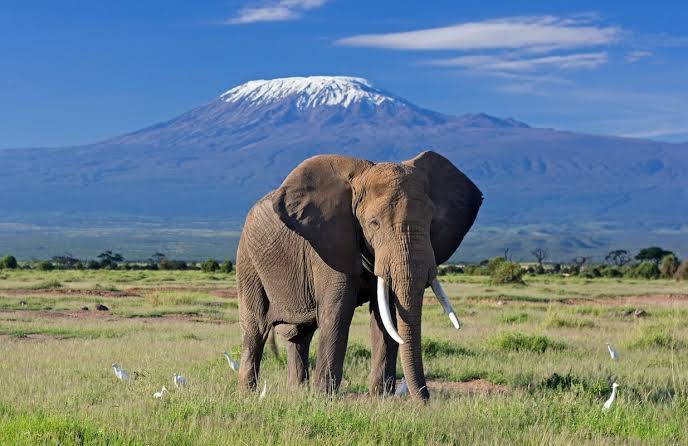
Amboseli’s defining quality as an elephant destination is the visual context that Kilimanjaro provides. When the mountain is clear. Typically in the early morning and late afternoon, before daily cloud cover builds on the summit—the visual is extraordinary. Large elephant bulls move through the swamp with Africa’s highest peak, rising snow-capped, in the background. This is one of the most reproduced wildlife images in the world. This composition is a product of geography, not photographic coincidence. The park sits directly at the base of Kilimanjaro on the Kenyan side of the Tanzania-Kenya border. The mountain’s scale relative to the flat Amboseli plain creates the perspective that makes it the perfect backdrop for elephant photography.
Amboseli’s large elephant bulls are among the most physically impressive elephant individuals in Africa. These are males that have left their birth herds and live semi-independently or in small bachelor groups. Decades of research protection have allowed the park’s bulls to age to their full size without poaching. The oldest males in the Amboseli population carry tusks rarely seen on surviving wild elephants elsewhere. Encountering a large tusked bull in the Amboseli swamp at close range, with Kilimanjaro behind him, is a wildlife encounter of almost overwhelming visual impact.
Elephant Social Behaviour
Amboseli’s elephant families have been researched and individually known for over 50 years. Guides who know the research history can identify specific elephants by name and family group. They can provide context for the social interactions observed during a game drive. Watching a matriarch lead her family across the swamp, knowing her name and age. And knowing the names of her daughters and grandchildren. This contextual depth transforms elephant watching. It becomes genuine natural history engagement that most safari destinations cannot provide. Guides with Amboseli elephant knowledge are among the most knowledgeable naturalists in East Africa.
Amboseli’s elephant encounters occur primarily in open terrain. The park’s swamps and open grassland provide excellent visibility. They allow the observer to watch extended sequences of social behavior. Entire family group dynamics can unfold at a comfortable distance. The contrast with Chobe’s waterfront concentration encounters is significant. Amboseli rewards patience and context-aware observation. Chobe rewards immersion in sheer scale and sensory impact. Both are extraordinary elephant experiences, but they engage different aspects of what makes elephant watching so compelling as a safari activity.
Plan Your Safari
Amboseli National Park fits naturally into Kenya safari itineraries as either a standalone two- to three-night stay or as part of a northern Kenya circuit. The park pairs naturally with the Masai Mara for a Kenya safari that covers both open plains big cat encounters and the iconic Kilimanjaro elephant experience within a single 10- to 14-day trip. Every Amboseli stay includes guided game drives with naturalists familiar with the park’s individual elephant families.
African Wild Trekkers includes Amboseli in Kenya safari packages at all budget levels and can extend itineraries with Tanzania’s Serengeti, Uganda’s gorilla trekking, or Kilimanjaro for multi-country East Africa experiences.
Contact African Wild Trekkers at africanwildtrekkers.com/contact with your travel dates and elephant experience priorities, and we will design the right Kenya itinerary within 24 hours.