Mangrove Kayak Africa: Paddling Through Kenya and Tanzania’s Coastal Forest Waterways
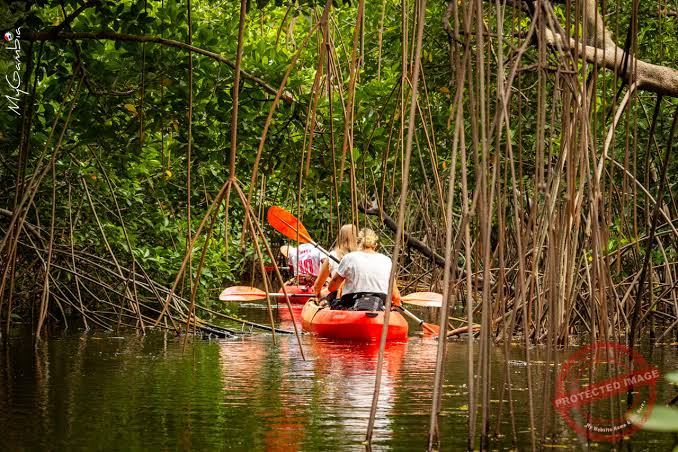
Mangroves are East Africa’s most undervisited ecosystem. These salt-tolerant forests line the tidal creeks, estuary margins, and sheltered bays of the Kenya and Tanzania coast. They stand with roots in saltwater and canopy above it, creating a labyrinthine waterway system navigable only by small paddle craft. A kayak in a mangrove system moves through spaces that have no human equivalent. Arching prop roots and pneumatophores create a living vaulted chamber above the tidal water surface. The light filters green through the canopy. The water is clear at incoming tide and turbid with suspended sediment on the ebb. Wildlife uses the mangrove at a density that restricted human access has kept largely intact.
Wildlife of the Mangrove System
The mangrove root system supports one of East Africa’s most productive marine nurseries. Juvenile fish, crab larvae, and invertebrate communities shelter in the complex root architecture, feeding on organic particles settling from the tidal water column. Mudskippers fish that move across exposed mud surfaces on modified pectoral fins and breathe air through moistened skin occupy every exposed mud flat in the channel system. Their behaviour is compelling two males displaying at each other, or a single fish climbing a mangrove root with its fins, carries an evolutionary novelty that makes extended observation surprisingly engaging.
Kingfisher species concentrate in mangrove systems at densities impossible in open water. The malachite kingfisher perches on root tips just 20 centimetres above the water surface. The giant kingfisher calls from higher canopy perches. Moreover, the mangrove kingfisher a species specifically associated with this habitat occupies the full mangrove complex year-round. Grey herons, purple herons, and yellow-billed egrets work the tidal mud flats at the system’s edges.
Kenya and Tanzania Mangrove Locations
Kenya’s Mida Creek, 5 kilometres south of Watamu, is the most accessible East Africa mangrove kayak location. Mida’s tidal creek network extends 12 kilometres inland from Turtle Bay, with mangrove forest lining most of the creek margin. The tidal cycle creates different paddling conditions at different times incoming tide delivers clear water and easy paddling, while outgoing tide exposes mud flats for bird observation and reveals the root architecture of the mangrove system. Additionally, Lamu Island’s mangrove channels and Kilifi Creek’s tidal mangroves provide alternative Kenya locations. Tanzania’s Rufiji Delta contains one of East Africa’s most extensive mangrove forests, navigable by guided kayak through the delta channels.
Best Conditions for Mangrove Kayaking
High tide provides the most productive kayaking in mangrove systems the water level rises above the exposed root systems and into the canopy zone, allowing passage through channels inaccessible at low tide. Kayaking two hours before to two hours after high tide maximises navigable channel access. Morning conditions in the dry season months deliver calm winds, clear skies, and cool temperatures before the afternoon sea breeze develops. The low season months bring warm temperatures and occasional rain showers, but the mangrove areas see far fewer visitors as a result.
Plan Your Safari
Adding a mangrove kayak day to a Kenya coastal itinerary requires only a single day and a base at Watamu, Kilifi, or Lamu. Mida Creek kayak operators run guided circuits with local guides who know the creek system and its resident wildlife in detail. Tanzania’s mangrove kayak operations near Mafia Island and the Rufiji Delta require boat-accessed camp bases. Combining a Mafia Island marine park dive with a Rufiji mangrove kayak creates a coastal Tanzania experience covering both marine and estuarine ecosystems.
African Wild Trekkers designs Kenya coastal safari itineraries combining Watamu marine activities, Arabuko Sokoke forest, and Mida Creek mangrove kayaking. Contact us to plan a Kenya coast experience exploring the full diversity of the coastal ecosystem.