Rwanda Women Parliament: How Rwanda Leads the World in Political Gender Representation
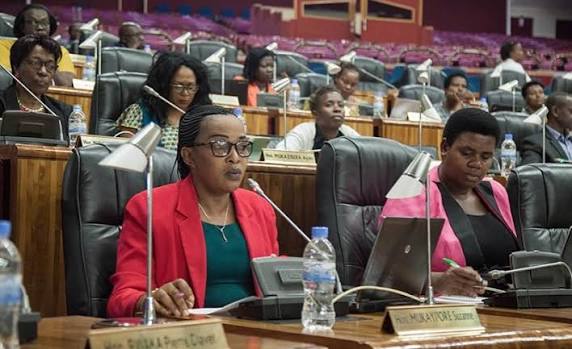
Rwanda holds the world record for the highest percentage of women in a national parliament. Women currently occupy more than 60 percent of seats in the Chamber of Deputies, Rwanda’s lower house. No other national legislature anywhere in the world matches this figure. The achievement results from deliberate constitutional design choices made in the post-genocide period combined with the specific historical context of Rwanda’s reconstruction.
The world record is not simply a statistical achievement. It represents a fundamental shift in the political culture of a society that had historically limited women’s roles in formal political life. The change has been sufficient to affect actual legislative priorities. Researchers and gender governance practitioners have documented these policy effects and studied Rwanda as a model for other countries seeking to increase women’s political participation.
The Constitutional Foundation
Rwanda’s 2003 constitution reserves a minimum of 30 percent of all decision-making positions for women. This applies to the parliament, cabinet, judiciary, and all government bodies. The 30 percent reservation is a floor, not a ceiling. Actual parliamentary representation has consistently exceeded the constitutional minimum by a substantial margin.
The electoral system includes reserved seats for women elected through a separate constituency mechanism. This guarantees a minimum female representation floor regardless of how parties perform in general elections. Women who wish to contest general constituency seats alongside men are free to do so. Many do, pushing total female representation above the reserved seat baseline.
The constitutional gender commitment extends to the local government level. Women hold significant proportions of elected positions at province, district, sector, and cell levels across the country. The cascading effect of the constitutional requirement through all levels of government has created a gender-integrated governing class. That class was absent from Rwandan political life before 1994.
Women in Post-Genocide Reconstruction
The historical context of the post-genocide period was critical in creating conditions for Rwanda’s gender political revolution. The genocide killed a disproportionate number of men. Women became the majority of the surviving adult population. They took over household economic management, community leadership, and legal management of property and family affairs out of practical necessity rather than ideological choice.
Women’s associations formed in the immediate post-genocide period to address the practical challenges of rebuilding destroyed households and communities. These associations created a new layer of women’s civic organisation that had not existed in the same form before 1994. They became a political base from which women’s voices and interests could be advanced in the reconstruction governance process.
The specific experience of genocide survivor women created a politically engaged population with a direct personal stake in governance decisions. Women who had survived sexual violence, displacement, and the loss of family members were not passive observers of the reconstruction process. This direct stake in outcomes motivated political engagement at levels that the political system was required to respond to with genuine rather than token inclusion.
Impact on Policy and Governance
Research on Rwanda’s high female parliamentary representation shows measurable differences in legislative priorities. Legislation on gender-based violence, maternal health, land rights for women, and inheritance laws has been strengthened notably. Researchers attribute these outcomes at least in part to the high female representation in the parliament that passed them. The evidence from Rwanda challenges arguments that reserved seats produce only symbolic inclusion.
Rwanda’s female parliamentary majority is not without complexity. The political system’s constraints on opposition apply equally to people of genders. Female representatives within the ruling party’s parliamentary caucus operate within the same political boundaries as their male colleagues. The gender record of Rwanda’s parliament must be assessed honestly within the full picture of the country’s political system. Both dimensions are real and both matter.
Rwanda’s Gender Achievement in Context
The world record female parliamentary representation is one dimension of a broader gender equality agenda. Rwanda also maintains commitments on healthcare, education, economic participation, and legal rights for women. The combination of political representation with these other commitments creates one of the most comprehensive national gender equality programs in Africa.
African Wild Trekkers designs Rwanda safari itineraries that engage with the country’s remarkable social, political, and cultural achievements alongside its extraordinary wildlife and landscape experiences. Contact us to plan a Rwanda safari that understands the full depth of what makes this country one of Africa’s most fascinating destinations.