Tanzania Family Safari Guide: Best Parks for Kids, Age Limits and Tips
A Tanzania family safari is one of the most genuinely transformative experiences a family can share. Children who see elephants at close range, watch a cheetah run at full speed, and learn about ecosystems from a professional guide carry those memories into adulthood in ways that textbooks cannot match. Tanzania is a family-friendly safari destination in many respects, but it requires more careful planning for a family with children than for adults traveling alone. This guide covers everything parents need to know: which parks suit younger children, what age restrictions exist, how to choose the right camp, and how to make the most of the safari for children of different ages.
Age Limits and Restrictions in Tanzania’s Safari Parks
What the Rules Are and Why They Exist
National Park Age Policies
Tanzania’s national parks do not impose a government-mandated minimum age for children on safari, but lodges and camps within the parks frequently apply their own minimum age policies. Many Serengeti and Ngorongoro camps set a minimum age of six or eight, partly for safety reasons and partly because the camp experience—early starts, long drives, and communal dining without children’s menus—genuinely challenges very young children and disrupts other guests. A few luxury camps apply a minimum age of twelve or sixteen, focusing on an adult atmosphere that excludes families with young children entirely. African Wild Trekkers reviews the age policies of every camp it recommends and advises families on which properties genuinely welcome children of their specific ages.
The practical safety considerations behind age limits are legitimate. Children under five or six have limited attention spans for game drives lasting four to six hours. They cannot always communicate discomfort or fear effectively in wildlife encounter situations. They are more vulnerable to sun exposure, insect bites, and dehydration in the field. Young children also make it harder for guides to maintain the vehicle silence that close wildlife approaches sometimes require.
None of this means young children cannot enjoy a Tanzania safari — many parents report that their three-year-olds were entranced by elephants at close range. It does mean that family safaris with very young children require camps that specifically accommodate them and itineraries that are shorter and more flexible than adult-only trips.
Private Vehicle Advantages for Families
A private vehicle for a family on safari solves most of the child-specific challenges that shared group vehicles create. In a private 4×4 with only the family and the guide, the drive can pause when a child needs a toilet stop, when interest lags and a break is needed, or when a specific animal holds the child’s full attention and everyone wants to stay longer.
Private vehicles also let the guide adapt the interpretation to the children’s age and attention level—using language and detail appropriate for an eight-year-old rather than adult-oriented commentary. African Wild Trekkers books private vehicles for all family safari clients as a standard practice, and most family-friendly camps include private vehicle guiding in their package pricing.
The private vehicle’s flexibility extends to the drive schedule itself. A family with young children can start later in the morning, allowing a proper breakfast and full clothing routine rather than the 0530 departure that optimizes adult wildlife viewing. An afternoon drive beginning at 1600 gives younger children a proper rest and meal before the evening activity.
The guide calibrates the day’s program to the family’s rhythm rather than to an abstract ideal of optimal wildlife viewing time. The wildlife viewing quality that results is often better than parents expect—well-rested, well-fed children are more engaged and less fractious than on an adult-optimized schedule.
Best Tanzania Parks for Family Safaris
Which Parks Suit Children Best
Tarangire: The Best Family Safari Park in Tanzania
Tarangire National Park is African Wild Trekkers’ top recommendation for family safaris in Tanzania for several reasons. The park’s elephant herds — among the largest concentrations in Africa during the dry season — engage children of any age immediately. Herds of fifty to one hundred elephants approaching the vehicle at the river crossing create immediate, visceral excitement that requires no interpretation.
Tarangire’s open landscape gives children clear sightlines for game viewing without the frustration of adults with binoculars pointed at a bird invisible in dense vegetation. The baobab trees that dominate the park’s ridgelines create memorable landmarks—children navigate the park by the big baobab tree and the elephant river rather than by park sections, building a personalized geography that matches their spatial understanding.
Tarangire’s mid-range to upper-tier camps also offer swimming pools—a significant feature for family safaris. The ability to swim between morning and afternoon drives transforms the midday rest from a period of restless boredom for energetic children into one of the day’s highlights.
Several Tarangire camps offer dedicated children’s activity programs—nature walks with a junior ranger guide, face painting with natural dyes, and bush skill demonstrations—that engage children during the midday hours when the safari pauses. African Wild Trekkers selects Tarangire camps specifically based on their family facilities and accommodation type, prioritizing two-bedroom family suites rather than single tents that require a separate tent for children.
Lake Manyara for Younger Children
Lake Manyara National Park is compact enough for shorter game drives—two to three hours rather than the Serengeti’s five-to-six-hour circuits—which suits younger children whose attention windows are genuinely shorter than adults’. The park’s tree-climbing lions, found in the fever tree woodland along the lake’s margin, deliver one of Africa’s most unusual wildlife sightings at close range.
Lions sleeping in trees rather than on the ground create a story that children retell enthusiastically. The lake’s flamingos visible from the park road add a vivid pink element that complements the green of the fever tree forest. The hippo pools in the lake’s northern section bring hippos close enough to the viewing track for children to hear their submersion and exhalation from the vehicle window.
Lake Manyara pairs well with Tarangire in a family-friendly two-park circuit covering Tanzania’s best wildlife experiences for younger children without the long drives that the Serengeti’s scale demands. Adding the Ngorongoro Crater—specifically as a half-day descent rather than a full-day commitment—gives families the Big Five context and the crater’s extraordinary wildlife density in a compressed format suitable for children who are engaged but not yet capable of sustaining six hours in a vehicle. African Wild Trekkers designs family circuits specifically around the parks that work for each child’s age rather than applying the same itinerary structure as adult trips.
Making the Most of Safari for Children
Keeping Children Engaged and Comfortable
Tools and Techniques for the Game Drive
Children engage more deeply with a game drive when they have their own tools for participation. A pair of binoculars sized for a child’s interpupillary distance—many adult binoculars are too wide for small eyes—gives children independent viewing capacity that transforms them from passive observers to active spotters. A dedicated wildlife journal or drawing pad where children record animals, sketch what they observe, and keep a running species count creates a personal record that most children treasure.
The guide can also involve children directly—asking the eight-year-old to spot movement in the grass, teaching the twelve-year-old how to estimate a lion’s age from tooth wear or a giraffe’s sex from the ossicone shape—transforming the drive from something adults are doing into something the child is doing alongside them.
Animal identification field guides designed for children — with simplified descriptions, clear photographs, and space to tick species seen — make excellent safari companions and serve as educational tools during the drive and at camp in the evenings. Parents who build pre-trip wildlife education into the months before Tanzania departure—nature documentaries, children’s books about African wildlife, and the specific animals the child most wants to see—arrive with children already invested in the wildlife experience.
A child who has watched a documentary about cheetah hunting and arrives in the Serengeti expecting to see exactly that is a fundamentally different passenger from one told only that they are going on a safari. African Wild Trekkers recommends specific pre-trip resources for each age group in the family’s pre-departure documentation.
Plan Your Safari
A Tanzania family safari requires camp selection based on age policies, accommodation configuration, pool facilities, and children’s activity programs alongside the standard wildlife quality assessment. African Wild Trekkers has designed family safari itineraries for children of every age from three to seventeen and knows which camps, which parks, and which drive structures produce the most engaged and educationally rewarding experience for children at each developmental stage.
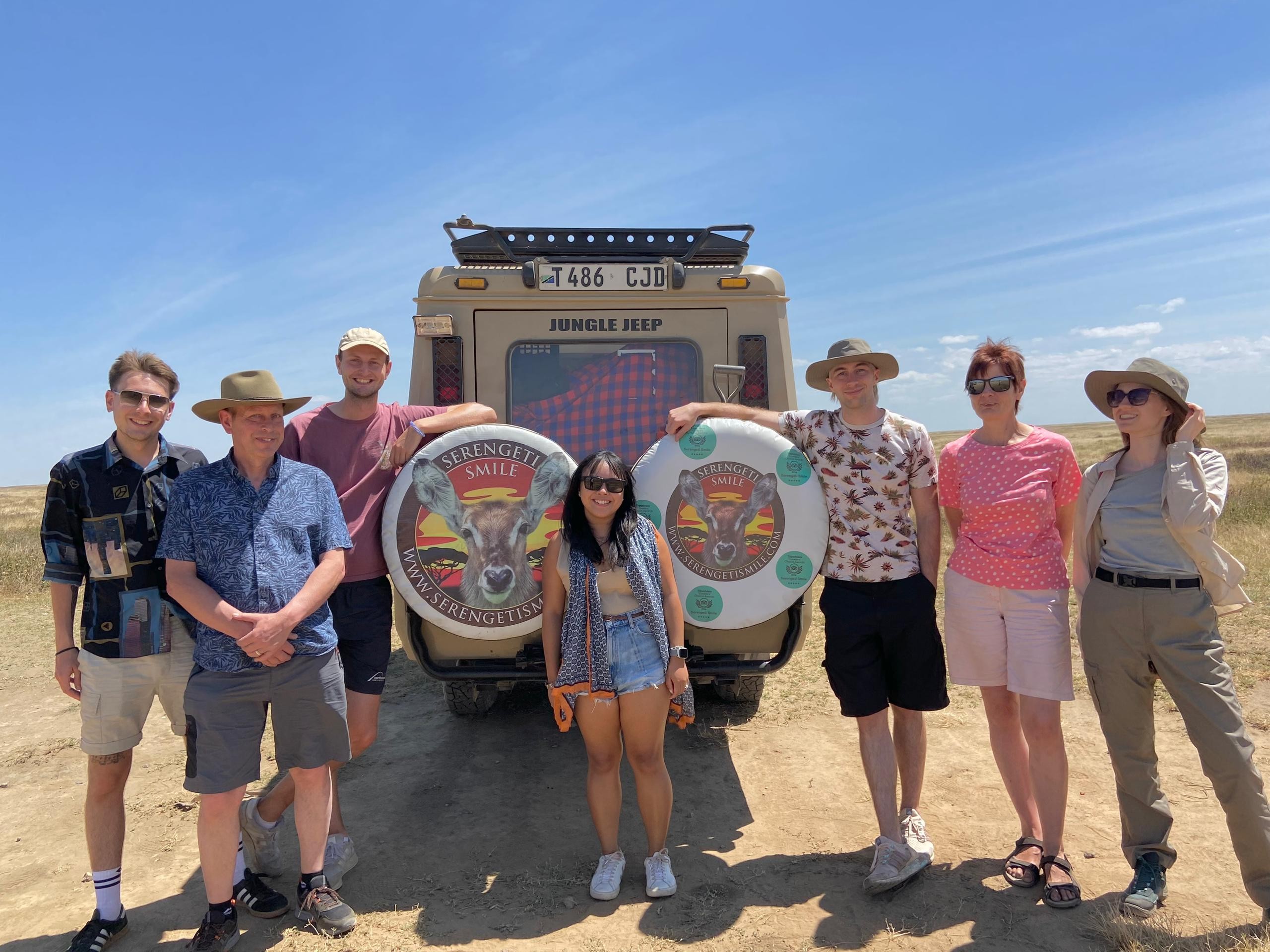
Every Tanzania family safari booking from African Wild Trekkers includes a private vehicle as standard, accommodation in two-bedroom family suites or adjacent tent configurations, and a guide who is specifically briefed on the ages and interests of the children in the group. The team advises on the age-appropriate interpretation level and coordinates children’s activity programs at participating camps. All reservations are confirmed in writing before any deposit is requested.
Contact African Wild Trekkers at africanwildtrekkers.com/contact with your Tanzania travel dates and your children’s ages, and we will build a personalized family safari itinerary with appropriate parks and camps within 24 hours.