Uganda Papyrus Birds: Specialists of the African Reed Beds
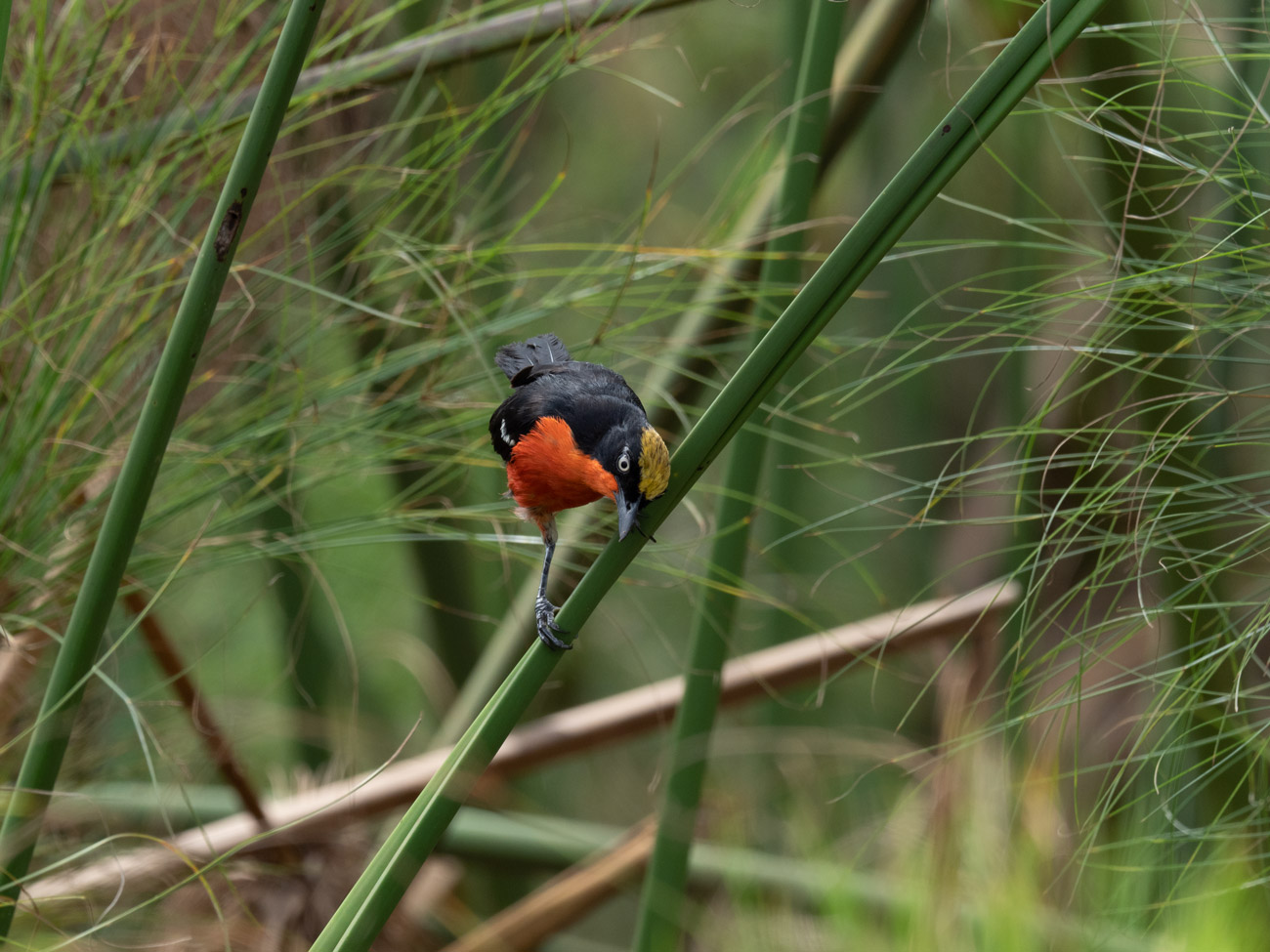
The papyrus gonolek is one of Uganda’s most colourful wetland birds. Its brilliant crimson breast contrasts sharply with a glossy black head and back, creating an unforgettable sight. However, the species spends most of its time hidden deep within papyrus stands. Birdwatchers usually detect it by its loud, two-note whistle before catching brief views as it approaches the swamp edge in response to territorial calls.
This striking bird occurs only in wetlands across Uganda, Rwanda, and eastern Democratic Republic of the Congo. Because of its limited range, it ranks among the country’s top birding targets. Mabamba Swamp offers reliable sightings, while populations also occur around Lake Mburo and the papyrus margins of the Kazinga Channel in Queen Elizabeth National Park. Nearly every healthy papyrus wetland supports at least one breeding pair.
White-winged Warbler
The white-winged warbler lives almost exclusively inside dense papyrus vegetation, making it one of Uganda’s most challenging birds to observe. It rarely ventures into open areas and usually remains hidden among the stems. Therefore, guides rely on careful listening and occasional call playback to encourage birds toward the channel edge, where visitors may briefly see them.
Breeding seasons between March and May, and again from October to November, offer the best chances for sightings because the birds become more vocal. Mabamba Swamp, Lutembe Bay, and Lake Bunyonyi all support healthy populations. For many visiting birders, finding this elusive species represents a significant achievement during a Ugandan birding tour.
Shoebill
The shoebill stands as the flagship species of Uganda’s papyrus wetlands. This remarkable bird hunts lungfish along the boundary between open water and dense vegetation, often standing perfectly still for long periods before striking. Skilled guides identify subtle movements within the papyrus that reveal its location. As a result, approaching a shoebill quietly by boat becomes one of Uganda’s most unforgettable wildlife experiences.
The shoebill is globally listed as Vulnerable, making Uganda’s wetland populations especially important for conservation. Community-based projects around Mabamba Swamp help protect nesting areas while providing income through guided birdwatching tours. Local fishermen actively participate in monitoring programmes, demonstrating how sustainable tourism can directly support both conservation and community livelihoods.
Other Papyrus Bird Species
Several additional specialists inhabit Uganda’s papyrus wetlands. The papyrus canary feeds on seed heads hidden among the reeds, while the greater swamp warbler fills the swamps with its loud, churring song throughout the day. Carruthers’s cisticola occupies the grassy margins, frequently singing from exposed stems. Together, these species create one of East Africa’s richest wetland bird communities.
Visitors also encounter birds that hunt or feed along the edges of papyrus stands. African marsh harriers patrol above the reeds searching for prey, while long-toed lapwings and African jacanas forage across floating vegetation. Meanwhile, colourful malachite kingfishers perch on papyrus stems before diving for fish in nearby channels. These species regularly appear during morning boat excursions, adding variety to every birdwatching trip.
Plan Your Safari
Begin or end your Uganda safari with a dedicated birding excursion at Mabamba Swamp near Entebbe, where specialist guides offer excellent opportunities to see the shoebill and other papyrus birds. For a broader experience, combine Mabamba with birding around the Kazinga Channel or the Ishasha Delta in Queen Elizabeth National Park. Booking an experienced guide greatly improves your chances of finding the region’s most elusive wetland species.
African Wild Trekkers arranges specialist birding safaris at Mabamba Swamp, the Kazinga Channel, and the Lake Edward Delta. Our experienced guides use local knowledge and ethical birding techniques to help visitors find Uganda’s remarkable papyrus birds while supporting conservation and community tourism initiatives.
Contact African Wild Trekkers to target Uganda papyrus birds on your safari. We respond within 24 hours and design Uganda birding itineraries that access the full range of papyrus specialist species at the country’s finest swamp and wetland sites.