Zanzibar Coral Reef Diving: Best Dive Sites and When to Go
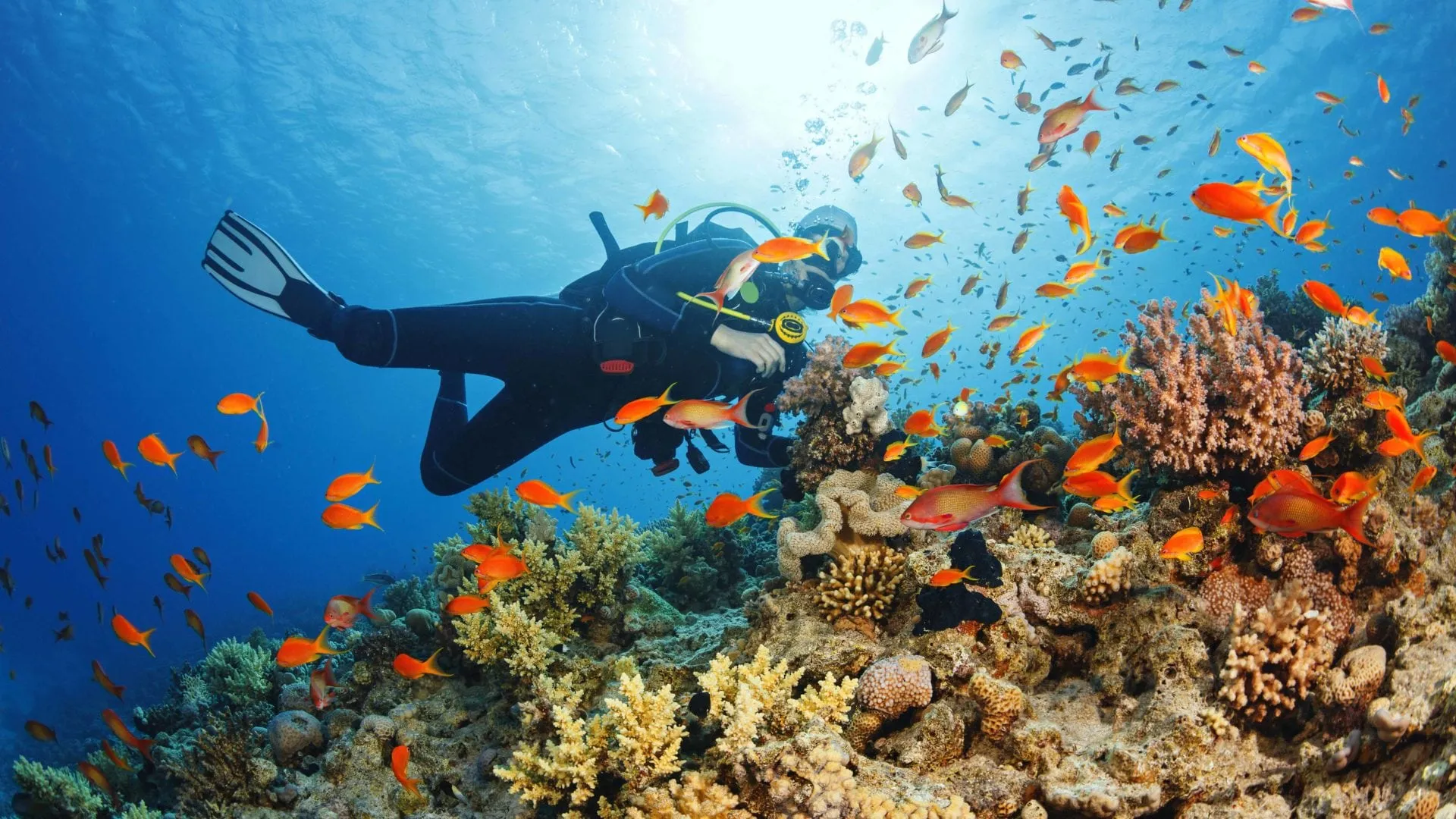
Zanzibar sits in the Indian Ocean on the edge of a continental shelf that drops away into deep water south of the island, creating the conditions for spectacular coral reef diving in warm, clear water with exceptional marine biodiversity. The reefs surrounding Zanzibar and its associated islands — Pemba and Mafia — are among the most pristine and species-rich in the western Indian Ocean. They feature hard coral structures, soft coral gardens, reef sharks, moray eels, lionfish, napoleon wrasse, and the largest population of hawksbill sea turtles in the region. Whale sharks visit at specific times of year. The diving suits every level, from resort course beginners making their first open water dives in sheltered lagoon conditions to advanced technical divers seeking the channel walls and deep reef structures.
This guide covers the practical information that divers need to plan a Zanzibar diving holiday: the best sites at different locations around the island and its neighbours, the seasonal window when visibility and conditions are optimal, what marine life to expect at each location, and how to choose between the main diving hubs at Nungwi, Matemwe, Paje, and the islands of Pemba and Mafia. Whether you are combining diving with a Tanzania safari or dedicating a full week to diving the Zanzibar archipelago, the information here gives you the foundation for a well-planned diving itinerary.
Best Dive Sites Around Zanzibar
North, East, and South Zanzibar Reef Systems
Mnemba Atoll: The Crown Jewel of Zanzibar Diving
Mnemba Atoll, a protected marine conservation area approximately 3 kilometres off the northeast coast of Zanzibar near Matemwe, is universally the best dive site in Zanzibar and one of the finest in the western Indian Ocean. The atoll is ringed by a series of dive sites at varying depths — from the shallow eastern reef lagoon suitable for beginners through to the northwestern wall and channel sites that reach 30 metres and beyond for advanced divers. The coral health at Mnemba is exceptional by East African standards, with dense coral cover on the main reef crest, large table corals in the mid-depths, and gorgonian fan corals and black coral trees in the deeper zones. The marine life includes spinner dolphins that regularly school inside the atoll in the mornings, green and hawksbill turtles on virtually every dive, reef sharks on the channel sites, and the full spectrum of Indian Ocean reef fish in extraordinary density.
Mnemba is accessible by boat from Matemwe — approximately 20 to 30 minutes — and licensed diving operators based in the area operate the dive sites. The conservation area charges a daily marine park fee, and diving here requires a licensed dive centre rather than independent access. The site is best in the morning when visibility is highest before afternoon boat traffic and tidal currents reduce clarity. The most experienced divers get in the water on the first boat of the day for the clearest conditions. Most Matemwe dive centres offer daily two-tank trips to Mnemba as their primary product, and for visiting divers this site should be a non-negotiable priority regardless of which other sites the itinerary includes.
Leven Bank and Tumbatu: North Zanzibar’s Deeper Sites
Leven Bank is a submerged reef system north of Zanzibar’s main island that rises from significant depth to relatively shallow water — creating the current conditions and pelagic life encounters that attract more experienced divers seeking something beyond the standard Mnemba reef circuit. The site holds large schools of barracuda, pelagic rays, various shark species including grey reef sharks on the bank edges, and occasional hammerhead sightings by dive leaders with long experience at this location. Conditions at Leven Bank are more demanding than Mnemba — currents can be significant, the site requires a longer boat crossing, and the experience is most rewarding for divers comfortable with drift diving and open water conditions. Several Nungwi-based dive centres include Leven Bank in their advanced diver programs, and dive leaders who know the site well can time dives for optimal conditions.
The reefs around Tumbatu Island on Zanzibar’s northwestern tip provide a different environment from the clear atoll diving of Mnemba — rockier substrate, more current-influenced conditions, and a marine life population that includes larger pelagic species less common at the enclosed atoll. Dive conditions at Tumbatu are variable and dependent on tidal timing, and local knowledge from an experienced dive centre is essential for getting the most from these sites. Nungwi-based dive operators know these sites best and typically incorporate them into multi-day itineraries for divers who have completed the standard Mnemba circuit and want to extend their diving into less visited territory.
East Coast and South Zanzibar Diving
Paje and the East Coast Reef System
The east coast of Zanzibar offers reef diving accessible from the beach community of Paje, with dive sites ranging from shallow reef structures suitable for beginners to moderately deeper sites along the outer reef edge. The east coast reef is less intensively visited than Mnemba and provides a quieter, more independent feeling to the diving, though the marine life diversity and coral health are generally lower than at the protected Mnemba Atoll. East coast diving suits divers who are combining their time at Paje with kitesurfing — the kite season on the east coast correlates approximately with good diving conditions — and who want to dive without the daily boat crossing to the north coast. Several well-established dive centres operate from Paje with consistent equipment maintenance and experienced instructors, making it a reliable choice for first-time divers doing their initial certification dives in Zanzibar.
The southeast coast around Kizimkazi is notable for year-round resident dolphins — a pod of humpback dolphins and occasionally spinner dolphins that inhabit the shallow inshore waters — and operators based in the area offer boat trips specifically for dolphin swimming and snorkelling. While not a dive destination in the traditional sense, Kizimkazi dolphin experiences are among Zanzibar’s most popular marine encounters and are easily combined with a dive day from Paje. The dolphin encounters work best very early in the morning before the animals have encountered the multiple tour boats that converge on them as the day progresses.
Pemba Island: Advanced Diving in Tanzania’s Most Pristine Waters
Why Pemba is the Specialist Diver’s Destination
Pemba Channel and Wall Diving
Pemba Island, 80 kilometres north of Zanzibar, is less visited and infinitely more pristine than its larger neighbour. The Pemba Channel on the island’s western side drops away to enormous depth, creating one of the most dramatic wall diving environments in the Indian Ocean. The walls begin at the surface and descend beyond recreational diving limits, covered in soft coral, fan corals, and black coral in concentrations that reflect decades of minimal diving pressure. Marine life at Pemba’s channel walls includes manta rays year-round, grey and whitetip reef sharks, large napoleon wrasse, and the occasional hammerhead or whale shark. The clarity of the water at Pemba is consistently exceptional — visibility of 30 metres or more is normal rather than exceptional — and the colour saturation of the soft coral in clear water at depth is among the finest dive aesthetics available in East Africa.
Pemba’s remoteness is both its greatest asset and its primary logistical challenge. Light aircraft from Zanzibar or a boat crossing of several hours in varying sea conditions are the only ways to reach the island, and the number of dive operations and accommodation choices is far smaller than Zanzibar’s main island. This means fewer divers at every site, dive boats that operate with four to six guests rather than the larger groups common at Zanzibar’s more popular sites, and a quality of dive experience that reflects the absence of competitive crowds. Pemba suits divers with Advanced Open Water certification at minimum who are comfortable with drift diving, wall diving, and the open-water conditions of the Pemba Channel. It is not appropriate for beginners or nervous divers, but for experienced divers seeking a genuinely world-class and uncrowded diving destination in East Africa, Pemba is difficult to surpass.
Best Time to Dive in Zanzibar
Seasonal Conditions and Visibility Windows
Dry Season Diving: June Through October
The dry season from June through October is the best overall period for Zanzibar diving in terms of visibility, surface conditions, and reliability of dive operations. During this period the southeast trade wind (kusi) blows steadily, creating choppy surface conditions on the east coast but calm conditions on the protected west coast and around the north of the island. Visibility at Mnemba Atoll and the north coast sites reaches 20 to 30 metres during the peak dry months of July and August, and marine life including whale sharks is most reliably encountered during the kusi season. Water temperatures during the dry season sit between 24 and 26 degrees Celsius — warm enough for comfortable diving without a wetsuit, though a thin 3mm wetsuit extends comfort across multiple dives per day.
The dry season also coincides with the peak safari season, making it the ideal time for combined Tanzania safari and Zanzibar diving itineraries. Most divers arriving after a northern circuit safari in July or August find Zanzibar conditions at their best, and the combination of peak safari and peak diving in a single trip is one of Tanzania’s most compelling seasonal arguments for visiting during the July-October window. Accommodation at both safari camps and Zanzibar dive lodges books out most quickly for this period, and bookings six to twelve months in advance are advisable for anyone planning this combination during peak months.
Green Season Diving: November Through May
The inter-monsoon periods of November and April-May offer excellent diving conditions on the calmer west coast of Zanzibar, with the transition between trade winds reducing surface chop and creating the clearest water of the year in some years. Whale shark season at Pemba Island peaks during November and December, and November conditions at both Mnemba and Pemba are highly regarded by experienced dive guides as some of the most productive of the year. The short rains of October-November and long rains of March-May reduce visibility on some sites due to runoff and plankton blooms, but the extent of this impact varies significantly by year and location.
The green season offers significantly lower dive accommodation prices and dramatically smaller crowds at all sites, including Mnemba Atoll where the combination of fewer boats and calmer water in some inter-monsoon conditions produces exceptionally good dive experiences for those willing to accept the less predictable weather. Divers who have already visited Zanzibar during the dry season and are returning for a second dive trip often deliberately choose the green season for the combination of exclusivity, price reduction, and the different marine life patterns that the changing ocean conditions produce.
Plan Your Safari
Planning a Zanzibar diving holiday alongside a Tanzania safari requires coordinating the dive season with safari season — fortunately, both align well during the July through October dry season window. Divers planning to complete certification courses should allow a minimum of four to five days on the island for the full Open Water course, while experienced divers wanting two-tank daily diving across multiple sites are well-served by a five to seven-night Zanzibar stay after their safari.
African Wild Trekkers arranges Tanzania safari and Zanzibar diving combination itineraries, connecting northern circuit safari packages with recommended Zanzibar dive centres at Matemwe, Nungwi, and Pemba through partners with consistently high equipment standards and experienced dive guides. The team confirms all accommodation and dive package bookings as part of an integrated itinerary. All reservations are confirmed in writing before any deposit is requested.
Contact African Wild Trekkers at africanwildtrekkers.com/contact with your Tanzania travel dates and diving experience level and we will design your safari and diving itinerary and confirm all bookings within 24 hours.