14-Day Tanzania Itinerary: Northern Circuit, Zanzibar and Optional Kilimanjaro
Fourteen days in Tanzania allows the full northern circuit safari and a Zanzibar beach close — and for climbers, it also creates room for Kilimanjaro in the middle. For most travellers, fourteen days means seven unhurried safari days across the Serengeti, Ngorongoro, and Tarangire, followed by five days on Zanzibar, with two transition days for the Arusha arrival and the island transfer. For climbers, the same two weeks can fold in the Machame or Lemosho Kilimanjaro route by compressing the safari to five days and the beach to two days, with the mountain filling the centre seven. This guide covers both structures in detail.
The 14-Day Safari and Beach Version
Days One Through Seven: Safari on the Northern Circuit
Tarangire and the First Wildlife Days
The fourteen-day safari and beach itinerary begins with an Arusha arrival and two nights in Tarangire National Park. Two Tarangire nights deliver morning and afternoon drives across the park’s southern river section and northern woodland, covering elephant herds at the river, baobab ridgelines, and the seasonal swamps that attract large concentrations of birds and herbivores during the dry season. Tarangire’s lions rank among Tanzania’s most active hunters, and the park’s open landscape makes stalks and chases visible from hundreds of metres away. A second Tarangire night also raises the probability of encountering African wild dogs, whose pack territory sometimes overlaps the northern park boundary.
The drive between Tarangire nights stays within the park, with the guide routing the afternoon drive to reach a different camp section and position for dawn at a new river stretch. This internal routing covers Tarangire’s distinct habitat zones — the open plains near the entrance gate, dense riverine forest along the Tarangire River, and rocky kopje terrain in the south — without doubling back on the same roads. Two nights in Tarangire deliver the park’s different characters in a way that a single overnight cannot, and the fourteen-day itinerary allows this more generous Tarangire allocation than shorter circuits permit.
Serengeti: Three Nights and Full Coverage
Days four, five, and six place the itinerary in the Serengeti with three full nights and approximately four game drives across different park sections. The first Serengeti day covers the central Seronera area — the heart of the park’s year-round resident predator territory — with dawn and afternoon drives sweeping the Seronera River corridor and surrounding kopje landscape. The second Serengeti day extends either north toward the Lobo area and the Mara River crossing zone during migration months or south toward the Ndutu plains during calving season, depending on the time of year. The third Serengeti day runs as a full flexible day, following the most active sightings from the previous two days and allowing the guide’s tracking instincts to direct the routing.
Three Serengeti nights transform the experience from efficient to genuinely exploratory. The guide builds a mental map of each pride’s location, each cheetah mother’s hunting route, and each leopard’s favoured rest tree. By the third day, this accumulated knowledge pays dividends in specific, anticipated sightings that shorter itineraries cannot deliver. The third morning drive in the Serengeti typically produces the trip’s most memorable moment — not because the animals are more spectacular, but because traveller and guide share enough understanding of the landscape to anticipate what comes next, and that anticipation makes the reward feel entirely different.
Ngorongoro Crater: A Full Day in the Caldera
The seventh day delivers the Ngorongoro Crater descent. With two nights on the rim — arriving late on day six from the Serengeti and spending all of day seven in the crater — no time pressure forces a rushed crater drive. The morning descent begins at gate opening, the lunch break at the hippo pool viewpoint allows a packed meal with uninterrupted wildlife watching, and the afternoon drive continues until the ascent track’s closing time allows the latest possible departure. A full-day crater visit extracts the maximum wildlife content from this extraordinary environment — black rhinos in the morning grassland, lions hunting at midday, hippos in the afternoon pool, and elephant families crossing the caldera floor in golden late-afternoon light.
The Ngorongoro rim camp’s second night offers something the arrival night cannot — a dawn walk along the rim before the crater descent, watching mist fill the caldera as the sun rises behind Oldeani volcano. This rim walk is one of Tanzania’s most overlooked wildlife experiences. The forest holds olive baboons, bushbuck, and occasionally elephants right on the camp perimeter, and the view of the crater filling with morning light from a walking vantage point creates something no vehicle experience replicates. African Wild Trekkers plans the rim walk into the morning schedule before the gate descent for clients who request it.
Days Eight Through Fourteen: Zanzibar Beach
Five Nights on the Island
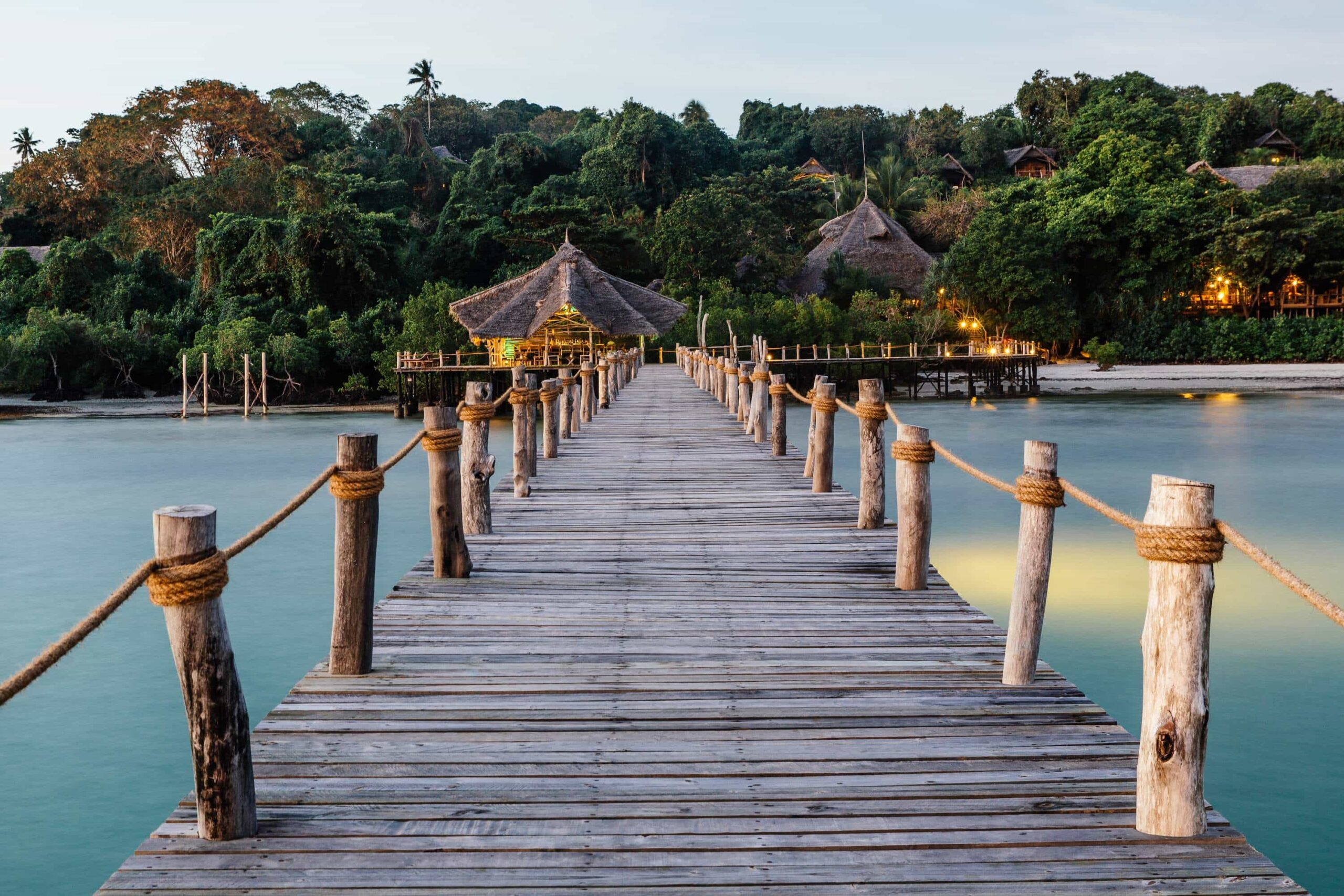
Five nights on Zanzibar transforms the fourteen-day itinerary from good to genuinely complete. Two beach days on the north coast, a Stone Town and spice farm day, a Mnemba Atoll or Prison Island day trip, and a relaxed departure morning give Zanzibar room to reveal itself in layers rather than as a rushed single-day activity. The north coast resorts at Nungwi and Kendwa offer the island’s calmest year-round swimming conditions, with a tidal cycle that keeps water swimmable from morning until late afternoon. Reef snorkelling from these beaches requires no boat and no diving certification, yet delivers turtles, octopus, parrotfish, and moorish idols in clear, warm water.
The Mnemba Atoll day trip — a forty-minute boat ride from the north coast to an uninhabited private island surrounded by one of East Africa’s finest coral reef systems — is Zanzibar’s best half-day snorkelling and diving addition. Clean open-ocean water circulating through the atoll’s channel maintains visibility that regularly exceeds fifteen metres. Spinner dolphins frequently follow the boat between the north coast and the atoll, riding the bow wave for several minutes before peeling away. The combination of open-ocean dolphin encounters and coral reef snorkelling in a single half-day activity is one of Zanzibar’s finest additions. African Wild Trekkers recommends the Mnemba day trip for all five-night Zanzibar stays.
The 14-Day Kilimanjaro Version
Replacing Beach Days with the Mountain
Structure for the Climber’s Fourteen Days
Travellers who came to Tanzania specifically for Kilimanjaro and the safari can restructure fourteen days to incorporate the mountain alongside a shorter Zanzibar component. Five safari days cover the Serengeti with two nights, Ngorongoro with one full day, and Tarangire with one night — a tighter northern circuit that sacrifices a Serengeti night to create room for the mountain. Seven Kilimanjaro days follow using the Machame Route — Tanzania’s most popular route, with a high summit success rate due to its gradual acclimatisation profile. Two Zanzibar nights close the circuit as a recovery beach component before the international departure.
Two Zanzibar nights after Kilimanjaro do not accommodate both Stone Town and reef snorkelling alongside beach rest, so most climbers choose one focus and commit to it. African Wild Trekkers recommends the north coast for climbers who want a complete beach rest after the mountain, and Stone Town’s hotels for travellers who prefer cultural interest over resort beach experience. Both options deliver two satisfying Zanzibar nights without the pressure of fitting in too many activities. The team manages the Kilimanjaro-to-Zanzibar flight logistics as part of the same coordinated booking as the safari and mountain components.
Plan Your Safari
A fourteen-day Tanzania itinerary gives every component enough room to breathe — the safari runs long enough to feel exploratory, Zanzibar delivers both beach and cultural experience, and the optional Kilimanjaro adds a physical achievement that most travellers spend years aspiring to. African Wild Trekkers recommends the fourteen-day format for travellers who want to experience Tanzania fully without any component feeling compressed. The team advises on the safari-and-beach versus safari-mountain-beach structure during the initial booking consultation, based on your fitness level, climbing interest, and travel priorities.
Every fourteen-day booking includes all northern circuit park fees, a licensed guide and safari vehicle, camp accommodation with full board, the internal Kilimanjaro-to-Zanzibar flight, and Zanzibar accommodation with breakfast. The Kilimanjaro version adds summit permits, a licensed mountain guide, cook, and porter team, camp equipment, and all mountain meals. The team confirms every component with written confirmations before any deposit discussion begins.
Contact African Wild Trekkers at africanwildtrekkers.com/contact with your Tanzania travel dates and preferred itinerary structure and we will build a personalised fourteen-day plan with full cost breakdown within 24 hours.