Congo Nile Trail Rwanda: Your Complete Guide to the Lake Kivu Shoreline Route
The Congo Nile Trail Rwanda stretches 227 kilometers along the dramatic western lakeshore from Rubavu in the north to Rusizi in the south, passing through fishing villages, tea estates, secondary forest, and mountain ridges with views that rank among Africa’s finest. This trail runs along the watershed divide between the Congo and Nile river basins, and every drop of rain that falls on its western slopes flows toward the Atlantic while eastern rain flows toward the Indian Ocean. Day hikers can tackle individual sections independently while supported multi-day walkers and mountain bikers complete the full route over six to eight days with community lodges providing meals and beds each evening. African Wild Trekkers incorporates Congo Nile Trail segments into Lake Kivu itineraries for clients who want to move through Rwanda’s landscape on foot rather than from inside a vehicle.
Understanding the Trail Route
Northern Section: Rubavu to Karongi
The northern section of the Congo Nile Trail begins at Rubavu (Gisenyi) town and follows the lakeshore south through tea-growing communities, volcanic rock formations, and small fishing settlements for approximately 100 kilometers to Karongi. This stretch offers the trail’s most accessible terrain for beginners because significant portions follow flat or gently undulating paths close to the water’s edge before climbing to ridge viewpoints. Communities along the northern route have developed homestay and guesthouse infrastructure specifically for trail users, and you reach a bed with a meal available each evening within a reasonable day’s walking distance. The lake views from the ridge sections between Rubavu and Kibuye reward the short climbs with panoramas that stretch to the Congo shoreline across the water. Most trail users take three to four days to cover this northern section at a comfortable pace.
Southern Section: Karongi to Rusizi
The southern half of the Congo Nile Trail between Karongi and Rusizi covers approximately 127 kilometers through the most remote and physically challenging terrain on the entire route. The trail climbs dramatically away from the lake in several sections, crossing ridges above 2,000 meters before descending back to shoreline level, and these elevation changes demand proper fitness preparation and loaded pack management skills. Nyungwe Forest National Park forms the eastern horizon for much of this section, and the biodiversity of the forest spills into the trail corridor through birdlife, butterfly populations, and occasional colobus monkey sightings in the canopy above. Community infrastructure exists but is spaced further apart than in the north, so carrying an extra day’s food provides useful buffer against longer-than-expected walking days. This section delivers the trail’s most rewarding sense of remoteness and physical achievement for travelers willing to earn it.
Day-Trip Sections for Limited Time Travelers
Travelers who cannot spare multiple days for the full trail can experience the Congo Nile Trail through single-day sections that capture the route’s essence without requiring overnight logistics. The Kibuye Peninsula section near Karongi offers a highly scenic four-hour circular walk that follows the trail ridgeline, descends to a fishing village, and returns along the lakeshore. The Rubavu to Gisenyi beach section runs five kilometers on flat ground and makes a simple morning walk for hotel guests in either town. A car drop-off and pickup at separate trailheads allows you to walk point-to-point on the most dramatic sections without backtracking. African Wild Trekkers builds half-day Congo Nile Trail walks into Lake Kivu stopover days so clients experience the route without disrupting their wider Rwanda itinerary schedule.
Mountain Biking the Congo Nile Trail
Why Cyclists Love This Route
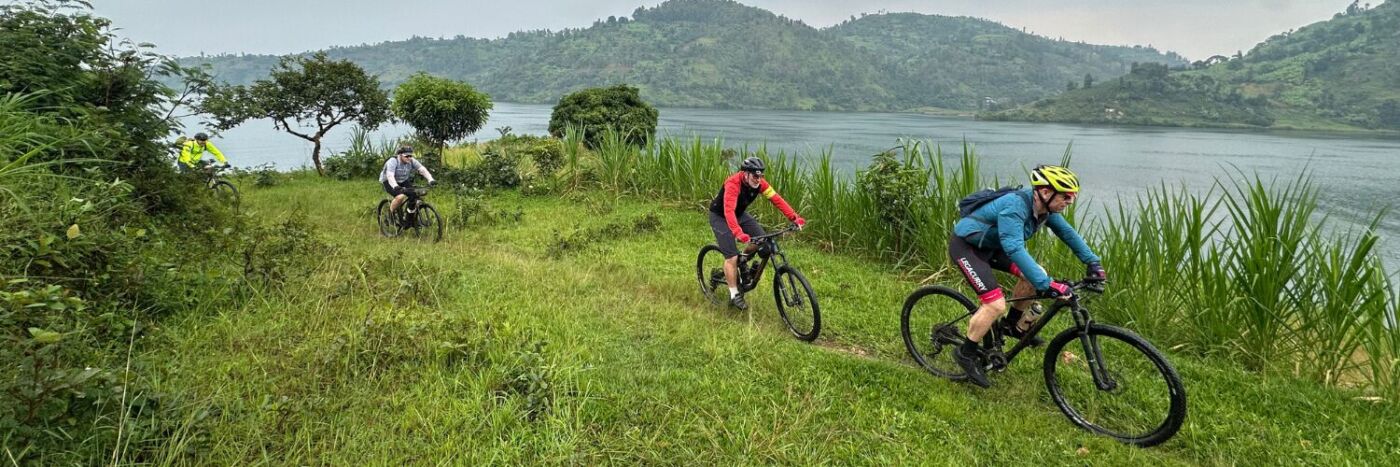
Mountain bikers rate the Congo Nile Trail among Africa’s best multi-day cycling routes because the mix of technical singletrack, ridge doubletrack, lakeside flat sections, and steep village climbs creates endlessly varied riding that keeps experienced cyclists fully engaged over the full six-day route. The volcanic soil provides excellent traction in dry conditions, and the views from ridge sections reward the climbing with descents as visually spectacular as any trail on the continent. Local communities welcome cyclists warmly, and the trail economy depends on trail users spending on meals, beds, and guides, which creates a positive relationship between riders and shoreline residents that enhances the social dimension of the journey. Cycling operators in Rubavu provide quality full-suspension mountain bikes with hydraulic disc brakes, helmets, and repair kits for guided multi-day trips. The best cycling season runs June through September and December through January when dry conditions firm the trail surface.
Self-Guided vs. Guided Cycling
Experienced mountain bikers comfortable with navigation can ride sections of the Congo Nile Trail independently using the detailed trail maps available from the Rwanda Development Board office in Rubavu. Route markers exist on the main trail corridor but vary in quality in more remote sections, so offline GPS tracks downloaded before departure prevent navigation errors in the southern segment. Guided cycling trips led by local operators bring the significant advantage of a support vehicle carrying luggage, lunch, and mechanical spares, which transforms multi-day cycling from a logistics challenge into a pure riding experience. Group guided trips also handle community guesthouse reservations in advance, which removes the uncertainty of arriving in a remote village hoping for a bed. African Wild Trekkers connects clients with the most reliable cycling operators on the Lake Kivu circuit for both guided and self-supported adventures.
Physical Preparation for a Multi-Day Cycle
The Congo Nile Trail demands a solid base of mountain biking fitness because cumulative elevation on the full route exceeds 6,000 meters of climbing spread across six days. Riders who train with loaded panniers or a backpack in the eight weeks before departure adapt better to the weighted riding position than those who only train on an empty bike. Core strength work prevents lower back fatigue on the long descending sections where you naturally tense against the bike rather than absorbing trail vibration through your legs. Carrying a well-fitted chamois cream, blister plasters, and anti-inflammatory tablets in your emergency kit prevents minor discomforts from escalating into forced rest days. Altitude acclimatization is less critical for cyclists than for high-altitude trekkers because the constant movement and ridge-to-lake elevation variation prevents prolonged exposure at any single altitude.
Practical Trail Information
Permits, Fees, and Trail Access
The Congo Nile Trail does not currently require a dedicated trail permit for hiking, though sections passing through official protected areas require the relevant park entry fees. Community guesthouses along the route charge between $10 and $30 USD per night including dinner and breakfast, and these fees flow directly to trail-corridor households. Hiring a local community guide for individual sections costs approximately $15 to $25 USD per day and supports livelihoods while providing navigation confidence and cultural context that independent walking cannot replicate. Trail management improvements funded by Rwanda Development Board and international NGOs have added trail markers, rest points, and basic sanitation facilities that did not exist five years ago. African Wild Trekkers arranges guide hire and guesthouse reservations for clients who want a supported Congo Nile Trail experience without full logistical planning.
Best Season for Trail Conditions
Dry season months from June through September and December through January provide the firmest trail surfaces and clearest views across Lake Kivu to the Congo horizon. Rain transforms the volcanic clay soil into a slippery surface that demands constant attention on descent sections and makes cycling technically demanding even for experienced riders. The long rains from March through May cause some sections of the trail to become temporarily impassable due to erosion and flooding, particularly in the southern segment where drainage infrastructure is less developed. Early morning starts in any season allow you to cover distance before afternoon cloud builds over the lake, and the dawn light on the water from ridge positions rewards the early alarm with extraordinary photography conditions. November marks the short rains season, which delivers brief but intense afternoon downpours that pass quickly and leave the trail usable for the following morning.
Plan Your Safari
Add the Congo Nile Trail to Your Rwanda Trip
African Wild Trekkers builds Congo Nile Trail walks and cycling segments into Lake Kivu itinerary days alongside gorilla trekking and Nyungwe Forest activities. Contact us at africanwildtrekkers.com/contact to plan your route.
What Your Package Covers
Your Congo Nile Trail itinerary includes community guesthouse reservations, local guide hire, vehicle support, and transfers connecting the trail to your wider Rwanda safari activities.
Request Your Lake Kivu Adventure Quote
Tell us your fitness level and available days and we will design the right Congo Nile Trail experience for your trip. We respond within 24 hours at africanwildtrekkers.com/contact.