Lions Reintroduced to Rwanda: The Story of Akagera’s Pride Restoration
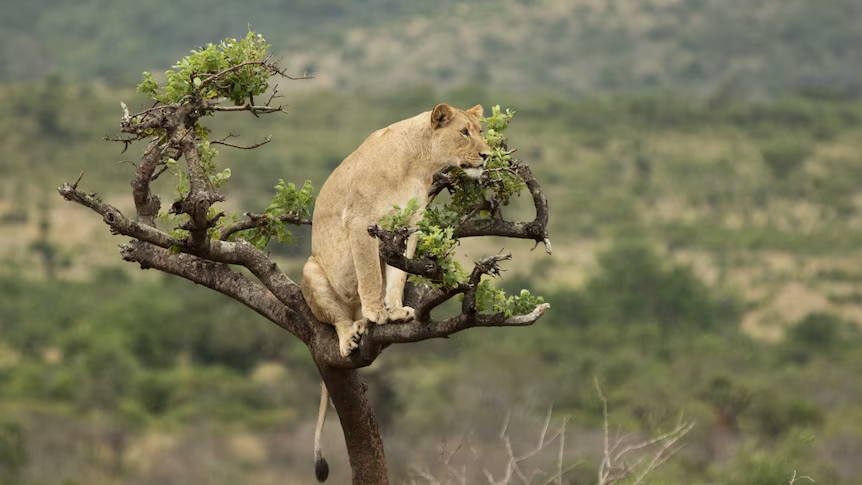
Lions reintroduced Rwanda Akagera in 2015 after more than two decades without a wild lion population in the country, and the reintroduction stands as one of Africa’s most carefully planned and successful large predator restoration programs. Seven lions from South Africa and Zimbabwe arrived at Akagera National Park as part of a collaboration between African Parks and Rwanda Development Board, following years of prey population recovery work that made the park viable for apex predator support. The pride has grown steadily through natural breeding, and by 2026 Akagera hosts approximately 50 lions distributed across several prides ranging the northern grasslands. African Wild Trekkers includes Akagera game drives in Rwanda itineraries specifically because the lion population now delivers reliable sightings that rival the predator viewing available at far more expensive East African destinations.
Why Lions Disappeared From Rwanda
Post-Genocide Land Encroachment
The 1994 genocide and its aftermath triggered a humanitarian crisis that caused massive population displacement, and returning communities resettled land previously held as protected area, including sections of Akagera National Park. The park shrank by approximately 50 percent as refugee resettlement programs allocated former park territory to farming households, fundamentally changing the habitat mosaic that large carnivores require. Lions found their range compressed, prey populations depleted by subsistence hunting, and the boundary between park and farmland increasingly porous in ways that brought predators into contact with livestock. Livestock killing triggered retaliatory poisoning by herders, and the combination of habitat loss, prey scarcity, and retaliatory killing eliminated the last lions from Rwanda by the late 1990s. The period between the last confirmed lion sighting and the 2015 reintroduction lasted nearly 20 years.
Akagera’s Degradation Under Previous Management
Before African Parks assumed management in 2010, Akagera National Park suffered severe poaching pressure that depleted the ungulate populations that lions require as prey base. Elephant numbers dropped sharply, buffalo herds shrank, and the grassland ecosystem degraded as illegal grazing by domestic cattle inside the park competed with and displaced wild herbivores. A park management structure without adequate funding for ranger programs, equipment, or community engagement cannot reverse this dynamic regardless of good intentions, and Akagera’s condition in the mid-2000s reflected a management system overwhelmed by the pressures it faced. African Parks brought substantial fundraising capacity, operational expertise, and a long-term commitment that fundamentally changed the park’s financial and operational trajectory within the first five years of their management contract. This transformation created the conditions that made lion reintroduction biologically justified and practically possible.
Prey Recovery as the Critical Prerequisite
The decision to reintroduce lions to Akagera required confirmation that prey populations had recovered to densities sufficient to sustain a growing carnivore population without reaching prey depletion that collapses the entire ecosystem. African Parks conducted annual wildlife counts from 2010 to 2014 that tracked buffalo, Uganda kob, topi, impala, waterbuck, and zebra populations as the primary lion prey species. By 2014, counts confirmed that prey biomass had recovered enough to support an initial founder group of seven lions without triggering measurable prey depression within two years of introduction. The elephant population had also stabilized under anti-poaching management, and crocodile and hippo numbers in the lake system confirmed the broader predator-prey balance was functioning. This evidence-based approach distinguished the Akagera reintroduction from politically motivated wildlife projects that proceed before ecological conditions support success.
The 2015 Lion Reintroduction Operation
Selecting and Transporting the Founder Animals
The seven founder lions came from Liwonde National Park in Malawi and Majete Wildlife Reserve, both managed by African Parks, as well as from private reserves in South Africa. Selection criteria prioritized animals with verified clean bills of health, no known history of livestock predation outside reserve boundaries, and genetic profiles that maximized diversity within the small founder group. The lions traveled by specialized wildlife transport aircraft to Kigali and then by road in reinforced veterinary crates to Akagera, with veterinary monitoring throughout the 36-hour journey. Upon arrival, the pride was held in a large boma within the park for six weeks to allow the animals to establish bonds, recover from transport stress, and learn the immediate landscape before the boma fences opened. This soft release approach produced much lower stress behavior and better pride cohesion than hard releases that immediately expose animals to an unfamiliar wild landscape.
Tracking Technology and Intensive Monitoring
Every founding lion received a GPS satellite collar before release, and African Parks rangers tracked each animal’s movements daily through the park’s ranger station network during the critical first year after the boma opened. Collar data allowed rangers to identify when lions approached the park boundary and to assess whether specific individuals showed fence-crossing tendencies that would require intervention. The monitoring program also tracked prey selection patterns to confirm the lions were hunting wild ungulates rather than developing cattle preferences from the park boundary farms. Monthly data sharing with Rwanda Development Board and the international conservation community created a transparent record of the reintroduction’s progress that informed subsequent large carnivore programs in Rwanda and neighboring countries. By the end of the first year, no cattle kills had been confirmed, prey selection matched ecological models, and two cubs were born — confirming the program was succeeding beyond initial projections.
Community Engagement Alongside the Reintroduction
African Parks launched intensive community engagement programs in the 14 cells adjacent to Akagera’s boundary before and after the lion release, explaining the safety protocols, compensation mechanisms, and economic benefits associated with a large predator reintroduction. Predator-proof livestock enclosures called lion-proof bomas were constructed in 20 households in the highest-risk areas with materials provided by African Parks and labor supplied by the community, creating a tangible material benefit connected directly to predator tolerance. A community lion compensation fund established before the first lion stepped outside the boma provided financial payments for any verified livestock killing attributable to Akagera lions within the boundary zone. The fund has paid out on several confirmed incidents, demonstrating that the mechanism works and building trust that community losses from predator activity will not go unaddressed. This combination of material support and transparent financial compensation explains why community opposition to the lion reintroduction remained minimal in a region where such programs typically generate intense local conflict.
Seeing Lions in Akagera Today
Where and When to Find Lions on a Game Drive
Akagera’s lions concentrate in the northern savanna circuits north of Lake Rwanyakizinga, where open grassland interspersed with dense thickets provides the combination of hunting terrain and daytime shade cover that lions prefer. Morning game drives between 6 and 9 AM offer the best lion viewing because the animals remain active through the cool early hours and often remain visible in open grassland until heat drives them into cover. Dry season months from June through September thin the grassland vegetation and concentrate prey animals at the remaining water sources, making lion encounters more predictable than in the wet season when animals disperse across the full park. Your game drive guide receives radio updates from ranger patrols who track the collared pride members daily, and this intelligence dramatically improves your chances of reaching a lion sighting location before the animals move into dense cover. Patience matters — spending time at a location where lions were seen the previous day often rewards with the animals returning to the same shade or water source.
How Akagera Lion Sightings Compare to Other Parks
Travelers who have visited Kenya’s Masai Mara or Tanzania’s Serengeti arrive at Akagera expecting the density of lion sightings available in those globally famous ecosystems and sometimes find the smaller population less immediately impressive. However, Akagera lion encounters frequently offer closer viewing distances and less vehicle competition than the overcrowded Mara or Serengeti circuits, where dozens of vehicles cluster around a single animal. The intimacy of a 20-vehicle-free Akagera lion sighting often produces the most memorable lion photographs of a traveler’s entire Africa experience specifically because the absence of competing vehicles allows patient positioning and unhurried observation. Akagera also delivers rhino, lion, and elephant within the same game drive circuit — a combination unavailable in any Ugandan park and possible only in certain Kenyan and Tanzanian locations. The park’s growing reputation for predator sightings is attracting travelers who want quality over quantity in their East Africa safari experience.
Booking Your Akagera Game Drive
Game drives in Akagera National Park operate with certified park guides assigned at the entrance gate, and all game drive vehicles must stay on designated tracks throughout the park. Private vehicle entry with your own safari car and an Akagera guide is the standard arrangement for travelers arriving with a tour operator, and African Wild Trekkers coordinates guide assignments and early gate entry permissions ahead of your arrival. Spending two nights inside the park at Akagera Game Lodge or Ruzizi Tented Lodge gives you access to four game drives across two days, which maximizes the statistical probability of excellent lion sightings while also exposing you to the full range of Akagera’s elephants, giraffes, zebras, and the extraordinary Lake Ihema boat safari. The combination of overnight stay and multiple drives consistently produces the complete Akagera wildlife experience that day visitors cannot access.
Plan Your Safari
Plan Your Akagera Lion Safari
African Wild Trekkers arranges overnight Akagera itineraries with dedicated lion-focused game drives, boat safaris on Lake Ihema, and accommodation inside the park. Contact us at africanwildtrekkers.com/contact to start planning.
What Your Package Covers
Your Akagera package includes park entry and guide fees, game drive vehicle, Lake Ihema boat safari, and two nights at Akagera Game Lodge or Ruzizi Tented Lodge with all meals and transfers from Kigali.
Request Your Rwanda Wildlife Quote
Tell us your travel dates and we will design a complete Rwanda itinerary combining Akagera, gorilla trekking, and other activities. We respond within 24 hours at africanwildtrekkers.com/contact.