info@africanwildtrekkers.com

info@africanwildtrekkers.com

blog

Kenya Camel Safari: Riding Through Samburu and the Northern Frontier

Kenya Camel Safari: The Most Adventurous Way to Explore the North

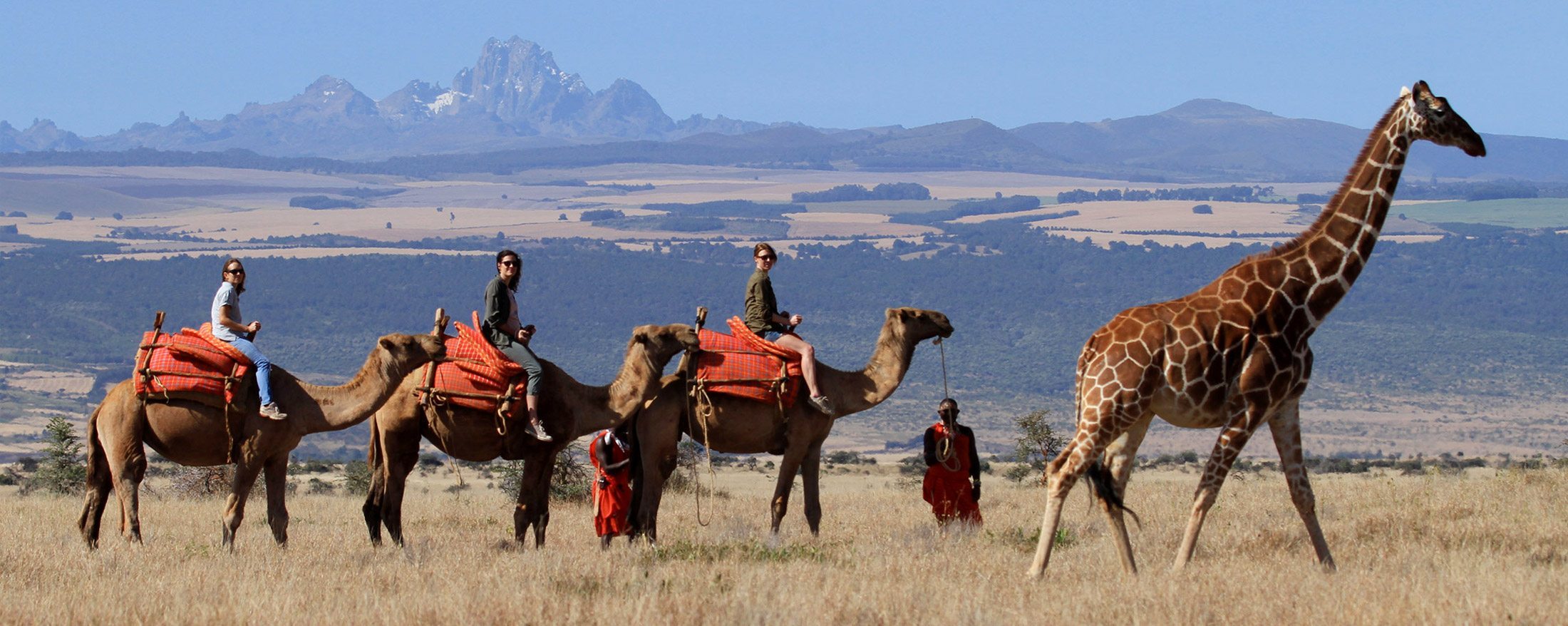
A Kenya camel safari provides the most physically immersive and adventurous alternative to the vehicle-based game drive format that defines most Kenya safari itineraries — a multi-day journey on camelback through the semi-arid acacia scrubland of Samburu, Laikipia, or the Northern Frontier District, travelling at the pace of the landscape itself rather than the pace of a 4×4 on a graded road. The camel safari tradition in northern Kenya dates to the colonial-era transport systems that linked trading posts across the waterless northern plains, and modern camel trekking operations have formalized this heritage into safari experiences ranging from single-morning camel rides accessible to every fitness level to five to seven day wilderness traversals that cover 20 to 30 kilometers per day across terrain inaccessible to any motorized vehicle. Kenya camel safari operations concentrate in the Laikipia-Samburu corridor north of the equator, where the landscape’s open character, the camel’s natural habitat familiarity, and the Samburu and Rendille communities’ herding traditions combine to create an authentic camel culture context that distinguishes Kenya’s camel safari from the tourist camel rides at Egyptian pyramids or Moroccan kasbahs. African Wild Trekkers integrates Kenya camel safari experiences into northern Kenya circuits as an active adventure component that complements the vehicle game drive’s wildlife observation with a different form of landscape engagement.

How a Kenya Camel Safari Works

Types of Camel Safari Available in Kenya

Kenya camel safaris range from a single two-hour morning ride at a Samburu lodge — suitable for all fitness levels and serving as an introduction to camel movement and the landscape from camelback height — to fully catered five-day wilderness treks where a support team of camel handlers, cooks, and bush rangers moves with the trekking group across uninhabited terrain between seasonal water sources. The multi-day format is the more rewarding experience for travelers with sufficient time and adventurous intent — covering 20 kilometers per day through northern Kenya’s acacia-dotted plains on the back of a walking camel places the traveler in the landscape rather than above it, and the sensory immediacy of travel at four kilometers per hour — the smell of the scrub, the sounds of the camel’s gait, and the slow revelation of terrain that the vehicle covers in seconds — creates a psychological relationship with the northern Kenya environment unavailable from any vehicle window. Camelback height — approximately three meters above the ground when seated on a loaded saddle — provides an elevated savanna viewing angle that positions the traveler above the acacia scrub line for a clear sightline across terrain that the vehicle’s ground-level perspective sometimes struggles to see through. The elevation advantage is particularly useful for spotting gerenuk feeding at the acacia tops — the gerenuk’s characteristic standing-on-hind-legs posture is visible from camelback that would be missed from a vehicle window at the same distance.

Laikipia’s most established camel safari operators — Ol Malo Lodge and the Lewa Wilderness camel trekking program — run five-day circuits through the conservancy land and the surrounding community areas with full overnight camp support and armed ranger accompaniment. The overnight camp setup on a multi-day camel trek involves the support team driving ahead in a vehicle to reach the designated camp site, setting up tents, preparing a shower using a solar-heated camp shower bag, and cooking the evening meal before the camel party arrives at 4 PM. The contrast between the day’s physical exertion on camelback and the camp’s comfortable dinner setup — a folding table with a tablecloth, a three-course meal from a camp kitchen, and a campfire in the open northern Kenya sky — creates the bush camp intimacy that luxury lodge accommodation attempts to simulate but that a genuinely remote camp experience delivers without architectural mediation. African Wild Trekkers books the multi-day camel trek component of northern Kenya itineraries for clients who specifically request the active adventure format, and the team coordinates the camel operator booking alongside the Samburu lodge or Laikipia conservancy camp reservations that the standard vehicle game drive components require.

Physical Requirements and Riding Experience

Camel riding requires no prior riding experience — the camel’s walking gait is gentler and more rhythmically predictable than a horse’s trot, and the saddle’s solid construction allows first-time riders to find balance within the first 30 minutes of movement. The camel rising from rest — a dramatic two-stage movement where the rear legs extend first and the rider tilts sharply forward, then the front legs extend and the rider tilts sharply back — is the most physically surprising moment for first-time camel riders and requires holding the saddle firmly through both transitions. Once upright and moving, the camel’s walking gait creates a four-beat left-right-left-right sway that most riders find comfortable within an hour and meditative after a full day’s travel. The primary physical demand of multi-day camel trekking is not riding fitness but walking fitness — most camel safari operators ask trekkers to dismount for steep descents and river crossings and to walk the camel alongside them, and these walking sections across rough semi-arid terrain in the midday heat demand adequate footwear (closed-toe hiking boots) and cardiovascular endurance for the pace required.

Inner thigh soreness develops on long camel riding days for participants who tense their thighs against the saddle rather than relaxing into the camel’s movement — the correct posture for comfortable camel riding positions the legs loose and long rather than gripping the saddle tightly, and a guide’s posture correction during the first morning’s ride prevents the cumulative soreness that makes Day 3 of a multi-day trek uncomfortable for riders who learn this lesson through experience rather than instruction. Sun protection is the most practically important equipment consideration for a Kenya camel safari because the elevated position on camelback raises the rider above the minimal shade that an acacia-level environment provides, and five to eight hours per day at altitude with direct equatorial sun on exposed skin without adequate SPF 50+ sunscreen, hat, and long-sleeve protection creates severe sunburn that disrupts the remaining safari days. African Wild Trekkers’ pre-booking briefing for camel safari clients covers equipment requirements, physical preparation recommendations, and riding instruction context so every client arrives at the Laikipia or Samburu camel operator prepared for the specific physical experience the format delivers.

Northern Kenya Landscape and Wildlife on Camelback

What You See From the Camel

The northern Kenya landscape traversed by camel safari — the Laikipia Plateau’s acacia grassland, the Matthews Range’s forested escarpment, and the dry riverbeds of the Ewaso Ng’iro tributaries — reveals itself at camel pace in a way that game drive vehicles compress to arrival and departure scenes rather than sustained landscape immersion. The semi-arid scrubland of Samburu at four kilometers per hour shows the botanical complexity that the vehicle’s 40-kilometer-per-hour transit reduces to background texture — the specific acacia species changing from the A. mellifera of the lower valley to the A. tortilis of the open plain, the doum palm clusters at seasonal watercourses, and the termite mound architecture that creates the landscape’s most prominent vertical features become individually distinct rather than collectively indistinguishable. Gerenuk, reticulated giraffe, and beisa oryx — Samburu’s most iconic northern endemic species — tolerate camelback approaches more comfortably than vehicle approaches in some contexts because the camel’s silhouette and scent profile falls within the grazing herbivore category that the wildlife classifies as non-threatening, creating approach distances impossible to achieve from a motorized vehicle’s visual and acoustic profile. African Wild Trekkers guides who have led multi-day camel treks report the gerenuk as the species most consistently observed at remarkable proximity — the animal’s evolutionary relationship with the camel zone’s species assemblage creates a tolerance that makes hand-reach-distance viewing possible on the best camel safari mornings.

The camel safari’s wildlife encounter profile differs from the vehicle game drive in another specific way — nocturnal and crepuscular species that retreat from vehicle traffic during the day remain active around the slow-moving camel caravan, and species like the bat-eared fox, aardwolf, and serval cat that a vehicle approaches with a noise signature detectable from 500 meters are sometimes visible from the camel caravan at 50 to 100 meters because the camel’s movement profile does not trigger the same flight response. The overnight camp site observation — sitting at the campfire in open northern Kenya landscape after dark — adds the nocturnal dimension that the vehicle game drive’s dusk-to-dawn park regulations exclude, and camp-based species observation by torchlight (reduced red-filter light to minimize night vision disruption) extends the day’s wildlife list into categories unavailable on standard safari formats. African Wild Trekkers clients who specifically request the nocturnal camp wildlife component receive a field guide briefing and red-filter torch on the multi-day camel trek so the evening camp period becomes a productive wildlife observation session rather than simply the between-dinner social hour.

Camel Safari Combined With Vehicle Game Drives

The Kenya camel safari works most effectively as a component within a broader northern Kenya itinerary rather than as the sole activity of a multi-day trip — combining a three-day Samburu vehicle game drive with a two-day camel trek through the conservancy’s non-motorized zone creates a wildlife and adventure combination that covers the Samburu Five endemic species from both the vehicle’s efficiency perspective and the camel’s immersive perspective. Vehicle game drives identify the wildlife targets, locate the gerenuk territories, and cover the Ewaso Ng’iro riverfront species before the camel trek transitions to the deeper bush experience of the conservancy’s vehicle-free zones. The Laikipia Plateau’s multi-day camel trek connections — from Ol Malo Lodge south through the Lewa Wildlife Conservancy — can include stop nights at different conservancy guest houses, creating a mobile point-to-point trek format that connects wildlife areas rather than returning to the same base each evening. African Wild Trekkers builds Kenya camel safari itineraries as point-to-point northern circuit experiences where the camel trek links Laikipia conservancy lodges in a logical sequence that minimizes backtracking and maximizes the northern Kenya landscape traversal that the active adventure format is specifically designed to deliver.

The Kenya camel safari season runs most comfortably from June through September and January through March — the dry season periods when firm ground supports camel movement on clay soils that the wet season turns to deep mud that disrupts the trek’s daily distance targets and creates safety risks on steep terrain. The September to November post-migration period in the Maasai Mara is an excellent time to combine a Maasai Mara vehicle safari with a Samburu-Laikipia camel trek — fly from Nairobi to the Mara for three or four nights of migration and predator viewing, then fly north to Samburu for two to three days of vehicle-based game drives and a final two-day camel trek through the Laikipia conservancy before returning to Nairobi for the international departure. This four-component Kenya itinerary delivers more environmental and activity diversity per day than any single-park extended stay can produce, and the camel trek component’s specific adventurous character provides the trip’s most immediately distinctive element for the post-safari storytelling that travelers bring back to family and friends.

Plan Your Safari

Kenya camel safari bookings require advance coordination with the specific camel operator whose routes and camp logistics fit your preferred northern Kenya itinerary — multi-day trek dates are limited by the camel team’s availability and the camp setup logistics that fix available departure dates weeks in advance. African Wild Trekkers coordinates the camel booking alongside your Samburu and Laikipia vehicle game drive accommodation in a single northern Kenya package.

Your Kenya camel safari package includes Samburu lodge accommodation, vehicle game drives with Samburu endemic species focus, camel trek operator booking, overnight bush camp with full support team, all park and conservancy fees, domestic flights between Nairobi and the northern Kenya destinations, and a pre-trip equipment and physical preparation brief specific to the camel trek duration.

Contact African Wild Trekkers at africanwildtrekkers.com/contact with your travel dates and camel trek interest and we will confirm operator availability and send a complete northern Kenya camel safari itinerary within 24 hours.