Tanzania Safari Cost 2026: How Much Does a Tanzania Safari Really Cost?
A Tanzania safari ranks among the world’s most extraordinary wildlife experiences, and the cost reflects everything the country offers — vast wilderness, professional guiding, and unmatched game viewing in the Serengeti, Ngorongoro, and Tarangire. In 2026, prices span a wide range depending on the season, accommodation tier, circuit length, and how many people share the vehicle. Understanding how those figures break down helps you match your budget to the right experience rather than compromising on the parts that matter most. African Wild Trekkers builds transparent, itemised quotes so every client knows exactly what they are paying for before any deposit changes hands.
What Determines the Price of a Tanzania Safari
Park Fees and Conservation Levies
Serengeti and Ngorongoro Entry Fees
Tanzania’s northern circuit carries some of Africa’s highest park fees, and those charges represent a significant portion of any safari budget. In 2026 the Serengeti National Park charges non-resident adults approximately USD 70 per day, while the Ngorongoro Conservation Area levies a separate crater service fee on top of the conservation fee. These fees fund anti-poaching operations, habitat management, and ranger salaries across millions of protected acres. Operators pay fees directly on behalf of clients and include them in the package total rather than billing them separately at the gate.
Tarangire National Park and Lake Manyara National Park carry lower daily fees, which is one reason that circuits combining those parks with the Serengeti can appear more affordable than a pure Serengeti itinerary. When you compare quotes from different operators, always ask whether park fees appear as a line item or are bundled silently into the per-day rate. Transparent operators show both figures. Fees rise periodically, so 2026 quotes may differ slightly from rates published in 2024 or early 2025.
Ngorongoro Crater Service Fee
Entering the Ngorongoro Crater triggers a separate crater service fee per vehicle per descent. In 2026 this fee runs approximately USD 295 per vehicle per descent, meaning a private vehicle descending twice pays the charge twice. Groups sharing a vehicle effectively split this cost, which illustrates one of the clearest financial advantages of travelling with a partner or small group rather than as a solo traveller. African Wild Trekkers accounts for all crater service fees in advance so there are no surprises at the ranger station.
Some budget operators reduce crater time or schedule only a single descent to lower costs, but that approach means spending less time with the lions, elephants, hippos, and black rhinos that make the crater floor one of Africa’s great wildlife spectacles. African Wild Trekkers recommends at least a full morning in the crater, timed to arrive as the mist clears and the golden light hits the caldera walls. The crater service fee reflects the conservation management required to protect an ecosystem holding the world’s densest population of large mammals.
Accommodation Tier and What It Changes
Budget Camping Safaris
Budget camping safaris in Tanzania use public campsites within or adjacent to national parks, with tents pitched by the guide or a camp crew and meals prepared over a portable stove or camp kitchen. These itineraries deliver full wildlife access — the same game drives, the same parks, the same professional guide — at a fraction of the cost of tented lodge safaris. In 2026 expect to pay roughly USD 200 to USD 300 per person per day on a well-run budget camping safari covering the northern circuit. That figure includes park fees, guide, vehicle, food, and camping fees but excludes flights and personal items.
The trade-off is comfort rather than wildlife quality. Shared ablution blocks, thin mattresses, and early starts are part of the experience, and many travellers find that sleeping under a billion stars inside a national park more than compensates. Solo travellers pay a single supplement because the vehicle and guide costs stay the same regardless of group size. African Wild Trekkers operates tented camping itineraries with quality sleeping gear, a dedicated cook, and private camp setups where the park rules allow.
Mid-Range Tented Camps and Lodges
Mid-range properties in Tanzania — permanent tented camps and comfortable safari lodges — deliver en-suite bathrooms, real beds, and dining rooms with set menus. In 2026 mid-range safaris run from approximately USD 400 to USD 600 per person per day inclusive of park fees, accommodation, meals, and guiding. This tier represents the sweet spot for most travellers: meaningful comfort, professional service, and full park access without the premium attached to the luxury tier. Properties at this level include well-known camps on the Serengeti’s western and central sections, lodges on the Ngorongoro rim, and tented camps at the edge of Tarangire.
Quality varies significantly within the mid-range bracket, and the difference between a well-run camp and a poorly maintained one can be dramatic. African Wild Trekkers personally vets every property it recommends, visiting annually and maintaining relationships with camp managers so it can respond quickly if standards change. When you book through African Wild Trekkers, your accommodation matches the overall quality of your guide and vehicle rather than simply hitting a price point.
Luxury Lodges and Exclusive Camps
Luxury Tanzania safaris start at USD 700 per person per day and can exceed USD 2,000 per person per day at the most exclusive private conservancy camps. These properties offer private game drives departing on your schedule, bush dinners under acacia trees, heated pools, and rooms designed by architects who understand how light moves across the savanna at sunset. The Serengeti’s northern section near the Mara River hosts several ultra-luxury camps that position clients directly in the path of the Great Migration’s river crossings. Ngorongoro’s crater rim lodges offer panoramic views from private verandas over the caldera floor.
At the luxury tier, the defining difference is exclusivity and flexibility. Private vehicles, private guides, and the ability to stop wherever and whenever you choose transform a game drive into something more closely resembling field research. Many luxury properties also run walking safaris, night drives, and specialist photographic guiding that budget and mid-range operations cannot offer. African Wild Trekkers curates luxury Tanzania itineraries for clients who want the best the country has to offer and understands which properties genuinely deliver that standard.
Typical Total Costs for Common Tanzania Itineraries
Five-Day Northern Circuit Safari
What Five Days Covers
A five-day northern circuit safari typically covers Tarangire, Lake Manyara, the Serengeti, and Ngorongoro Crater — the core of Tanzania’s greatest parks. In 2026 a five-day budget camping itinerary for two people sharing costs roughly USD 2,000 to USD 3,000 per person excluding international flights. A mid-range version of the same parks runs USD 3,500 to USD 5,500 per person, while luxury camps push total costs to USD 6,000 to USD 10,000 per person. All figures include park fees, guiding, vehicle, food, and accommodation but exclude tips, visa fees, and travel insurance.
Five days gives you enough time to see the major habitats and encounter elephants, lions, leopards, and the crater’s black rhinos with reasonable probability. The Serengeti deserves at least two full days to feel the scale of the ecosystem. Many first-time Tanzania visitors later say they wished they had spent an extra day or two in the Serengeti, so if the budget allows an extra night, add it there. African Wild Trekkers guides five-day circuits regularly and advises on the exact routing based on wildlife patterns at the time of your travel.
Seven-Day and Ten-Day Extensions
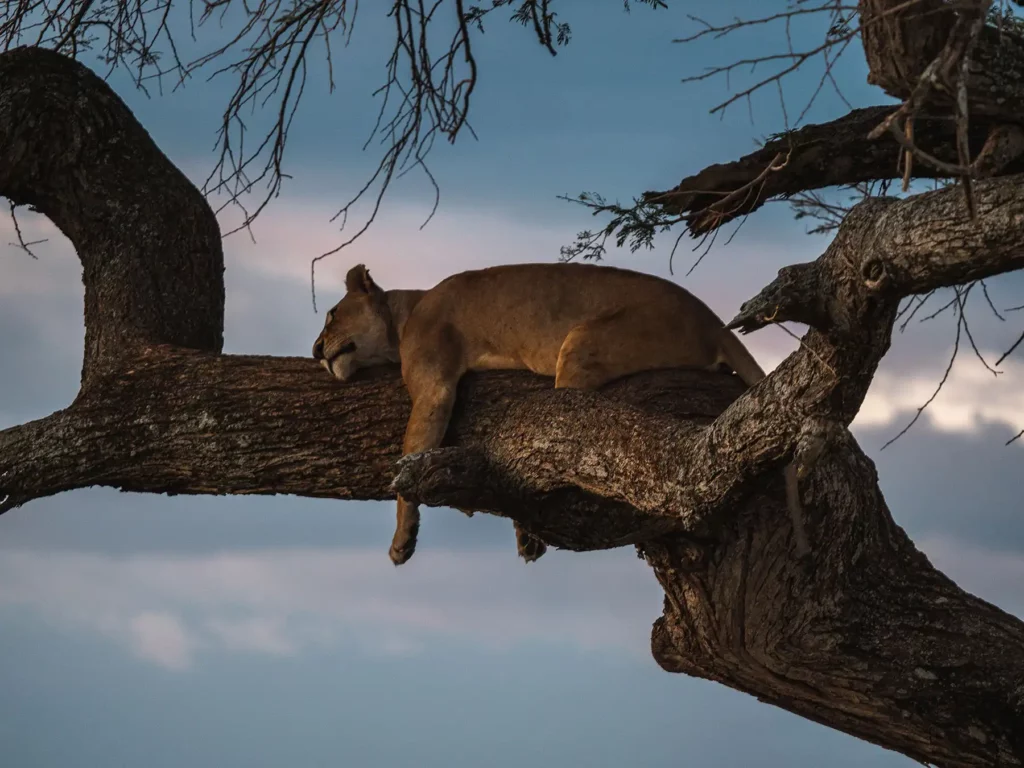
A seven-day safari adds meaningful depth — a second night in the Serengeti, a morning at Lake Manyara’s tree-climbing lions, and more unhurried time at each destination without the pressure of long driving days. Total costs for a seven-day mid-range circuit fall between USD 5,000 and USD 7,500 per person in 2026, depending on accommodation level and season. Ten-day itineraries that add Zanzibar for a beach extension typically cost USD 7,000 to USD 12,000 per person depending on the resort tier for the island segment. The beach component adds relatively little to the overall cost because Zanzibar accommodation is considerably less expensive than mainland safari camps.
The most value-conscious approach is to book safari and beach as a combined package rather than pricing them separately, because operators who manage both legs can apply volume pricing on flights and coordinate transfers seamlessly. African Wild Trekkers handles combined safari-beach packages with a single point of contact from arrival to departure, removing the complexity of booking each component through different providers.
Plan Your Safari
Tanzania safari pricing depends on the number of travellers, the season you choose, the parks you want to visit, and the accommodation tier that suits your travel style. African Wild Trekkers builds fully itemised itineraries so you see exactly what each element costs before committing to any deposit. The team books park fees, camps, internal flights, and Zanzibar transfers as a single coordinated package.
Every Tanzania safari quote from African Wild Trekkers includes a licensed guide, a 4×4 safari vehicle, all park and conservation fees, accommodation, and full board from arrival to departure. Tips, visa fees, travel insurance, and international flights are excluded and itemised separately so there is no ambiguity. The team can match any reasonable budget to the best available experience within that range.
Contact African Wild Trekkers at africanwildtrekkers.com/contact with your Tanzania travel dates and group size and we will send a full cost breakdown within 24 hours.