7-Day Tanzania Safari Itinerary: Serengeti, Ngorongoro and Tarangire
A seven-day Tanzania safari is the most popular format for first-time visitors to the country and for good reason — it covers the Serengeti, Ngorongoro Crater, and Tarangire National Park without feeling rushed, delivers full exposure to the northern circuit’s iconic wildlife, and fits within a standard annual leave allocation that includes travel days. Seven days in the parks means approximately thirty hours of game drive time spread across the four main parks of the northern circuit, enough for meaningful encounters with all members of the big five and the landscape variety that makes Tanzania’s northern circuit so consistently rewarding.
Day-by-Day Seven-Day Tanzania Safari Plan
Days One and Two: Arusha and Tarangire
Day One: Arrival in Arusha
Most seven-day Tanzania safari itineraries begin with an arrival at Kilimanjaro International Airport, the regional gateway closest to Arusha and the northern parks. Your guide meets you at the arrivals hall and transfers you to your Arusha hotel for the night. The afternoon and evening are for recovery after long-haul travel, dinner at your hotel or a restaurant in town, and the pre-safari briefing where your guide outlines the week’s routing, what to bring in the vehicle, and what wildlife to expect in each park. Arriving the day before the safari begins means you start fresh rather than stepping off a plane into a game drive.
Arusha itself is worth an hour’s walk in the morning if you arrive early — the Arusha Cultural Heritage Centre displays quality Tanzanian art and craft, and the Arusha National Park outside town is worth a morning game drive if your schedule includes a full day before the main safari begins. The Arusha market on the main road near the clock tower sells fresh produce, local crafts, and fabric in a lively environment that gives a first taste of Tanzanian everyday life. Most seven-day itineraries arrive in Arusha and depart for Tarangire the following morning, treating the arrival day as a transitional day rather than a full safari day.
Day Two: Tarangire National Park
The second day begins with an early breakfast and a three-to-four hour drive south from Arusha to Tarangire National Park. The park entrance gate sits near the northern boundary, and the Tarangire River running through the park’s centre creates a natural magnet that draws elephants, buffalo, lions, and plains game from the surrounding dry country during the dry season months. Afternoon drives in Tarangire focus on the river corridor, where elephant herds of thirty to one hundred individuals gather at the bank in the late afternoon light. The park also hosts Tanzania’s highest density of baobab trees — enormous, ancient, alien-looking giants that frame the landscape and appear in every direction.
Tarangire at night is a completely different environment. If your camp sits inside the park rather than on its boundary, lion roars, hyena whoops, and the rustle of elephants moving through the darkness replace the silence of an urban hotel. Most Tarangire camps offer bush dinners under the stars as an optional experience, with lantern-lit tables set among the baobabs and a camp staff member positioned discreetly with a flashlight to watch the perimeter. This first night in the African bush — with its sounds, smells, and awareness that the fence between you and the wildlife is either nonexistent or merely a low strand of wire — is the moment many travellers describe as when the safari became real.
Days Three and Four: Serengeti National Park
Day Three: Drive to the Serengeti
The third day involves a drive or flight from Tarangire toward the Serengeti, passing through the Ngorongoro Conservation Area along the rim of the crater. The drive from Tarangire to the Serengeti via Ngorongoro takes approximately five to six hours in total, with a stop at the crater rim viewpoint providing your first look into the caldera before heading west into the Serengeti plain. The landscape shifts dramatically as you cross the conservation area — from the thorn scrub of Tarangire, through the highland forest of the Ngorongoro rim, and then out onto the open grass plains of the southern Serengeti, where the horizon stretches uninterrupted in every direction.
Afternoon game drives in the central Serengeti around the Seronera area deliver year-round predator sightings. The Seronera River corridor holds the park’s highest resident lion pride density, and the rocky outcrops known as kopjes provide elevation for cheetahs scanning the plain and leopards resting between hunts. A first afternoon in the Serengeti typically delivers multiple sightings — a pride of six lions, a cheetah mother with cubs, a pair of jackals working a wildebeest carcass — before returning to camp as the sky turns orange and the first stars emerge.
Day Four: Full Day in the Serengeti
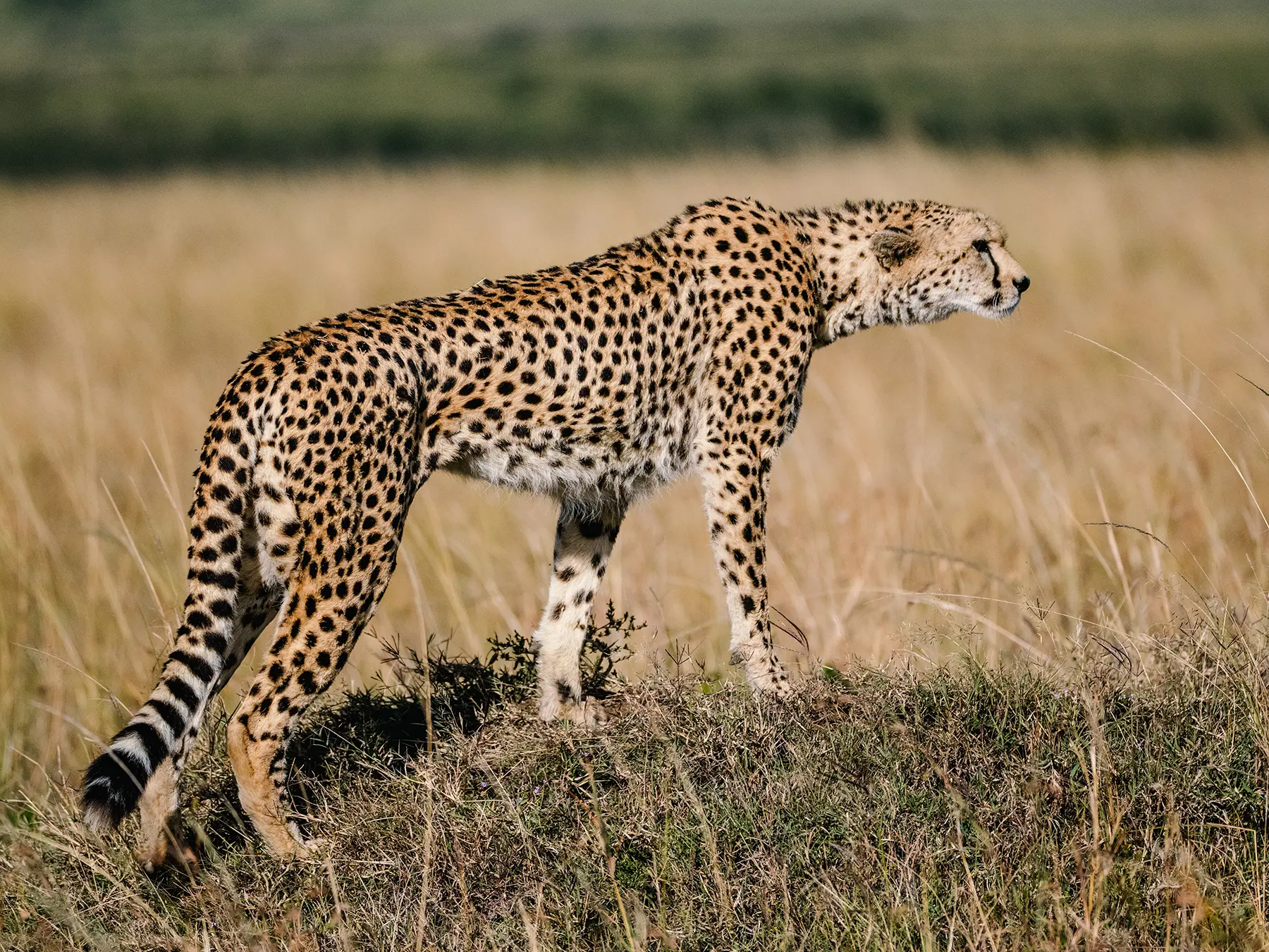
The fourth day is the most important of the seven-day circuit: a full day in the Serengeti with a packed breakfast consumed in the vehicle and no constraint on stopping time. Leaving camp before sunrise puts you at a waterhole or a crossing point as the light changes from purple to gold, and the morning drive from 0600 to 1030 covers the ground at peak activity time when predators have not yet found shade. African wild dogs, rarely seen in many East Africa parks, appear occasionally in the Serengeti’s eastern section around Lobo during the morning hours. Cheetahs on the plain make their morning hunt visible from a great distance — a long acceleration across open ground that either ends in a kill or in a collapse as the prey escapes into denser vegetation.
The afternoon drive from 1600 until sunset focuses on whatever the guide has tracked during the midday rest — a leopard’s location scouted by asking other vehicles, a lion pride that moved to the river, a large elephant family feeding in the acacia woodland. The Serengeti rewards patience; the guide who waits at a promising spot while other vehicles move on often witnesses the moment that defines the entire safari. African Wild Trekkers’ guides understand this instinctively and structure the day to balance coverage with the kind of patient waiting that leads to extraordinary encounters rather than merely ticking boxes.
Days Five and Six: Ngorongoro Crater
Day Five: Drive to Ngorongoro and Rim Arrival
The fifth day moves east from the Serengeti back toward the Ngorongoro Conservation Area, arriving at the crater rim in the late afternoon. The rim sits at 2,200 to 2,400 metres above sea level and offers viewpoints that look down into the twelve-kilometre caldera, where you can see the pattern of grassland, forest patches, the soda lake, and the tiny moving dots that are elephant herds and buffalo groups on the crater floor. Sunset from the rim turns the caldera walls rose and amber, and the temperature drops sharply enough after dark that a warm layer is necessary for the evening meal.
The evening at the Ngorongoro rim is a moment of genuine anticipation. You can see the crater from your veranda, you know the game drive descends at dawn, and the concentration of wildlife you are about to enter is visible as moving shapes in the caldera below. Most travellers find the night before the Ngorongoro descent difficult to sleep through — partly the cool highland air, partly the sounds of the forest around the camp, and partly the knowledge that tomorrow’s drive has a realistic chance of delivering all five of the big five within a single morning.
Day Six: Full Ngorongoro Crater Day
The sixth day’s crater descent begins as early as the park permits — typically 0700 after registering at the gate and paying the crater service fee. The descending track drops steeply through forest that holds Ngorongoro’s black-and-white colobus monkeys and, occasionally, a leopard using the forest edge at dawn. The crater floor opens suddenly after the forest gives way to open grass, and the first view of the caldera from vehicle level — vast, enclosed by walls on all sides, and filled with wildlife in every direction — is one of Tanzania’s defining moments. Flamingos turn the soda lake pink, hippos wallow in the freshwater pool, zebras cross the grass in long single-file lines.
The Ngorongoro Crater’s predator density is the highest in Africa per unit of area. A full morning drive in the crater virtually always delivers lion encounters, usually at close range with habituated prides that have little concern about vehicles. The black rhinos — one of the most endangered mammals in Africa — graze in the open in small groups that park management has protected in the crater for decades. Spotted hyenas move in clans across the caldera floor with a swagger that reflects their status as the crater’s dominant predator by number. A full day in the Ngorongoro Crater is the single most concentrated big five experience available in Tanzania.
Day Seven: Return to Arusha and Departure
Final Morning and Drive Home
The seventh day begins with a final drive from the Ngorongoro rim down to the main road and back toward Arusha, passing through the highlands that separate the conservation area from the lowland dust of the Maasai steppe. The return drive takes approximately three hours from the Ngorongoro gate to Kilimanjaro Airport, and morning departures can usually be achieved if the crater descent on day six leaves Ngorongoro by 1500. Travellers with later international connections can visit the Masai market in Arusha, purchase crafts at the Cultural Heritage Centre, or have a final Tanzanian coffee at a town café before the transfer to the airport.
The seventh day is also when the synthesis of the week settles — the mental replay of the safari’s best moments, the photographs reviewed on the long flight home, and the conversations that begin with “I was in the Serengeti last week” and immediately stop strangers mid-sentence. A seven-day Tanzania safari is not a brief tourist experience. It is a week that changes how you understand the natural world and your place in it, and African Wild Trekkers works specifically to ensure that every day of those seven delivers what Tanzania does best.
Plan Your Safari
A seven-day Tanzania safari covering the Serengeti, Ngorongoro, and Tarangire is the ideal first-time Tanzania itinerary, and African Wild Trekkers runs this circuit throughout the year with adjustments for each season’s wildlife patterns. The team selects the specific camps, routes, and park section timing based on what the Serengeti’s wildlife is doing during your visit month, ensuring you are positioned where the best action is happening rather than where the roads are most convenient.
Every seven-day itinerary from African Wild Trekkers includes a licensed guide, a 4×4 safari vehicle, all park and conservation fees, accommodation, and full board from the Arusha arrival to the Kilimanjaro departure. The team confirms all bookings in writing with confirmation numbers before any deposit is taken. Seven-day itineraries book up quickly for peak season months, so early enquiry is advised for June-October travel.
Contact African Wild Trekkers at africanwildtrekkers.com/contact with your Tanzania travel dates and group size and we will send a personalised seven-day itinerary with full cost breakdown within 24 hours.