Gombe Stream National Park Tanzania: Where Jane Goodall’s Story Began
Gombe Stream National Park is one of the most historically significant wildlife destinations on earth. In 1960, a twenty-six-year-old British researcher named Jane Goodall arrived on the forested shores of Lake Tanganyika and began what became the world’s longest-running wildlife research project. Her observations of chimpanzees using tools to extract termites from mounds overturned the scientific consensus that tool use was uniquely human and changed our understanding of the human-primate relationship permanently. Today, Gombe remains an active research site and a chimpanzee trekking destination of profound scientific and cultural significance, sitting within a compact national park that packs extraordinary wildlife density into a small but intensely protected area.
Gombe Stream’s Chimpanzee Community
The F-Family and Goodall’s Research Legacy
The Kasekela Chimpanzee Community
The Kasekela chimpanzee community that Jane Goodall began observing in 1960 still inhabits Gombe’s forested ridges, and the current research team from the Jane Goodall Institute continues the daily monitoring program that now spans more than six decades of continuous data. The community’s genealogy covers multiple generations—researchers know the parentage, birth order, dominance hierarchy, and individual behavioral quirks of every Kasekela chimpanzee by name. Visiting Gombe means entering a research site where the animals are not merely habituated but individually known, creating a quality of chimpanzee encounter that goes beyond wildlife observation and into something closer to meeting specific, documented individuals with known histories.
The habituation that Goodall initiated in the early 1960s using banana provisioning—a method now discontinued in favor of less interventionist approaches—produced a chimpanzee community accustomed to human presence at close range. The research team and the guides who accompany visitors maintain the current habituation through daily contact, and the Kasekela chimps show the confidence of animals that have never experienced negative interactions with humans.
An adult male sitting three meters from your group and peeling fruit while watching you with evident curiosity delivers a wildlife encounter of a completely different character to the Mahale Mountains’ M-Group chimps, whose territory is larger and whose encounters can require longer, more demanding treks to find.
What Gombe’s Chimpanzees Do That Others Do Not
Gombe’s chimpanzees display the full repertoire of complex behaviors that decades of research have documented—termite fishing using prepared grass stems, nut cracking with stone tools on specific anvil sites, inter-community patrols along territory boundaries, and coordinated monkey hunts that involve division of roles between chimps who cut off escape routes and those who make the chase. Observing any of these behaviors during a visit requires a degree of luck since they happen on the chimps’ schedule rather than the visitor’s, but the research team’s daily tracking often positions guides near active fishing or nut-cracking sites before visitor groups arrive.
A morning at a Gombe chimpanzee nut-cracking site—watching adults select specific stones as hammers and anvils, crack oil palm nuts with practiced efficiency, and share pieces with begging infants—changes how a person thinks about animal intelligence permanently.
Gombe also offers the opportunity to visit the research center’s archive of historical photographs and footage from Goodall’s original work, and the site where she first set up camp in 1960 is marked and explained by knowledgeable guides whose families have been connected to the park since the research program began. The historical dimension of a Gombe visit—understanding that you stand in the exact forest where one of the twentieth century’s most consequential scientific discoveries was made—adds intellectual depth that purely tourism-focused sites cannot provide. African Wild Trekkers builds Gombe visits for clients who want this combination of wildlife and scientific history.
Getting to Gombe Stream National Park
Access by Lake and Air
The Kigoma-Gombe Connection
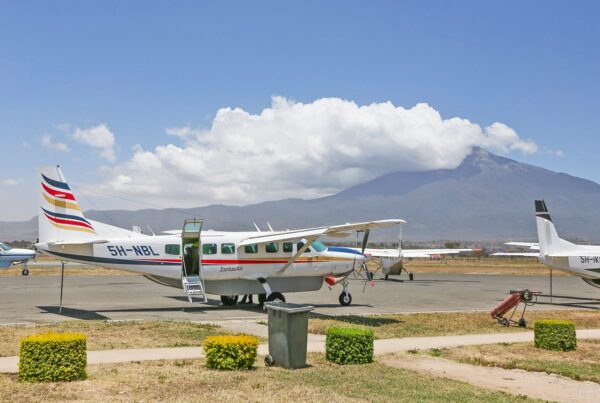
Gombe Stream National Park sits thirty kilometers north of Kigoma on the eastern shore of Lake Tanganyika, and the park has no road access—the only way to reach it is by motorized boat from Kigoma. The boat journey takes approximately ninety minutes in a water taxi or two to three hours in a slower local wooden boat. A daily flight of approximately two hours connects Kigoma from Dar es Salaam, and the overnight train that runs from Dar es Salaam three times per week takes approximately thirty-six hours. Most safari visitors fly from Dar es Salaam to Kigoma and take the water taxi to Gombe on the same day. The water taxi schedule aligns with the morning Kigoma flights if you book in advance.
The boat journey across Lake Tanganyika’s clear water—with the Congolese mountains visible across the lake on the western horizon and the Gombe forest rising steeply from the beach as you approach—is itself part of the Gombe experience. Arriving by boat at a narrow beach with forested ridges rising directly from the water and no road or car visible in any direction sets the tone for a visit that feels genuinely remote despite the relatively modest distances involved. African Wild Trekkers coordinates Kigoma flights, water taxi bookings, and park permit applications for all Gombe itineraries, handling the logistics that the park’s remote location might otherwise make complex.
Combining Gombe with Mahale or Other Western Tanzania Destinations
Gombe and Mahale Mountains National Park share the same Lake Tanganyika coastline and the same access hub at Kigoma, making a combined western Tanzania circuit covering both chimpanzee destinations the natural itinerary for visitors to this part of the country. The boat journey from Kigoma south to Mahale takes approximately five to six hours by scheduled motorboat, and the combined itinerary of two nights at Gombe followed by two or three nights at Mahale delivers Tanzania’s two finest chimpanzee trekking experiences in a single western Tanzania circuit. The contrast between Gombe’s compact, historically layered research site and Mahale’s remote luxury lakeside camps is as striking as the wildlife itself.
Combining western Tanzania with the northern circuit or the southern Selous-Ruaha circuit requires careful flight planning, as Kigoma’s connections run through Dar es Salaam rather than Kilimanjaro or Arusha. A Tanzania circuit that begins in the northern parks, flies south to the Selous, and then flies west to Kigoma for Gombe and Mahale before returning to Dar for the international departure covers the full geographic and wildlife spectrum of the country in a single extended trip.
This circuit suits travelers on their second or third Tanzania visit who want to experience the country beyond the famous northern circuit. African Wild Trekkers has run this multi-circuit itinerary for experienced Tanzania visitors and manages all the internal flight connections that hold it together.
Gombe’s Other Wildlife and the Forest Environment
Beyond Chimpanzees
Olive Baboons and Forest Primates
Gombe’s forests support a rich primate community beyond the chimpanzees. Olive baboons—famously studied by Shirley Strum and other researchers attracted to Gombe by Goodall’s pioneering work—move through the forest in troops that cross the chimpanzee territory boundaries and interact with the chimps in complex competitive and occasionally predatory ways.
Red-tailed monkeys and blue monkeys occupy the forest canopy in permanent resident populations, and their alarm calls help guides locate chimpanzees that have moved quickly away from a previous position. Red colobus monkeys—among Gombe’s most frequently hunted prey species for the chimpanzees—inhabit the forest’s higher reaches and serve both as photographic subjects and as indicators of chimpanzee hunting activity when the alarm call pattern changes from territorial to panicked.
The Gombe forest also holds leopards, bushpigs, and forest antelopes, including the Harvey’s red duiker and the bushbuck, that emerge at the forest edge at dawn and dusk. The bird life in Gombe’s forest and at the lake shore combines forest species with Lake Tanganyika’s endemic cichlid-catching African fish eagle and the brilliant blue-and-orange malachite kingfisher that perches over every stream.
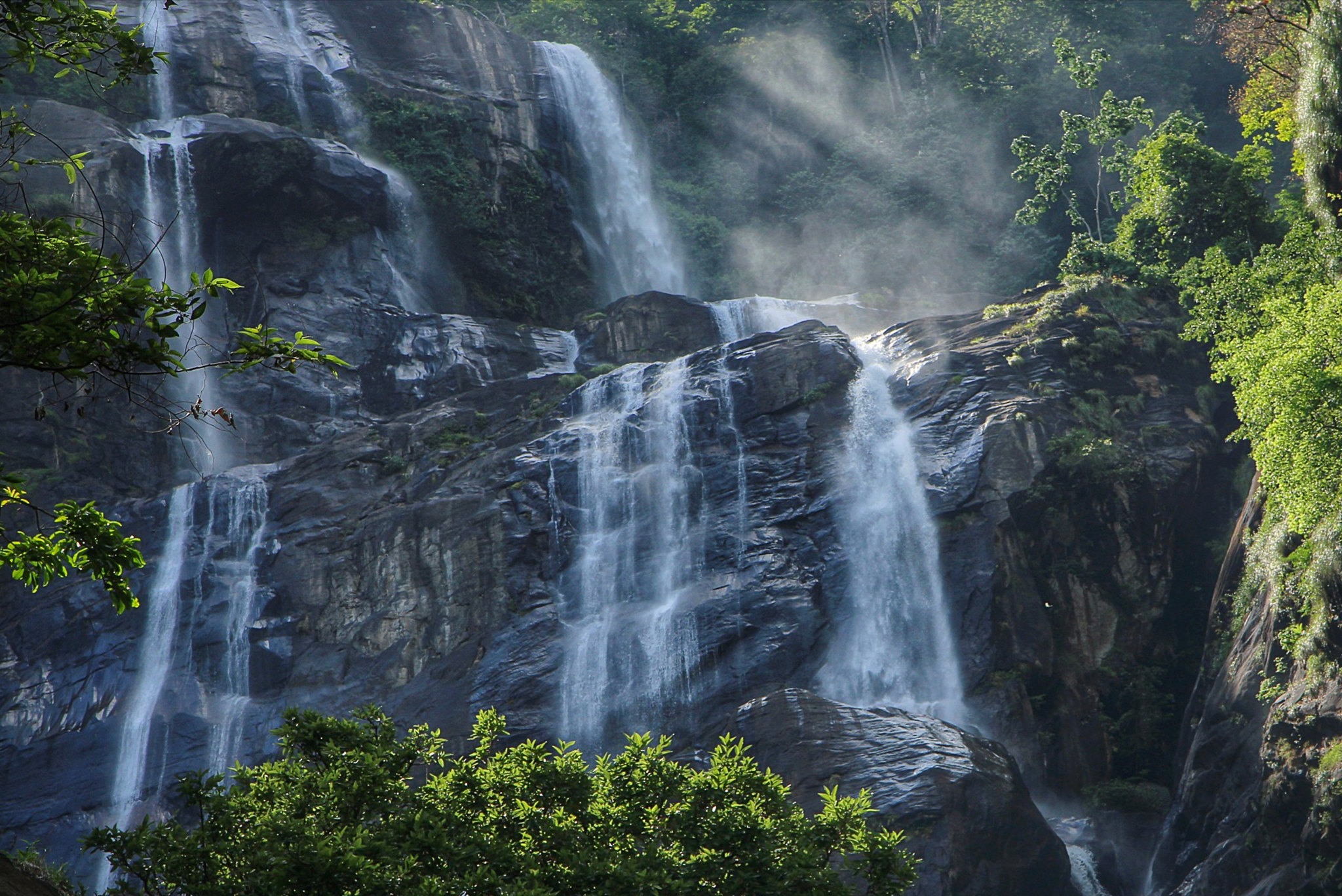
Gombe’s diversity is extraordinary for such a compact park—56 square kilometers total—because the forest’s undisturbed quality concentrates species that in other parts of Tanzania would spread across much larger areas. An afternoon walk along the park’s Kakombe waterfall trail delivers forest birding, baboon encounters, and occasional close-range red colobus sightings in a setting of mossy rocks and cascade sound that feels profoundly different from any savanna park experience.
Plan Your Safari
Gombe Stream National Park is one of Tanzania’s most unique destinations—a place where science, history, and outstanding wildlife come together in a compact forested setting on one of the world’s great lakes. African Wild Trekkers incorporates Gombe into western Tanzania circuits that also include Mahale Mountains, advising on the optimal combination of nights at each site and managing all water taxi, camp, and flight logistics.
The team books Gombe trekking permits through the Tanzania National Parks authority as part of the combined western Tanzania itinerary.
Every Gombe itinerary from African Wild Trekkers includes the Kigoma flight connection, water taxi transfer to the park, park accommodation or Kigoma lodge accommodation between visits, and chimpanzee trekking permits. The team provides a pre-departure briefing on what to expect at the research site, the trekking protocols, and the historical context of Jane Goodall’s work that makes the visit more meaningful for informed travelers.
The team confirms all reservations in writing before any deposit is requested.
Contact African Wild Trekkers at africanwildtrekkers.com/contact with your Tanzania travel dates, and we will build a personalized Gombe and western Tanzania itinerary within 24 hours.