Mahale Mountains National Park: Chimpanzee Trekking on Lake Tanganyika
Mahale Mountains National Park sits on the eastern shore of Lake Tanganyika in western Tanzania, reachable only by light aircraft or boat, and it offers one of East Africa’s rarest and most extraordinary wildlife experiences: chimpanzee trekking in a dense tropical forest at the edge of the world’s second-deepest lake. The park holds one of Africa’s most studied chimpanzee communities, a group habituated to human presence since the 1960s through the research programme initiated by Japanese primatologist Toshisada Nishida. Visiting Mahale demands serious commitment — the access logistics are demanding and the cost is significant — but it delivers a wildlife encounter of an intimacy and intensity that few destinations anywhere in Africa can match.
The Chimpanzee Experience at Mahale
What Trekking for Chimps in Mahale Delivers
The M-Group Chimpanzees
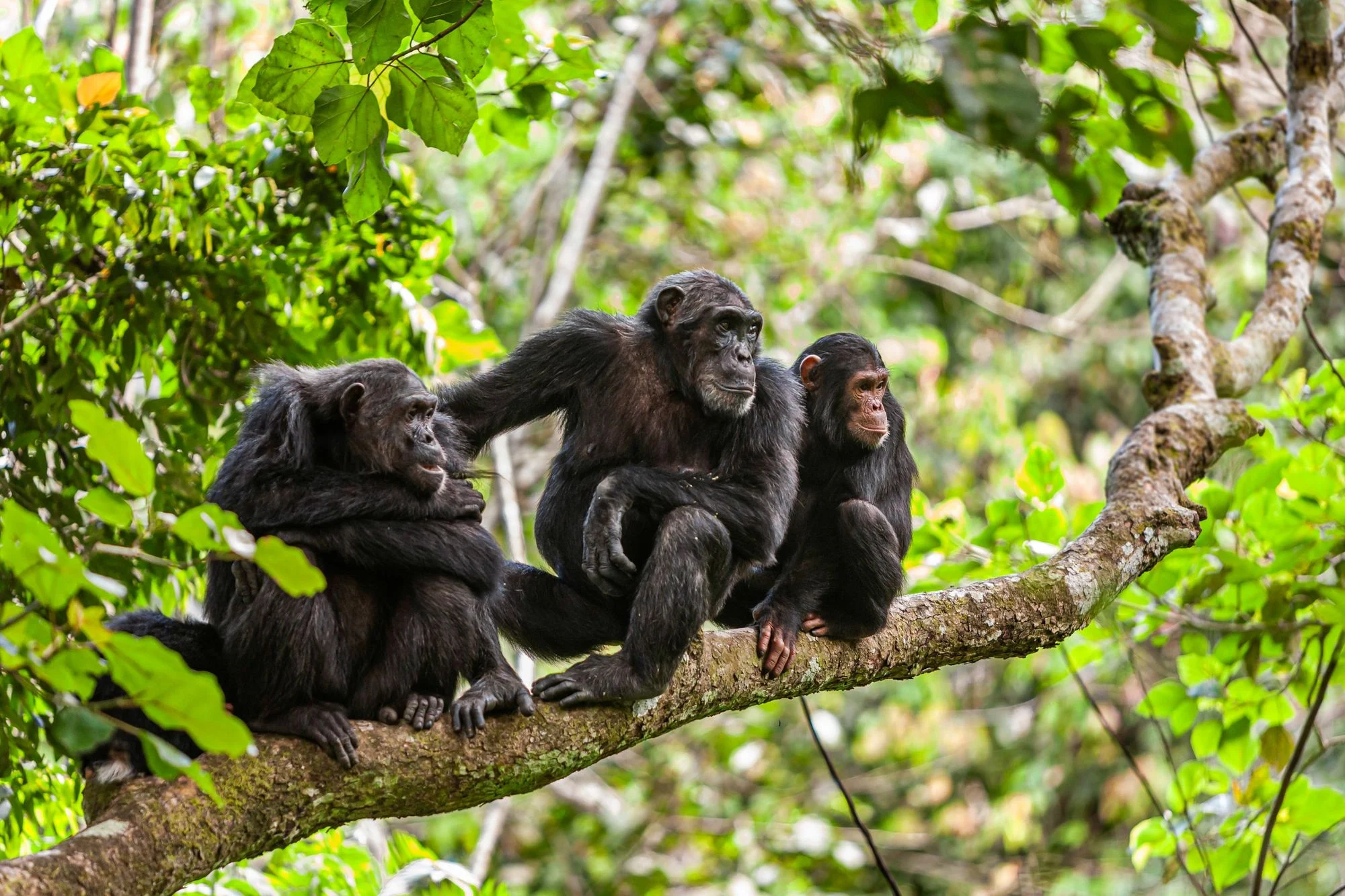
Mahale’s M-Group is one of the largest habituated chimpanzee communities in East Africa, with a current population of approximately sixty individuals ranging across the Mahale Mountains’ forested terrain. Decades of patient, daily contact — initiated by researchers and continued by the current guides — produced chimpanzees that move, feed, and socialise in close proximity to observers without showing the stress responses that unhabituated chimps display. The difference between an encounter with a habituated group and an attempt to observe wild chimps with little human contact is the difference between watching a documentary and being in one. With the M-Group, chimpanzees sit within arm’s reach, infants wrestle at your feet, and dominant males display their authority in charging runs that pass within metres of the observer group.
The trek to find the M-Group begins at the park headquarters on the lake shore, where guides and trackers who have been in contact with the chimps since dawn relay the group’s current location. The forest terrain at Mahale ranges from gentle lakeside paths to steep ridges at altitude, and the trek duration varies from thirty minutes to several hours depending on how far the chimps have moved overnight. The rules at Mahale match Rwanda and Uganda gorilla encounters — one hour with the chimps once found, strict protocols about noise and distance, no trekking with a cold or flu (guides exclude sick visitors to protect the animals), and no more than eight visitors per group per day. These restrictions work; the M-Group is thriving and its population has grown under the current management regime.
What Makes Mahale Different from Other Chimp Destinations
Kibale Forest in Uganda offers reliable chimpanzee trekking with higher encounter probability than many other East Africa sites and draws the largest number of chimp trekkers in the region. Gombe Stream National Park — Tanzania’s other famous chimpanzee site, where Jane Goodall began her research in 1960 — is smaller and has seen chimp population pressures from surrounding human settlement. Mahale stands apart from both. The park’s 1,613 square kilometres of protected forest ensure the chimpanzees have sufficient undisturbed habitat that human pressure from the park boundary does not affect their behaviour. The lake shore setting is extraordinarily beautiful — waking to the sound of Lake Tanganyika washing the camp’s beach at Mahale delivers a sensory experience that forest research stations in Uganda or other parts of Tanzania cannot match.
The combination of chimpanzee trekking and Lake Tanganyika swimming creates a Mahale visit that blends wildlife intensity with genuine tropical paradise aesthetics. The lake’s crystal-clear water — Tanganyika is the world’s second oldest lake and its clarity reflects the age-old stability of the ecosystem — allows snorkelling over colourful cichlid fish communities found nowhere else on earth. Swimming with the lake’s endemic species after a morning chimpanzee trek delivers a dual-environment wildlife experience that no other Tanzania destination combines in the same way. Afternoon fishing with the camp’s traditional wooden dugout canoes and evenings watching the sunset turn the lake’s surface from gold to dark purple add to a Mahale experience that feels completely different from any other Tanzania park.
Getting to Mahale Mountains National Park
The Journey to Tanzania’s Most Remote Park
Access by Light Aircraft
Reaching Mahale requires a flight from Dar es Salaam or Arusha to Mahale’s grass airstrip on the lake shore — a journey that includes at least one refuelling stop at Tabora or Mpanda and a total flight time of approximately four to five hours from Dar es Salaam. Coastal Aviation operates charter flights to Mahale on a scheduled basis during the park’s operating season, and the route’s long distance from the standard Tanzania safari hubs is the primary reason Mahale attracts a small, self-selecting group of committed wildlife travellers rather than a mass safari audience. The airstrip’s grass surface and Mahale’s location within a national park means the small aircraft land directly in the camp area — there is no road transfer, as the camps sit on the beach within walking distance of the landing strip.
The lake boat alternative involves an overnight ferry from Kigoma — the western Tanzania rail head reachable from Dar es Salaam by a long train journey — to Mahale’s beach. Occasional budget itineraries use this approach, and some travellers choose it for the full journey experience, but total travel time from Dar es Salaam to Mahale by overland and boat exceeds thirty-six hours. This alternative is practical only for travellers with very flexible schedules. Flying is the standard access method for photographic safari visitors, and African Wild Trekkers coordinates Mahale flights as part of all Mahale bookings.
Best Time to Visit Mahale
Mahale’s park season runs from May through October, with the dry months of June through October delivering the best trekking conditions. The forest’s undergrowth thins during the dry season, making it easier to follow the chimps through vegetation and allowing clearer sightlines for observation and photography. June and July tend to keep chimps at lower altitudes, reducing the elevation gain required on the trek and making the experience more accessible to travellers who are not experienced hikers. August and September remain strong months with reliable encounters, and October’s end-of-season timing can deliver exceptional experiences as the rains have not yet returned and the chimps are active and accessible.
The park closes from November through April during the heavy rain season, when the forest becomes impassable and Mahale camps shut down. Travellers planning a Mahale visit need to confirm the specific camp’s opening dates for their year of travel, as the precise season boundaries shift slightly based on rainfall patterns. African Wild Trekkers advises on the current year’s Mahale operating season and integrates the camp’s available dates into the broader Tanzania circuit when building itineraries that combine Mahale with other Tanzania destinations.
Accommodation at Mahale
Camps on the Lake Shore
The Mahale Camp Experience
Mahale’s accommodation concentrates in a small number of high-quality camps on the lake beach within walking distance of the forest edge. The best Mahale camps house between eight and twelve guests in open-plan bandas or canvas tents that combine natural materials with modern comfort, positioned to maximise views of the lake and the forested mountain slopes behind. Dining and common areas face the lake, and meals arrive as the afternoon light changes the water’s colour from clear blue to rose gold as the sun descends behind the escarpment on the Congolese shore opposite. No roads, no electricity pylons, no phone signal, and no visible human infrastructure beyond the camp itself exist in any direction — just the lake stretching to a horizon backed by the mountains of the DRC on the far shore.
All Mahale camps include the chimpanzee trekking permits, guides, forest walks, lake activities, and full board accommodation as a single package. The inclusive structure reflects the camps’ remote fly-in model — no off-camp activity requires additional cost, and the daily programme of chimp trek, lake activities, and forest walk fills every day without planning. The Mahale park authority strictly limits daily visitor numbers, so each camp’s guest capacity ensures the chimpanzee interaction stays within conservation guidelines. The eight-visitor-per-group rule means a full twelve-guest camp sends no more than eight individuals on any single chimp trek, with the remaining guests joining an earlier or later group departure.
Plan Your Safari
Mahale Mountains National Park is Tanzania’s most remote and logistically demanding destination, but it delivers a chimpanzee trekking experience of extraordinary quality in a Lake Tanganyika setting that has no equivalent in East Africa. African Wild Trekkers incorporates Mahale into extended Tanzania circuits for clients who want to experience primate trekking without leaving Tanzania and are willing to invest the travel time the park’s location requires. The team manages all Mahale flight bookings, camp reservations, and permit confirmations as part of the broader Tanzania itinerary.
Every Mahale booking includes the Dar es Salaam or Arusha connecting flight coordination, camp accommodation with all activities and full board, and departure flight logistics. The team advises on the most efficient circuit combinations — Mahale pairs naturally with the Selous or Ruaha for a complete southern and western Tanzania experience — and confirms all bookings in writing before any deposit is requested. Mahale’s limited bed count means peak season availability books out many months in advance.
Contact African Wild Trekkers at africanwildtrekkers.com/contact with your Tanzania travel dates and we will advise on Mahale availability and build a personalised western Tanzania circuit with full cost breakdown within 24 hours.