Leopard Facts Africa: The Most Adaptable Big Cat on the Continent
The leopard is the most widely distributed wild cat in the world. It lives in rainforest, semi-desert, montane grassland, savanna, coastal scrub, and suburban parks. eats dung beetles and it eats eland. It survives in landscapes where lions and cheetahs cannot persist. Its adaptability is the foundation of its success and the reason it remains the big cat most likely to survive Africa’s changing landscape into the next century.
Physical Features and Coat
The leopard, Panthera pardus, is the smallest of Africa’s three big cats. An adult male weighs between 37 and 90 kilograms considerably lighter than a lion. Females weigh 21 to 60 kilograms. Body length in males reaches 1.6 to 1.9 metres, with the tail adding another 60 to 95 centimetres. The tail is long relative to body length an important balance organ during the climbing, jumping, and narrow-surface movement that characterises the leopard’s arboreal lifestyle.
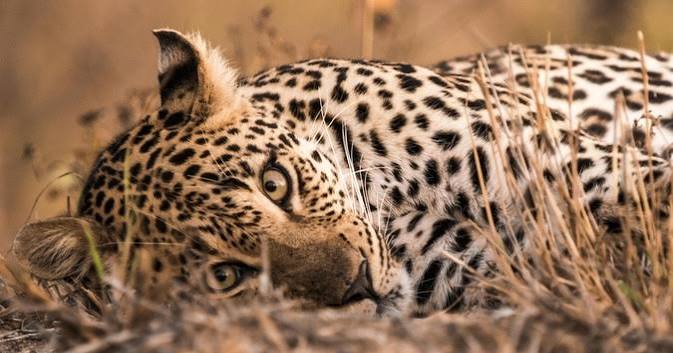
The coat is pale yellow to tawny, covered in black rosettes circular clusters of spots that form a ring around a paler centre. The rosette pattern on each individual is unique, allowing photo-identification from camera trap images. Melanistic leopards “black panthers” carry the rosette pattern in the black coat, visible under certain light angles as a slightly different black tone. Black leopards occur with some regularity in East Africa’s montane forest zones, particularly in areas like the Aberdare Mountains in Kenya.
Solitary Life and Territory
Leopards are strictly solitary outside of mating and the mother-cub relationship. An adult male’s territory overlaps with those of several females. Both sexes scent-mark territory boundaries with urine, claw raking on tree trunks, and faecal deposits on prominent objects. The male’s territory is actively defended against rival males. Male-male encounters at territorial boundaries can be violent — fights involving roaring, swiping, and biting produce injuries that sometimes prove fatal weeks later through infection.
Female leopards raise cubs entirely alone. The gestation period is 90 to 105 days. Litters of 1 to 4 cubs are born in dense vegetation, rock crevices, or hollow trees. The mother moves the cubs every few days. She hunts alone and returns to nurse and guard the cubs. The cubs accompany her on hunts from about 3 months old and become increasingly competent hunters over the following year. Independence occurs at 12 to 20 months.
Hunting: The Silent Ambush Specialist
The leopard is Africa’s most accomplished ambush hunter. It relies on an extremely close approach — typically under 5 metres before launching a short, explosive sprint. The stalk uses every available cover: grass clumps, termite mounds, shadows, and depression contours in the terrain. A stalking leopard can cover 200 metres toward prey in 10 minutes, moving only when the prey animal’s head is turned away.
The kill is by throat grip. The prey is suffocated or its spinal cord severed at the atlas-axis joint. Large prey like impala is hoisted into a tree after killing a feat that requires the extraordinary forelimb and neck musculature discussed in the leopard tree resting post. Tree hoisting secures the kill from lions and hyenas and allows the leopard to feed undisturbed over two or three days.
Diet: The Broadest Menu of Any Big Cat
The leopard’s prey list is the longest of any African big cat. Documented prey includes impala, bushbuck, warthog, baboon, vervet monkey, porcupine, dung beetle, crabs, fish, and elephant calves. In the Maasai Mara, the primary prey is impala. In the forests of Uganda, it shifts to bushbuck and primates. Kalahari it becomes small antelope and foxes. This dietary flexibility is the key to the leopard’s extraordinary geographic range it can find sufficient food in almost any African ecosystem.
Conservation Status
The leopard is classified as Vulnerable on the IUCN Red List. Populations are declining across most of its range outside protected areas. Trophy hunting, persecution by farmers protecting livestock, the illegal wildlife trade for skins and bones, and prey base depletion are the primary drivers. In East Africa’s major protected areas, leopard populations are considered stable. Outside parks and reserves, the trend is downward in most countries.
Plan Your Safari
The Maasai Mara, Serengeti, and Uganda’s Queen Elizabeth National Park offer East Africa’s most consistent leopard sightings. The Mara’s Leopard Gorge area on the Talek River is one of the most famous leopard-watching locations in Africa. The Serengeti’s kopje country around Seronera holds several resident, well-documented individuals. Uganda’s Queen Elizabeth channel drive produces tree-resting leopard sightings with regularity.
African Wild Trekkers plans East Africa safaris specifically around known leopard territories and current activity reports. Contact us to design an itinerary built around this most beautiful and elusive of Africa’s big cats.