Selous Game Reserve Tanzania (Nyerere National Park): A Complete Wilderness Guide
The Selous Game Reserve — the portion now designated as Nyerere National Park — is the largest protected land area in Africa and one of the continent’s most extraordinary wilderness experiences. Larger than the United Kingdom, the reserve protects a river-threaded landscape of floodplains, fever tree forests, and miombo woodland that holds the continent’s largest elephant population within a single protected area, the greatest concentration of hippos and Nile crocodiles in East Africa, a significant lion population, and one of Africa’s most important wild dog strongholds. The boat safari on the Rufiji River adds a dimension unavailable in almost any other Tanzania park. This guide covers everything you need to know about visiting.
The Selous-Nyerere Ecosystem and Its Wildlife
Africa’s Greatest River Safari
The Rufiji River Boat Safari Experience
The Rufiji River defines the Selous-Nyerere ecosystem, draining an enormous watershed across southern Tanzania and flowing through the reserve’s core zone before reaching the Indian Ocean. Permanent water and lush bankside vegetation concentrate wildlife along the river’s course, making the Rufiji boat safari one of Tanzania’s most distinctive activities. Your guide operates a motorised pontoon at low speed along the river channel, approaching hippo pods at water level, watching Nile crocodiles bask on sand banks metres away, and positioning below cliff overhangs where martial eagles and fish eagles nest. The water-level perspective transforms familiar African wildlife — seeing a hippo from a boat at two metres rather than from a vehicle at fifty metres changes the animal entirely.
The Rufiji’s crocodile population ranks among the largest in Africa, with individuals living undisturbed in the system for decades and reaching lengths most visitors find genuinely surprising. Crocodiles in this system regularly exceed four metres, and the boat safari’s close approach to basking individuals delivers photography that no land-based vehicle achieves. Hippos in the Rufiji are equally numerous — entire river sections echo with their honking during the boat’s passage — and the underwater close approach from the boat makes territorial charges and posturing displays visible in a way that no vehicle-based safari can replicate. African Wild Trekkers includes the Rufiji boat safari as a standard activity in all Selous-Nyerere itineraries.
Elephant, Lion, and Wild Dog in the Reserve
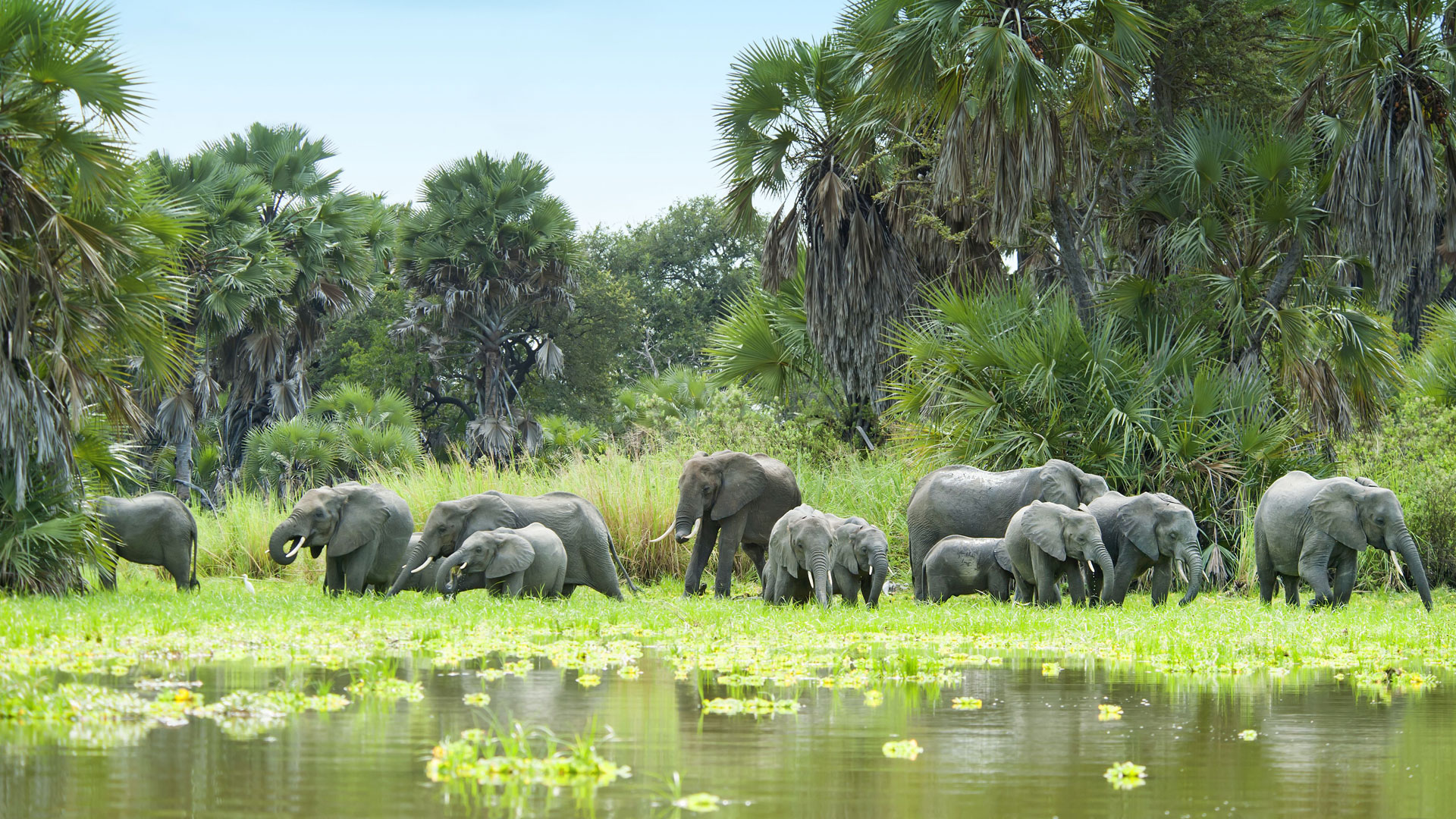
The Selous Game Reserve’s total elephant population — spread across the reserve’s full extent including hunting areas to the south and east — has historically represented the largest single elephant concentration in Africa. The national park section’s elephants now receive full protection, and the population within the photographic safari zone has stabilised and recovered after the poaching crisis of the 1980s and 1990s. Elephant encounters in the Nyerere National Park core zone today involve habituated family groups that move confidently across game drive tracks, riverbanks, and camp perimeters. Vehicle encounters with elephants in the Selous often happen at much closer range than in more vehicle-concentrated parks because the animals have less reason to be wary.
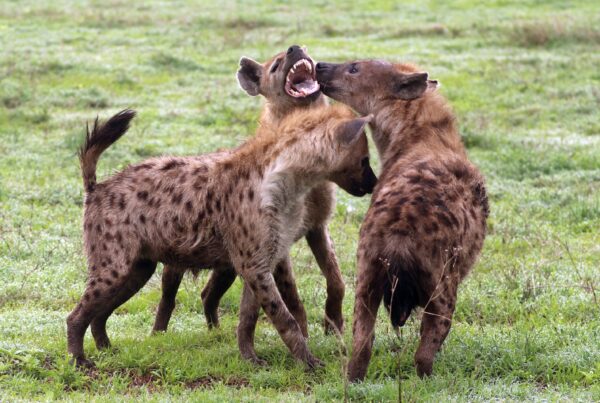
The reserve’s lion population features large pride sizes adapted to hunting enormous buffalo herds. Lion prides in the Selous numbering twenty to thirty individuals are not uncommon — significantly larger than the Serengeti’s standard pride sizes — reflecting the protein abundance of a landscape with almost no competition from human activity for the prey base. Wild dogs in the Nyerere National Park’s northern sector have access to vast, undisturbed territory, and the reserve holds one of East Africa’s most significant wild dog breeding populations. Morning game drives in the northern Selous frequently track wild dog packs between their denning sites and hunting territories in open grass areas along the Rufiji tributaries.
Access and Logistics for the Selous-Nyerere Safari
Getting to the Reserve
Flights from Dar es Salaam
Light aircraft access the Selous-Nyerere ecosystem from Dar es Salaam, with flight times of forty-five to sixty minutes to the reserve’s internal airstrips. Coastal Aviation and Auric Air operate scheduled services to several Selous airstrips including Jongomero, Stiegler’s Gorge area strips, and private airstrips at camps with their own runways. The Dar es Salaam connection makes the Selous a practical extension for travellers transiting through Tanzania’s commercial capital, and many Tanzania-Zanzibar itineraries add a Selous component by routing through Dar rather than making the island their sole southern Tanzania destination. Flights from Zanzibar to the Selous route through Dar es Salaam and take approximately ninety minutes in total including the connection.
The overland alternative from Dar es Salaam covers approximately 250 kilometres on a road that ranges from reasonable tarmac to rough gravel track and takes six to eight hours depending on the season and road conditions. This route suits budget itineraries or operators repositioning vehicles, but most photographic safari visitors fly in. Road conditions after rainfall can extend the journey significantly beyond the estimated duration, making this alternative impractical for visitors with fixed departure dates. African Wild Trekkers books Selous flights as the primary access method for all client itineraries.
Combining the Selous with the Northern Circuit
The most rewarding Tanzania safari structure for travellers with ten or more days combines the Selous with the northern circuit, experiencing both the Serengeti’s open plains wildlife and the Selous’s river system and remote character in a single trip. The standard combined routing covers three to four nights in the Serengeti and Ngorongoro via Kilimanjaro, then connects to Dar es Salaam for the Selous flight, spending three nights in the reserve before returning to Dar for the international departure or connecting to Zanzibar for a beach close. Multiple carriers operate the daily Kilimanjaro-to-Dar es Salaam internal flight in approximately two hours.
The Selous and Ruaha can also combine in a southern circuit-only itinerary that avoids the northern parks entirely, which suits repeat Tanzania visitors who have already done the northern circuit and want to explore the south for the first time. Three nights in Ruaha followed by three nights in the Selous creates a complete southern Tanzania wildlife experience covering the river safari, walking safaris, wild dogs, and the different landscape characters of each park. This southern circuit suits experienced safari travellers who prioritise wildlife quality and exclusivity over the brand recognition of the north. African Wild Trekkers runs both combined northern-southern circuits and standalone southern circuits depending on each client’s experience level and priorities.
Best Camps in the Selous-Nyerere
Where to Stay in the Reserve
Private Camps on the Rufiji
The Selous-Nyerere’s quality camps sit along the Rufiji River or on lake shores within the photographic safari zone of the national park. Properties in this tier offer ten to twenty guest rooms or tents and provide dedicated guide-to-vehicle ratios that ensure personalised game drives rather than shared group vehicles. Most Selous camps include game drives, boat safaris, and walking safaris as standard activities, giving each day a three-activity structure that covers the park’s different access methods. Accommodation ranges from permanent canvas tents on raised platforms overlooking the river to stone-and-thatch lodges with swimming pools and river-view dining. The high-water season from December through April reduces some activity options but opens the boat safari system on flooded channels inaccessible in the dry months.
The Selous-Nyerere’s best camps maintain a remoteness that northern circuit camps cannot achieve, simply due to the greater distance from Dar es Salaam and the absence of significant overland tourism in the area. Arriving at a Selous camp by light aircraft — with no road connecting the camp to any town and surrounding wilderness visible in every direction from the perimeter — delivers a sense of genuine remoteness that the Serengeti’s well-developed infrastructure cannot replicate. African Wild Trekkers recommends specific Selous camps based on each client’s accommodation preference, activity priorities, and the specific sub-zone of the reserve that delivers the best wildlife during their travel window.
Plan Your Safari
The Selous Game Reserve — now protected as Nyerere National Park — is one of Africa’s great wildlife destinations and deserves far more international recognition than its position in the shadow of Tanzania’s famous northern circuit has historically given it. African Wild Trekkers runs Selous safaris as standalone southern circuit itineraries and as combined north-south circuits, and the team has detailed knowledge of each camp’s strengths and the seasonal wildlife patterns that determine which sub-zone delivers the best experience each month.
Every Selous booking includes the Dar es Salaam or Zanzibar arrival flight coordination, camp accommodation with all activities and full board, and departure flight logistics. The team advises on the Rufiji boat safari scheduling, walking safari access, and the optimal combination of Selous with Ruaha or the northern parks for clients planning longer Tanzania circuits. The team confirms all reservations in writing before any deposit is requested.
Contact African Wild Trekkers at africanwildtrekkers.com/contact with your Tanzania travel dates and we will build a personalised Selous itinerary with full cost breakdown within 24 hours.