Lesser Galago Facts: Africa’s Big-Eyed Nocturnal Primate Explained
The bushbaby’s call cuts through the African night—a sharp, infantile wail that gives the animal its common name. The call stops. Then huge eyes catch the spotlight from a low acacia branch. A small, round-eared animal stares back. Then it vanishes with a leap so fast it registers only as a displacement of air. The lesser galago is one of East Africa’s most charming nocturnal encounters.
What Is a Lesser Galago?
The lesser galago, Galago moholi, and closely related species belong to the family Galagidae. Galagos are prosimians—primates more ancient than monkeys and apes, more closely related to the lemurs of Madagascar than to East Africa’s monkeys. Multiple lesser galago species exist across Africa, several of which were only distinguished from each other through genetic analysis in the 1990s and 2000s. What was once called “the lesser galago” is now understood to be a complex of closely related but distinct species.
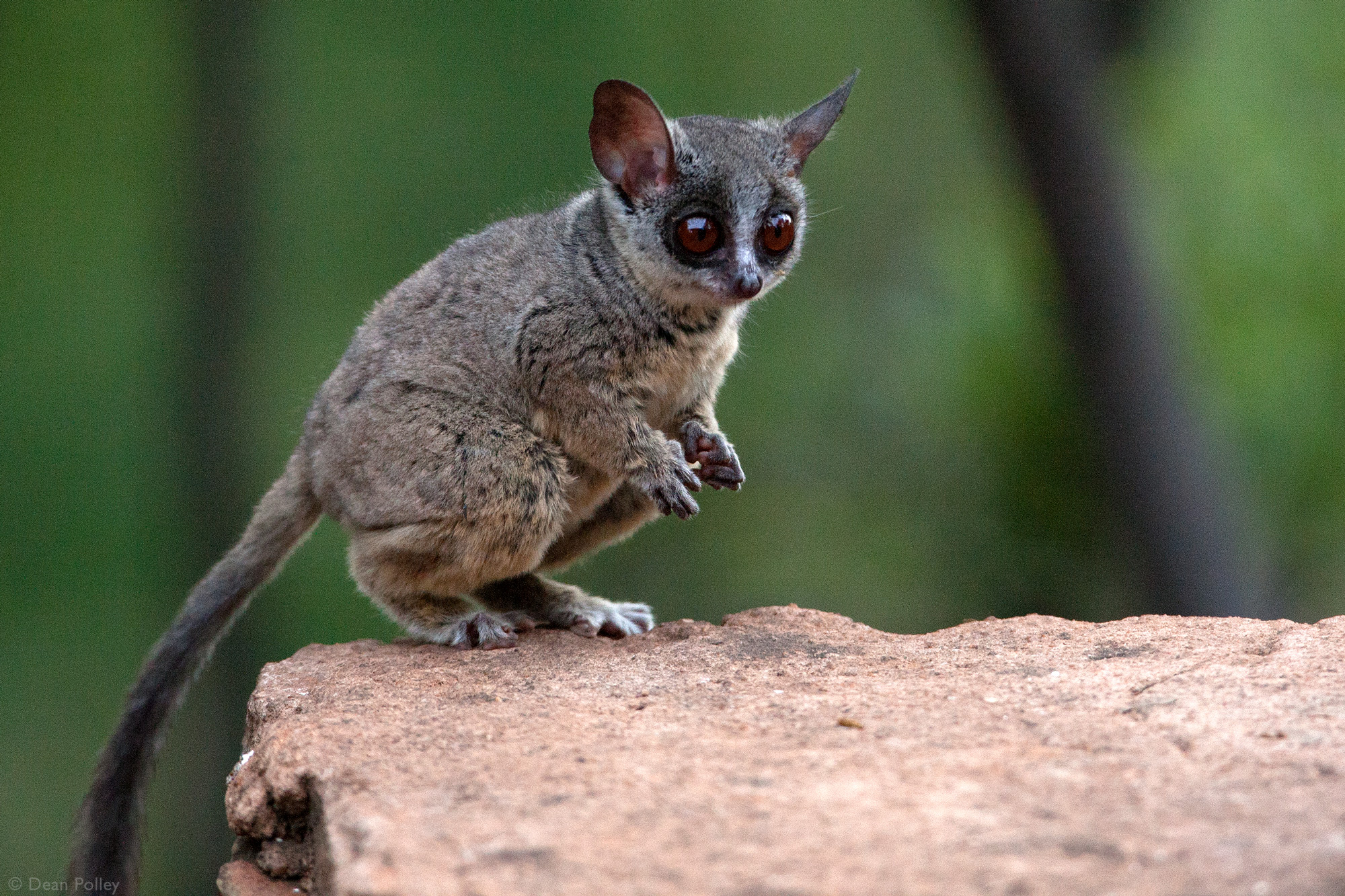
An adult lesser galago weighs between 100 and 300 grams. Body length reaches about 17 centimeters. The tail adds another 20 centimeters. The body is small and round. The ears are large, membranous, and mobile—they fold against the head when the animal sleeps to protect them. The eyes are enormous relative to skull size — among the largest eye-to-body ratios of any primate.
Physical Features: Eyes, Ears, and Leaping Legs
The lesser galago’s eyes are forward-facing and fixed in their sockets. Unlike human eyes, which rotate within the socket, galago eyes cannot swivel. To look sideways, the animal rotates its entire head, whichh it can do nearly 180 degrees. The eyes contain a tapetum lucidum—a reflective layer behind the retina that doubles available light. This layer produces the bright eye shine that appears in a spotlight. The yellow-orange reflective glow from a lesser galago’s eyes is visible from 30 meters.
The hindlimbs are disproportionately long and powerfully muscled. The lower leg bones — tibia and fibula — are fused for rigidity during the push-off phase of a leap. A lesser galago reaches a horizontal distance of over 5 meters in a single leap and a vertical height of 2 meters from a standing start. The feet carry elongated toe pads that grip bark and smooth surfaces during landings at speed.
Nocturnal Life and Activity
Lesser galagos are strictly nocturnal. They sleep in tree holes, dense vegetation, or old bird nests during the day—oftenn groups of two to seven indivday—often the same social unit. They emerge at dusk and forage independently through the night. Each individual covers a home range of 1 to 5 hectares per night. Multiple individuals’ ranges overlap substantially,, but direct encounters are largely avoided through scent marking and calling.
Scent marking is the primary social communication tool. Galagos urinate on their hands and feet before moving through their territory. The urine deposits a scent trail on every surface they touch. Other galagos reading these marks gain information about the marker’s identity, sex, reproductive status, and how recently it passed. This chemical communication system substitutes for the complex vocal and visual social signals that diurnal primates rely on.
Diet: Insects, Gum, and Fruit
Lesser galagos eat insects as their primary food. Moths, beetles, and grasshoppers are caught in flight and on bark surfaces. The galago uses its mobile ears to pinpoint the exact location of a moth in flight before leaping to intercept it. It catches moths in mid-air with its hands. This aerial prey capture is one of the most impressive small-mammal hunting techniques in East Africa.
Acacia gum — a starchy carbohydrate exuded from bark wounds — supplements the insect diet heavily. Galagos have specialized comb-like lower teeth used to scrape gum from bark. In dry seasons when insects are scarce, gum psubstantially,0 percent of dietary calories. Galagos are among the most important gum feeders in African savanna woodland ecosystems.
The Bush Baby Call
The lesser galago produces the call that gives all galagos their common name. The call is a loud, descending wail that sounds remarkably like a human infant crying. It carries hundreds of meters through bush and woodland. The call communicates territorial occupancy, contact between social partners, and alarm at predators. Each individual’s call is slightly different in pitch and timing. Galagos distinguish the calls of their social partners from those of strangers, responding more strongly to unfamiliar voices.
Plan Your Safari
Lesser galagos are reliable night drive sightings across East Africa’s savanna parks. Their eye shine in a spotlight beam is distinctive—a pair of amber-orange orbs at low heighteyeshine ter canopy of savanna trees. Queen Elizabeth National Park in Uganda, theight, eye shine under theKenya, and Tanzania’s Serengeti all produce consistent lesser galago sightings on dedicated night drives. A slow drive through acacia woodland between 8 pm and midnight gives the best results.
African Wild Trekkers includes night drives in recommended East Africa itineraries. Contact us to plan a safari that captures the rich nocturnal wildlife most day-only visitors miss entirely.