Hippo Facts Africa: The Animal That Kills More People Than Lions
Africa’s Most Dangerous Animal
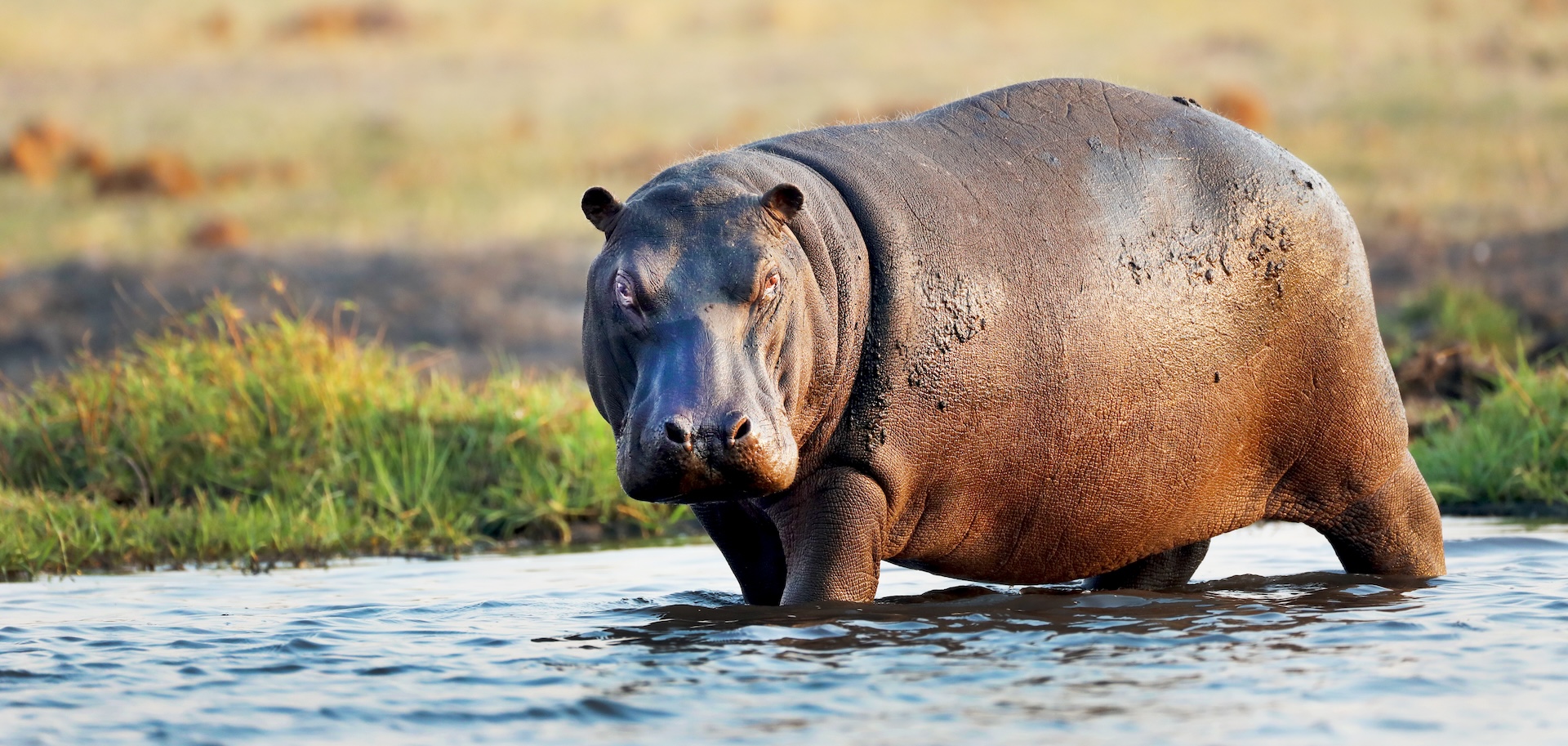
The hippopotamus is Africa’s most dangerous large land animal in terms of human fatalities, responsible for an estimated 500 or more human deaths annually across the continent. This figure exceeds the combined annual human fatalities from lions, leopards, crocodiles, and elephants. This statistic surprises most visitors encountering hippos for the first time. The animals they see from a boat on the Zambezi or the Kazinga Channel look docile. Heads barely visible above the water, ears twitching, the occasional yawn revealing impressive canine teeth. The danger is almost entirely invisible until it isn’t. Hippos are highly territorial in water and exceptionally fast on land. Capable of 30 kilometers per hour over short distances. They will attack humans who inadvertently approach too closely on foot near water sources, sometimes with no warning at all.
For safari travelers in boats and vehicles, hippos are entirely safe to observe and are among the most entertaining animals in Africa’s waterways. A pod of hippos produces an extraordinary range of behaviors: the territorial male’s massive open-mouthed yawn. Not a yawn at all but a threat display to rival males. The synchronized submerging of the entire pod when a boat approaches too closely, the calves swimming alongside their mothers. And the eruption of sparring between two large bulls over territorial boundary disputes. Hippos in water give a constant performance. A boat safari on any of Africa’s major rivers or channels that carries a hippo population is one of the most reliably rewarding activities any safari can offer.
Hippo Biology and Adaptation
Aquatic Life and Physical Adaptations
Why Hippos Need Water
Despite being herbivores that feed on land, hippos spend the majority of each day submerged in rivers and lakes, emerging at night to graze. This amphibious lifestyle stems from a fundamental physiological need: hippo skin produces no sweat or oil and faces high susceptibility to dehydration and sunburn if the animal remains exposed to air for extended periods. The solution is water. Hippos secrete a reddish fluid from pores in their skin. Sometimes described as “blood sweat,” though it is neither blood nor sweat. That functions as both a sunscreen and an antimicrobial agent. This secretion is one of the most remarkable adaptive solutions in mammalian biology: a built-in SPF system and antibiotic combined in a single fluid that the animal produces continuously throughout its life.
Hippos have remarkable adaptations to aquatic life despite not being genuinely aquatic animals. Their eyes, ears, and nostrils sit on top of their heads so that a resting hippo can monitor the surface environment while almost entirely submerged. They can close their nostrils underwater and hold their breath for five to seven minutes while moving along riverbeds on foot. They are buoyant but not efficient swimmers. Most hippo “swimming” is actually walking along the bottom with periodic pushes to the surface for air. Young calves are born underwater and must surface to breathe almost immediately. Mothers and calves swim together when moving between territories, making the calf completely dependent on the mother for navigation and protection in the first weeks of life.
Feeding, Territory, and Social Structure
At night, hippos leave the water to graze on short grass, following fixed paths. “Hippo highways” marked by deep ruts in riverbanks. That they have used for years or decades. A large adult hippo eats 40 to 60 kilograms of grass per night, moving up to 10 kilometers from water in search of grazing before returning to the water before dawn. Dominant males hold their daytime territories in water by maintaining exclusive access to stretches of riverbank or lake area through threat displays and, when necessary, physical combat. Bull hippos carry impressive canine teeth. The lower canines can reach 50 centimeters in length. That functions as a weapon in territorial fights and can inflict devastating slashing wounds. Fights between large bulls occasionally result in death, though the threat display usually determines rank without contact.
Female hippos and their young form loose groups within a dominant male’s territory, tolerated as long as they do not challenge the male’s access to prime resting areas. The female-calf bond is strong, and females actively protect their young against perceived threats from other hippos and from external predators. Crocodiles—which share every waterway hippos inhabit—rarely attempt predation on hippo calves because the risk of retaliation from the mother or other adult hippos is significant. Lions and leopards prey on hippos outside of water in some populations, particularly at night when hippos face the greatest vulnerability on land. Hippo adults are large enough that a single lion cannot overpower one. And successful predation requires a large pride acting cooperatively.
Best Places to See Hippos in Africa
Top Hippo Destinations
Kazinga Channel and Zambezi River
Uganda’s Kazinga Channel—a 32-kilometer natural waterway connecting Lakes George and Edward within Queen Elizabeth National Park—hosts one of the highest concentrations of hippos in Africa, with over 5,000 individuals recorded along the channel’s shores. Afternoon boat cruises on the Kazinga stand as one of Uganda’s signature safari activities. The channel’s banks are lined with hippo pods, buffalo herds coming to drink, elephants crossing at shallow points, and an extraordinary diversity of waterbirds. These include African skimmers, pied kingfishers, goliath herons, and African fish eagles calling from dead trees over the water. The closeness of the hippos. Pods are often visible within meters of the boat. It makes the Kazinga Channel cruise one of the most impressive large-mammal boat experiences in Africa.
The Zambezi River between Zimbabwe and Zambia supports large hippo populations throughout its course. Boat safaris out of Livingstone near Victoria Falls, from camps in the Lower Zambezi National Park. And lodges in Mana Pools National Park all deliver exceptional hippo viewing. The combination of hippos, crocodiles, elephants crossing the river, and the dramatic landscape of the Zambezi escarpment produces a boat safari experience unlike anything available on land. The Lower Zambezi’s canoe safaris. Paddling the river in a two-person dugout with a guide. Give many travelers the most intense and intimate hippo experience available, navigating around pods at close range in a vessel barely larger than the animal itself.
Other Top Hippo Destinations
Tanzania’s Rufiji River in the Selous ecosystem. Now Nyerere National Park. Has one of the largest hippo populations in Africa, with estimates suggesting over 3,000 animals along the river and its associated lakes. Boat safaris on the Rufiji combine hippo watching with crocodile sightings and elephant crossings. And exceptional waterbird diversity in an environment that receives far fewer visitors than the northern circuit parks. Kenya’s Maasai Mara hosts hippo pods in the Mara River that feature in dramatic wildebeest migration crossings. And the hippo pools along the Mara and Talek rivers are accessible as afternoon game drive destinations from most camps in the ecosystem. Botswana’s Okavango Delta waterways and the Chobe River front both have substantial hippo populations that boat and mokoro safaris bring visitors to easily.
South Africa’s Kruger National Park has hippo populations concentrated in the Sabie, Letaba, Olifants, and Luvuvhu rivers. Several rest camps offer viewing decks or guided walks along riverbeds where hippo pods sit within easy observation distance. Zambia’s South Luangwa has exceptional hippo viewing from camps along the Luangwa River. Where pods of hundreds of animals occupy the river shallows during the day. The banks come alive with hippo grazing at dusk and dawn. South Luangwa is particularly notable for nighttime hippo observation. The animals’ nocturnal land movements bring them very close to camps. And the sounds of hippos grazing outside the tent at 2am are a quintessential South Luangwa experience that every first-time visitor mentions.
Plan Your Safari
The best hippo experiences combine boat-based observation. For close-range viewing of hippo pod behavior in water. With land-based sightings at waterholes and river crossings. Uganda’s Kazinga Channel, Zambia’s Lower Zambezi, and Tanzania’s Rufiji River all deliver extraordinary boat safari hippo encounters that dramatically exceed what any land-based drive produces.
African Wild Trekkers builds itineraries that incorporate boat safaris at Africa’s best hippo destinations, pairing river-based activities with vehicle game drives and walking safaris to give travelers the full range of experience that each ecosystem offers.
Contact African Wild Trekkers at africanwildtrekkers.com/contact with your travel dates, and we will design a safari itinerary that includes the best hippo viewing destinations in East or Southern Africa within 24 hours.