Serengeti Balloon Safari: Cost, What to Expect, and Is It Worth It in 2026?
A hot air balloon flight over the Serengeti at sunrise is one of the most iconic optional activities available on a Tanzania safari, and it generates more debate among travelers than almost any other safari add-on. At approximately USD 600 per person in 2026, it represents a significant additional cost on top of an already substantial safari investment. Yet the travelers who do it almost universally describe it as one of the highlights of their entire trip to Tanzania. This guide addresses the experience honestly — what you see, what you do not see, how the flight works, and whether the cost is justified — so you can make the decision that suits your priorities.
What Happens on a Serengeti Balloon Safari
The Timeline from Before Dawn to Bush Breakfast
The Pre-Dawn Wake-Up and Launch Site Transfer
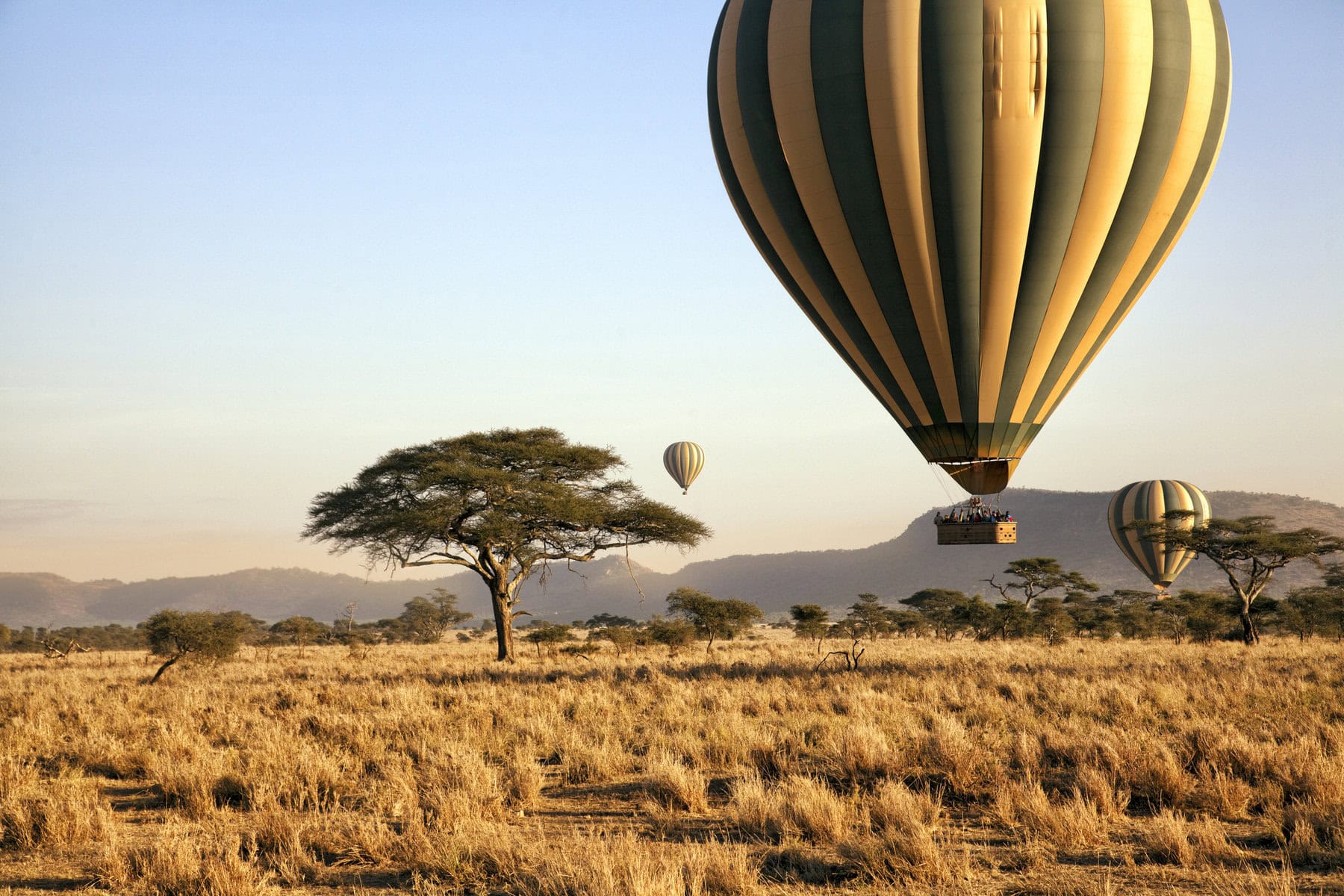
A Serengeti balloon safari begins with a pre-dawn wake-up at your camp, typically around 0500, followed by a vehicle transfer to the launch site in the darkness. The launch site is usually a clearing in the bush, and the balloon’s inflating process begins well before your arrival—the crew starts the ground inflation at least an hour before scheduled departure to ensure the balloon is fully expanded and stable when guests arrive. The first light of dawn is just beginning to define the horizon as you board the basket, which holds between twelve and sixteen passengers in divided compartments that look outward over the basket’s rim. The pilot operates from a central section and manages the burners that control altitude throughout the flight.
The inflation process itself is worth watching for a few minutes before boarding—the enormous envelope fills with hot air in a process of orchestrated chaos, with crew members holding guide ropes while the basket gradually rights itself from horizontal to vertical. The balloon’s size is genuinely surprising in person; when fully inflated, a Serengeti hot air balloon towers over the acacia trees like a cathedral. Once all passengers board and the crew checks harnesses, the ground crew releases the tethers, and the balloon lifts silently off the Serengeti plain, trailing the sound of crackling burners as it rises through the cool morning air.
The Flight: What You See and How Long It Lasts
The flight itself lasts approximately one hour, drifting at the mercy of the wind direction across the Serengeti’s plains, kopje country, and woodland. The pilot uses altitude to find different wind directions, rising and descending as necessary to follow the most interesting terrain and to position the balloon over wildlife when it is visible. From altitude, the Serengeti looks impossibly vast—the plain extends to the horizon in every direction without a building, fence, or power line visible.
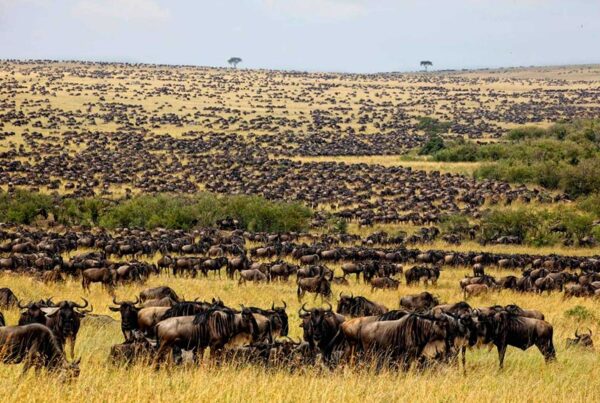
Herds of wildebeest and zebra appear as moving patterns against the grass, and the balloon’s silence means that wildlife below is rarely disturbed by its approach.
Wildlife sightings from the balloon are genuine but variable. On any given flight you might see elephants, giraffes, impalas, buffalo, and possibly predators at a kill—or you might see primarily herds of wildebeest and little else. The balloon’s altitude and the open landscape make identification straightforward for herds of large mammals but more challenging for predators that use vegetation for cover.
The Great Migration season from July through September improves the wildlife viewing significantly, as the landscape below fills with moving columns of wildebeest that the balloon can approach at low altitude. Outside migration season, the flight’s landscape value—the scale, the light, the silence—often exceeds its wildlife encounter value in terms of what most travelers find most memorable.
The Bush Breakfast and What Follows
Landing and the Post-Flight Experience
Landing on the Serengeti Plain
Balloon flights in the Serengeti do not land back at the launch site—the wind direction determines the landing location, which changes every flight. The pilot selects a landing spot from the air, and the ground crew follows the balloon in vehicles, arriving at the landing site within minutes of touchdown to begin the deflation and packing process.
Landings are typically smooth, though the basket can tip sideways at the moment of ground contact depending on the wind speed and the terrain—this is normal and expected, and the passenger compartments allow a controlled tipping that ends with everyone gently on their side rather than upright. After the brief landing process, passengers step out onto the Serengeti plain for a glass of champagne in the bush while the crew begins deflating the envelope.
The champagne landing tradition is one of the ballooning world’s oldest customs, and the Serengeti version delivers it in an environment that makes the ritual feel genuinely special—standing on the open Serengeti plain at 0800 with a glass of sparkling wine, watching a hot air balloon deflate behind you while a giraffe regards the scene from a hundred meters away. The post-landing vehicle drive back toward breakfast camp sometimes adds a morning game drive component, with the guide stopping for sightings encountered on the route. This impromptu game drive at ground level after the aerial perspective of the flight creates an interesting comparison in what each vantage point reveals about the same landscape.
The Bush Breakfast
The balloon flight concludes with a full bush breakfast under an acacia tree or in a designated clearing, served by the balloon company’s own catering crew, who have driven ahead and prepared a full spread. In 2026 the standard brunch breakfast includes eggs cooked to order, grilled meats, fresh fruit, pastries, juice, coffee, and tea—a proper full meal rather than a simple continental spread.
The breakfast setting on the open Serengeti, with no walls or roof overhead and the morning light at its most golden, delivers a dining experience that many travelers describe as the best breakfast they have ever had purely because of the context. The combination of physical exertion, fresh air, and the preceding hour of flight makes the food taste better than it might in any other setting.
The balloon company’s ground crew and the pilot join the breakfast, and the casual atmosphere after the flight allows for direct questions about the ballooning process, the Serengeti’s geography, and any specific sightings from the flight. Pilots who fly the Serengeti daily develop encyclopedic knowledge of the ecosystem’s seasonal patterns, the balloon’s perspective on migration routing, and the wildlife behaviors visible only from altitude.
This informal educational conversation over breakfast adds intellectual value to what might otherwise be primarily a visual and sensory experience. African Wild Trekkers can book the Serengeti balloon as an add-on to any Serengeti camp itinerary, managing the logistics and early wake-up transfer as part of the package.
Cost and Value Assessment
Is the Serengeti balloon worth USD 600?
What the Cost Covers and Who Offers It
In 2026 the Serengeti balloon safari costs approximately USD 599 per person through the main operator, Serengeti Balloon Safaris, which has run the experience since 1990 and holds the concession for most of the Serengeti’s balloon launch sites. The cost covers all aspects of the experience from the camp transfer to the bush breakfast and return transfer to your camp or the next section of your game drive.
The operator carries full insurance and operates under Civil Aviation Authority certification for Tanzania, with an unblemished safety record accumulated over three decades of daily flights. No significant competitors operate at the same scale within the Serengeti, so the concession holder sets the price rather than market competition.
Assessing the value depends entirely on what you prioritize. At USD 600 for one hour of flight plus the breakfast, the cost per unit of time is high compared to a full-day game drive that costs approximately the same amount across a shared vehicle in a well-run camp. The game drive delivers far more wildlife sightings, far more variation in experience, and far more total hours. The balloon delivers one thing: perspective.
The Serengeti from 300 meters, in silence, at sunrise, is a perspective available no other way. Travelers who place significant value on unique experiences and memorable visual and emotional moments tend to find the cost justified. Travelers who measure safari value primarily in wildlife sighting quantity sometimes find the balloon less satisfying than a good game drive in the same time period. African Wild Trekkers advises clients on this trade-off honestly and lets the client decide based on their own priorities.
Plan Your Safari
The Serengeti balloon safari is an optional add-on that African Wild Trekkers books on behalf of clients staying in Serengeti camps, coordinating the pre-dawn transfer, managing the reservation with the balloon operator, and ensuring the day’s game drive schedule accommodates the morning’s balloon start time. The team advises on which Serengeti section delivers the best balloon perspective based on current wildlife patterns and seasonal migration position.
For clients who decide the balloon is the right choice, the team confirms the booking at the same time as the camp reservation to ensure the balloon date aligns with the camp nights. The cost bills separately from the safari package and goes directly to the balloon operator at camp. African Wild Trekkers can also advise on which morning of the Serengeti stay works best for the balloon, leaving the other mornings for game drives that cover the ground the balloon covered from the air. The two perspectives — aerial and ground — deliver a more complete understanding of the ecosystem than either alone.
Contact African Wild Trekkers at africanwildtrekkers.com/contact with your Tanzania travel dates and Serengeti stay details, and we will advise on the balloon logistics and include it in your personalized itinerary within 24 hours.