How to Get From Arusha to the Serengeti: All Transport Options Explained
Arusha is Tanzania’s safari capital, and the Serengeti is Tanzania’s most famous national park, but getting between them is not as simple as the map distance suggests. The 335-kilometer road journey passes through the Ngorongoro Conservation Area and crosses challenging terrain that can take six to eight hours in a 4×4. The alternative is a forty-five- to sixty-minute flight from Arusha to one of the Serengeti’s airstrips. Both options work well for different travelers for different reasons, and this guide explains exactly what each route involves so you can make the choice that suits your itinerary, budget, and priorities.
Driving from Arusha to the Serengeti
The Road Route via Ngorongoro
What the Drive Involves
The road journey from Arusha to the Serengeti covers approximately 335 kilometers, taking between six and eight hours depending on road conditions, vehicle type, stops at the Ngorongoro rim, and the section of the Serengeti you are heading to. The route leaves Arusha on the main tarmac road heading west toward Makuyuni, then turns south past Lake Manyara to the Lodoare Gate of the Ngorongoro Conservation Area.
Passing through the conservation area involves driving across the Ngorongoro highlands—with the crater visible to the south—and descending through spectacular highland forest onto the Serengeti plains at Naabi Hill Gate. The road between Lodoare and Naabi Hill is mostly gravel and in good condition during the dry season, though sections become rough during the wet months.
The road route offers significant advantages that the flight cannot deliver. The drive through the Ngorongoro Conservation Area frequently yields wildlife sightings en route—Maasai giraffe on the highland road, elephant in the crater rim forest, and plains game on the open section near the Serengeti border. The Ngorongoro rim viewpoint stop allows a first look into the caldera that is impossible from an airstrip.
The descent onto the Serengeti plain—when you first see the open grass stretching to the horizon after hours of forest and highland—builds dramatically after the journey rather than depositing you in the park without context. Many Serengeti guides advocate for the road approach specifically for this revelation of the arrival experience.
Road Conditions and Timing
The Arusha-to-Serengeti drive is most comfortable in the dry season months of June through October and January through March, when the gravel sections through the conservation area and the Serengeti are passable in a standard 4×4 without difficulty. The long rains from March through May and the short rains in November turn some road sections into mud tracks that require high ground clearance and good traction, extending journey times and occasionally making specific routes impassable.
Operators who run the road route year-round use appropriately equipped 4×4 vehicles and know which alternative tracks bypass the worst sections in wet conditions. Your guide handles all route decisions; knowing when to take an alternative track and when to push through a difficult section is part of the professional guide’s local knowledge.
Departing Arusha by 0700 on a drive day places you at the Serengeti’s Naabi Hill Gate by early to mid-afternoon, leaving time for a late afternoon game drive before reaching your camp by sunset. Departing later creates time pressure, and Tanzania’s national parks strictly enforce gate closing times — rangers do not permit arrivals after closing time without a pre-arranged escort. African Wild Trekkers plans all road journey days with appropriate departure times built into the schedule and communicates the timing to clients during the pre-departure briefing.
Flying from Arusha to the Serengeti
The Air Route Options
Arusha to Serengeti Airstrips by Light Aircraft
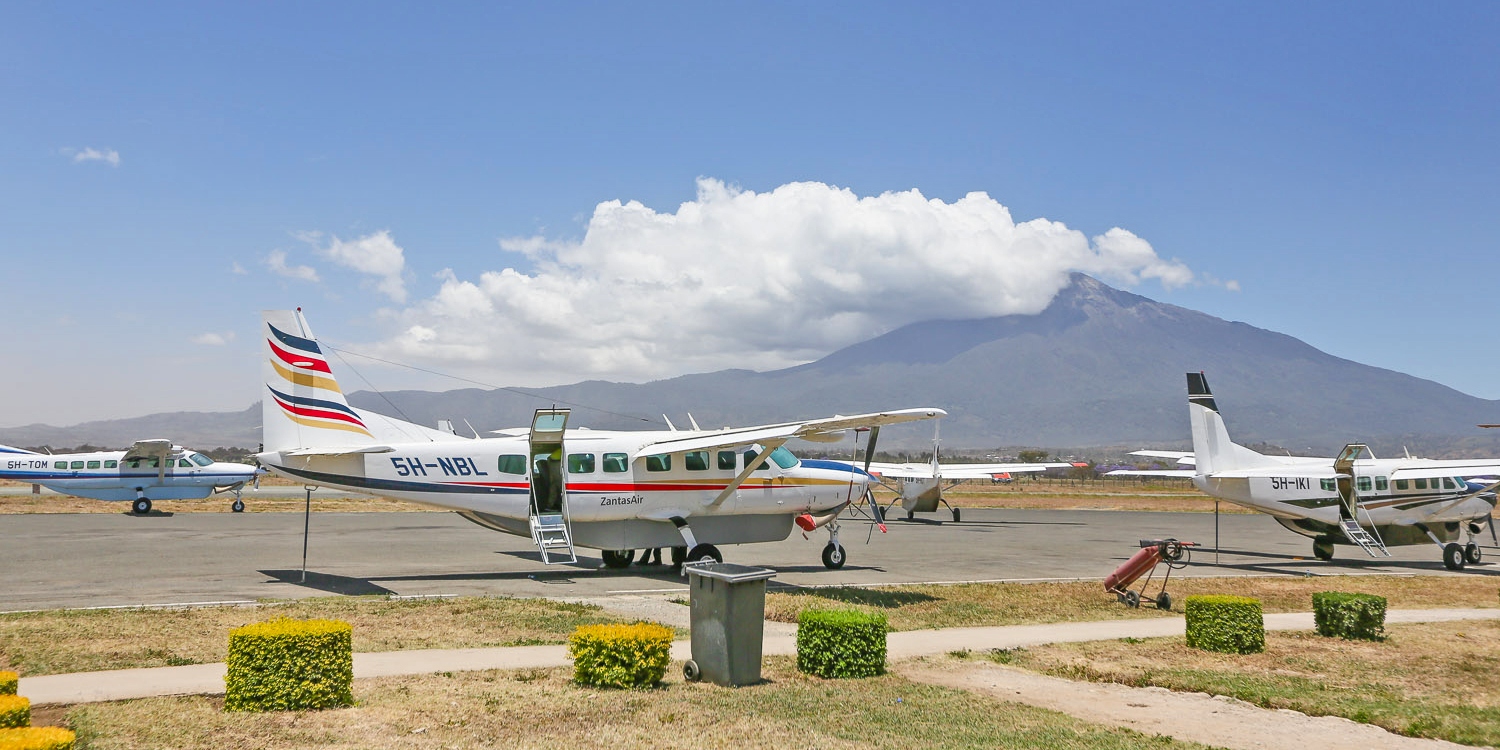
Light aircraft flights from Arusha Airport or Kilimanjaro International Airport to the Serengeti’s internal airstrips take approximately forty-five to sixty minutes depending on the destination airstrip. The Serengeti has multiple airstrips at different sections of the park — Seronera in the central section, Lobo in the north, Grumeti and Kirawira in the west, and various private airstrips serving specific camps and concessions.
Most flights connect through Seronera, and travelers heading to northern or western camps often transfer at Seronera before a short onward flight to the camp’s nearest strip. Coastal Aviation and Auric Air operate the primary scheduled services, with charter options available for travelers needing direct routing to remote airstrips not served by the scheduled network.
The flight delivers you to the Serengeti in time for a full morning game drive on a day that would otherwise be a transit road day. If your Serengeti itinerary is limited to two nights, the flight saves one of those nights from being a transit day. For travelers on tight schedules—those combining Tanzania with Kenya, Zanzibar, or international departure pressures—the time savings of flying justify the additional cost straightforwardly.
The flight also provides an aerial perspective of the landscape between Arusha and the Serengeti, with views of Kilimanjaro (on clear days), the Rift Valley, Lake Manyara, and the Ngorongoro highlands visible below depending on the routing.
Cost Comparison: Flying Versus Driving
Scheduled light aircraft flights from Arusha to Seronera in 2026 cost approximately USD 200 to USD 350 per person depending on the carrier, the timing of booking, and the specific departure and destination airports. Charter flights are considerably more expensive — a private charter for two to four passengers on the same route runs USD 800 to USD 1,500 total depending on the aircraft type.
The road journey’s cost is embedded in the safari package, as the guide and vehicle are already included for the ground circuit, so no additional cost comes with road travel beyond what the operator has already accounted for in the package price.
For travellers on a combined ground circuit that covers Tarangire, Lake Manyara, and Ngorongoro before reaching the Serengeti, the road approach delivers both the journey’s wildlife and the intervening parks without the need for a separate flight. For travelers who fly directly to the Serengeti from Kilimanjaro without covering the intervening parks, flying is the appropriate access method because the ground route through Ngorongoro would add three to four days of park coverage that the itinerary does not include. African Wild Trekkers advises on the fly-versus-drive decision based on the specific itinerary structure and time available rather than making a generic recommendation.
Combined Route: Drive One Way, Fly the Other
The Best of Both Options
Drive In, Fly Out (or Reverse)
Many experienced Tanzania operators recommend a combined approach: drive from Arusha to the Serengeti via the Ngorongoro road to capture the journey’s wildlife, then fly from the Serengeti to the next destination on the return leg. This structure captures the overland arrival experience—the Ngorongoro rim viewpoint, the descent onto the Serengeti plain, and the wildlife en route—while freeing the departure leg from another six-to-eight-hour road day.
The return flight can connect directly to Zanzibar, Kilimanjaro, or Dar es Salaam depending on the onward itinerary, turning what would be a long drive day into a flight that delivers half an hour of aerial Serengeti views before landing at the destination airport.
The reverse approach—fly in and drive out via Ngorongoro—also works, delivering the aerial arrival perspective and saving a driving day at the start when energy levels are highest while using the end-of-safari drive back as a final game viewing opportunity through the Ngorongoro Conservation Area.
Some travelers specifically request the drive-out routing because it allows a Ngorongoro crater descent on the return journey that the drive-in direction might not have included. African Wild Trekkers builds the combined routing into itineraries where it delivers the most value, advising on which direction the drive should run based on the full circuit structure.
Plan Your Safari
The decision to drive or fly between Arusha and the Serengeti depends on your itinerary length, the parks you are covering en route, and what you most want from the journey between Tanzania’s safari capital and its most famous park. African Wild Trekkers advises every client on the optimal Arusha-to-Serengeti routing as part of the itinerary planning process, coordinating internal flights when the fly option is chosen and ensuring the drive day includes appropriate wildlife stops when the road route is preferred.
Every Tanzania itinerary from African Wild Trekkers includes specific routing guidance for each travel day, with departure times, park gate schedules, and airstrip transfer logistics confirmed before departure. The team books internal flights at the same time as camp reservations to ensure availability aligns. Clients who choose the road route receive a briefing on what to expect at each major point along the journey so the drive becomes part of the safari rather than a transit between destinations.
Contact African Wild Trekkers at africanwildtrekkers.com/contact with your Tanzania travel dates and Serengeti destination, and we will advise on the best Arusha-to-Serengeti routing within 24 hours.