Why This Uganda Birding Guide 2026 Starts With One Number: 1,065
This Uganda birding guide 2026 begins with the statistic that defines Uganda’s global birding status — 1,065 bird species recorded in a country smaller than the United Kingdom. Uganda holds approximately 24 percent of all African bird species. No other country on the continent delivers such concentrated avian diversity within such a compact geography. The Albertine Rift, Congo basin forest, East African savanna and Great Rift Valley lakes all converge here, creating habitat stacking that drives extraordinary species richness.
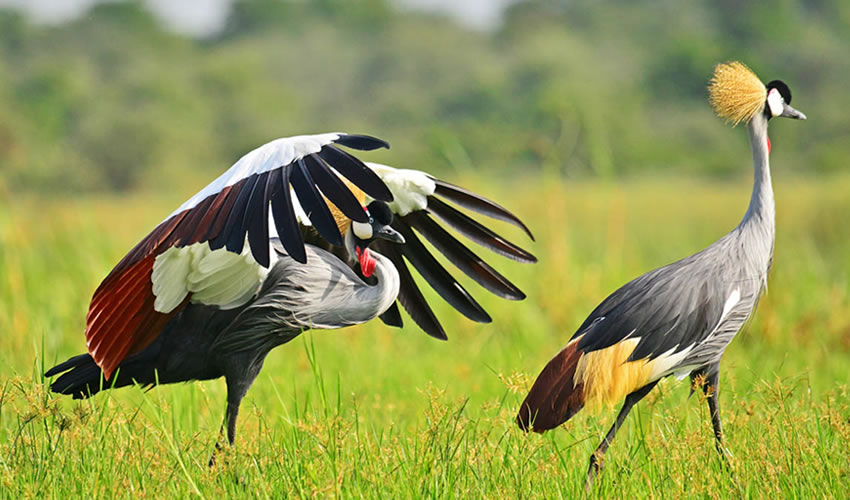
Birders with serious life lists treat Uganda as a priority destination. A well-planned 10-day tour can yield 500 or more species. Guided tours with expert local ornithologists regularly achieve 600 to 700 species. Even casual birders find Uganda’s common birds spectacular — the African crowned crane, the great blue turaco and the African fish eagle deliver enough beauty to satisfy any wildlife lover.
Uganda Birding Guide 2026: Top Sites Across the Country
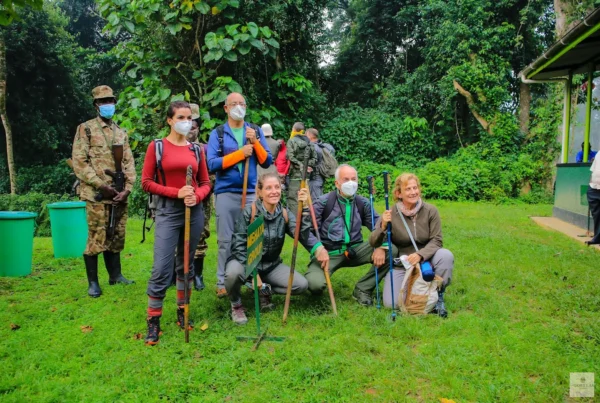
Bwindi Impenetrable Forest is Uganda’s premier site for Albertine Rift endemic species. Twenty-three of Africa’s 36 Albertine Rift endemics occur here, including the African green broadbill, Shelley’s crimson wing and Grauer’s rush warbler. Birding the Bwindi trails requires good forest birding skills and patience. Early morning walks from 6am to 10am produce the best results. Hire a specialist birding guide at the park gate rather than a standard gorilla trekking guide for better species identification support.
Kibale Forest National Park supports 375 bird species. The forest canopy teems with turacos, hornbills and sunbirds. The African pitta visits seasonally. Blue-headed sunbirds and red-chested sunbirds flash through the understorey. The Bigodi Wetland Sanctuary adjacent to Kibale is a Community-managed birding trail that delivers papyrus specialists including the papyrus yellow warbler and white-winged warbler for just $10 entry.
Murchison Falls Delta and the Uganda Birding Guide 2026 Shoebill Section
The Murchison Falls delta in this Uganda birding guide 2026 warrants special attention for the shoebill stork — the single most sought-after bird in Uganda. Dugout canoe trips into the papyrus delta cost $30 to $50 and often deliver this extraordinary prehistoric-looking bird. African skimmers nest on the Nile sandbanks. Goliath herons stand sentinel on the banks. The African fish eagle calls from every riverside tree. Over 450 bird species occur in the greater Murchison ecosystem making it one of Africa’s most productive single-site birding destinations.
Queen Elizabeth National Park in the Uganda Birding Guide 2026
Queen Elizabeth National Park records over 600 bird species — the highest of any Uganda park — earning its place near the top of every Uganda birding guide 2026. The Kazinga Channel boat cruise produces extraordinary concentrations of waterbirds including African spoonbills, pink-backed pelicans, pied kingfishers and water thick-knees. The Maramagambo Forest in the south holds the bat hawk, African broadbill and multiple forest specials. Kyambura Gorge adds forest birds within a savanna park. The Ishasha sector in the south supports savanna species like the long-tailed fiscal and white-headed buffalo weaver.
Semuliki and Mabamba: Hidden Gems in the Uganda Birding Guide 2026
Semuliki National Park near the DRC border contains 441 bird species including 56 Guinea-Congo biome species found nowhere else in Uganda. The lemon-bellied crombec, white-crested hornbill and yellow-throated nicator all inhabit this lowland Congo forest extension. Mabamba Swamp near Entebbe offers the most accessible shoebill location and also delivers papyrus gonolek, blue-headed coucal and lesser jacana. Plan a dawn trip to Mabamba either before or after your flights at Entebbe Airport.
Best Time for Birding in the Uganda Birding Guide 2026
Uganda’s birds sing and display year-round, making it a 12-month destination. October to November and March to April bring Palearctic and intra-African migrants that temporarily swell species counts. European bee-eaters, reed warblers and various waders fill wetlands and open areas during migration. The dry seasons of June to September and December to February make forest birding easier with drier trails. June to September represents peak season for both birding and general safaris — expect higher accommodation prices and book ahead.
Guided Birding Tours and Equipment for the Uganda Birding Guide 2026
Hire a specialist birding guide for any serious birding in Uganda. Local guides at every major park entrance know the sites, the calls and the seasonal movements of target species. Guided birding tour operators include NatureUganda, Rockjumper and Uganda Birding Safaris. These companies provide transport, accommodation and specialist guiding at rates between $250 and $500 per person per day all-inclusive. For equipment, bring a 10×42 or 10×50 binocular, a telephoto lens of 500mm or more for photography, and a field guide such as Birds of East Africa by Stevenson and Fanshawe. A decent spotting scope mounted on a car window improves your sightings dramatically on open savanna drives.
Plan Your Uganda Adventure
Booking Your Activities
Activity Permits and Reservations
All adventure activity permits — gorilla trekking, chimpanzee trekking, white-water rafting bookings and any guided expeditions — are confirmed by African Wild Trekkers before your departure. Nothing is left to chance on arrival.
Fitness and Preparation Guidance
Our team provides activity-specific preparation guidance for every adventure on your itinerary. We match activity difficulty to your fitness level and ensure you arrive at every trailhead, river launch or park gate fully prepared.
Your Full Adventure Package
Transport Between Activity Hubs
Private 4×4 vehicle transfers between activity locations, domestic charter flights where relevant, and all airport transfers are included. Your driver-guide handles all timing and logistics between your adventure days.
Accommodation and Meals Between Adventures
Lodge accommodation and full-board meals are confirmed at your chosen comfort level at every stop on your itinerary. Rest and recovery between active days is built into your schedule by design.
Our Uganda Adventure Specialists
Expert Local Knowledge
African Wild Trekkers operates exclusively in Uganda and East Africa. Our team has personal experience of every activity we sell — gorilla trekking, chimp encounters, Nile rafting and more. We recommend only what we know delivers.
Start Planning Today
Contact us at africanwildtrekkers.com/contact with your travel dates and adventure interests. We build your custom Uganda adventure itinerary within three working days.