Kilimanjaro Porters: Wages, Conditions, and the Right Way to Tip Them
Kilimanjaro’s Porters: The People Who Make Every Summit Possible
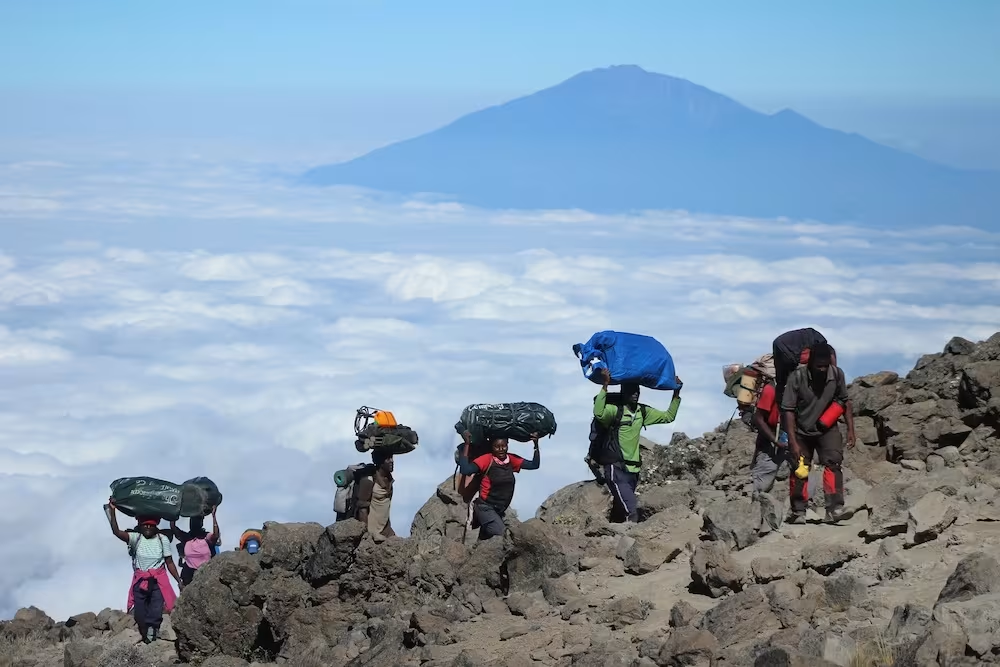
Every Kilimanjaro summit depends on the work of porters. These people of all genders carry tents, cooking equipment, food, and water. And personal gear. Up to 15 kilograms per person up Africa’s highest peak. They do this so that paying climbers can ascend with only a daypack and focus their energy on the altitude and effort of the climb. The porter workforce is one of the largest sources of employment in the Kilimanjaro region. Conditions, wages, and treatment of porters vary significantly between operators. This variation has direct consequences for the people doing this work. Understanding what fair porter treatment looks like. And what the tipping culture requires. Allows travelers to make informed choices that support the mountain’s most essential workforce.
Porter Working Conditions and Standards
Porter welfare on Kilimanjaro has improved significantly over the past decade. The establishment of the Kilimanjaro Porters Assistance Project and increasing media attention have driven this improvement. However, meaningful variation between operators remains. Travelers who do not investigate their operator’s porter standards may inadvertently support practices that harm the workers whose labor their summit depends upon.
Weight Limits and Equipment
TANAPA regulations specify a maximum porter load of 20 kilograms, including the porter’s personal equipment, food, and water. The KPAP voluntary standard is stricter at 15 kilograms for the carried load, excluding personal items. Reputable operators enforce these limits actively, weighing loads at the gate before ascent begins. They redistribute weight that exceeds the limit rather than allowing porters to accept excessive loads. Budget operators who understaff a group effectively increase the per-porter load beyond safe limits. The health consequences of carrying heavier loads at altitude over many consecutive days are cumulative and serious.
Porter clothing and sleeping equipment reveal the gap between ethical and exploitative operators most clearly. KPAP-verified operators ensure that porters have appropriate waterproof jackets and warm layers. And appropriate footwear for the altitude zones they work in. Sleeping equipment sufficient for the temperatures at mountain camps is also required. Porters at Kilimanjaro’s high camps wearing thin clothing or canvas sneakers or sharing sleeping bags signal an operator that cuts costs by externalizing them onto the workers. Report these conditions to KPAP and document the operator name for future reference.
Wages and Payment Practices
Porter wage standards are the most contentious area of Kilimanjaro’s labor practices. The KPAP-recommended minimum wage for porters in 2024 was approximately $10 to $12 USD per day plus accommodation and food. Guide and cook wages are higher, reflecting the skill and certification requirements of these roles. Operators who quote significantly below market rates invariably achieve the saving through below-minimum porter wages rather than through operational efficiency. This is a transfer of cost from the paying client to the lowest-paid worker in the chain.
Wage payment should occur at the end of the climb in the presence of the climbing group. KPAP advocates this practice because it allows climbers to verify directly that porters receive their full entitlement. It prevents wages from being skimmed by gate-level supervisors. Some operators provide wage envelopes to each team member individually in a transparent ceremony at the Mweka or Marangu gate. This creates accountability and allows climbers to ask questions if payment amounts seem inconsistent. Operators who object to transparent wage payment in front of clients are usually doing so for understandable reasons.
How to Tip Kilimanjaro Porters Correctly
Tipping on Kilimanjaro is not optional. It is an expected and important component of porter income. Informed climbers account for it as part of their total mountain budget. Understanding the correct amounts and distribution process ensures the full intended tip reaches the intended recipients. This prevents reduction through handling or collection by senior staff.
Recommended Tip Amounts
The KPAP 2024 tipping guidelines recommend the following amounts per climber, per climb (not per day): lead guide $20 to $30 per day of the climb, assistant guide $15 to $20 per day, and cook $15 to $20 per day. And porters $8 to $12 per day each. On a seven-day Lemosho climb with a team of eight staff, the total recommended tip for a single climber is approximately $550 to $750 USD. For a group of four climbers sharing a team, this represents $2,200 to $3,000 total distributed across the team. This is a meaningful contribution to mountain worker incomes proportional to the labor the climb requires.
Prepare tips before arriving at the mountain in US dollars in small denominations—specifically $1, $5, and $10 bills. Porters and guides cannot easily make change, and the mathematics of tip distribution across a team of varied roles is easier with small bills. Many operators provide a suggested tip breakdown sheet at the pre-climb briefing. It specifies how much to budget per team member and takes the calculation work out of the process. Preparing tip envelopes labeled by name and role before the gate ceremony makes distribution faster and less chaotic on the final morning.
The Tip Distribution Ceremony
Most established Kilimanjaro operators conduct a tip distribution ceremony at the gate after the final descent. The full team is assembled, and envelopes are distributed individually. This ceremony is a genuine moment of appreciation between climbers and the workers who made the summit possible. Many climbers find it one of the most emotionally resonant moments of the entire Kilimanjaro experience. Guides typically translate brief remarks from climbers to porters, and the exchange of gratitude is authentic in both directions. The effort, dedication, and mountain knowledge that the team has provided over seven or eight days on Africa’s highest mountain deserve recognition beyond the financial transaction.
Some climbers choose to add individual notes or small personal items to tip envelopes. This is particularly common for guides with whom a genuine personal connection has developed over the climb. These gestures are appreciated and remembered. A good Kilimanjaro guide accompanies dozens of climbing groups per year. They maintain detailed mental records of clients who treated the team generously and respectfully. Recommendations from these guides to other potential clients represent a valuable network within the mountain tourism community. Ethical operators and genuine climbers benefit from this network over time.
Choosing an Ethical Operator for Porter Welfare
The most direct action available to climbers who want to support porter welfare is choosing an operator with KPAP partner status. KPAP partner operators have agreed to meet minimum standards for porter wages, weight limits, equipment, and accommodation. The project conducts spot checks on the mountain to verify compliance. The KPAP partner list is publicly available and provides a reliable filter for eliminating exploitative operators from the consideration process. The price difference between KPAP-compliant and non-compliant operators is typically modest. A few hundred dollars on a total climb cost of several thousand. The ethical return on this additional spending is proportionally very high.
Beyond KPAP compliance, ask operators specific questions during the booking process. Ask about porter wages, weight limits, and sleeping arrangements on the mountain. And the mechanism for wage payment at the end of the climb. Operators with good porter practices answer these questions in detail. Operators who deflect, give vague responses, or express irritation at being asked about porter welfare provide meaningful information about their priorities.
Plan Your Safari
African Wild Trekkers is committed to fair porter wages, weight limit compliance, and proper equipment for all mountain staff. The team enforces porter welfare standards at the gate with mandatory load weighing before every climb. Wages are paid transparently at the gate ceremony in the presence of the climbing group. The working conditions we provide on the mountain reflect the values we ask climbers to uphold in their engagement with the broader East Africa tourism industry.
Every Kilimanjaro package includes a pre-climb porter welfare briefing and a detailed tipping guide with recommended amounts. And a gate distribution ceremony on the final day. You can combine Kilimanjaro climbs with Tanzania safaris and Zanzibar beach extensions as part of an integrated East Africa itinerary.
Contact African Wild Trekkers at africanwildtrekkers.com/contact with your preferred climb dates, and we will provide full details on our porter welfare standards and complete climb costs within 24 hours.