Kilimanjaro Gear Guide 2026: Exactly What to Pack for Your Climb
What to Pack for Kilimanjaro: The Complete 2026 Gear Guide
Packing correctly for Kilimanjaro is not complicated, but it is unforgiving of significant omissions. The mountain’s five climate zones require gear that handles everything from humid heat to temperatures well below freezing within a single week of trekking. Those zones run from tropical rainforest at the base to arctic conditions near the summit. Bringing the wrong gear or forgetting critical items is among the most preventable causes of a miserable Kilimanjaro experience. Showing up with boots that have not been broken in is equally costly. This guide covers exactly what you need and what you can rent in Moshi. And what experienced guides recommend skipping to keep pack weight manageable.
Clothing Layers: The Critical System
The layering system is the most important gear concept for Kilimanjaro. The mountain’s temperature varies by approximately 25 degrees Celsius between the lower forest camps and the summit. Weather can change rapidly at any elevation. Add and remove layers throughout the day rather than relying on single heavy garments that work in only one temperature range.
Base Layers and Mid-Layers
Moisture-wicking thermal base layers — top and bottom — form the foundation of the layering system. They should be wool or synthetic rather than cotton. Cotton retains moisture when wet and loses insulating value rapidly. This is dangerous at altitude in cold conditions. Merino wool base layers are excellent for Kilimanjaro because they manage moisture effectively and dry relatively quickly. They also resist odor over multiple days of wear. Relevant on a seven-day climb where laundry facilities do not exist. Two sets of base layers allow rotation so that one dries while you wear the other.
Mid-layer insulation should include at least one warm fleece or down jacket. This layer works as a standalone during forest and moorland trekking. It also serves as an inner insulating layer beneath the outer shell during summit night. A down jacket packed in a compression sack takes minimal daypack space. It provides the best warmth-to-weight ratio of any insulation option. A heavier synthetic-fill jacket is a reasonable alternative if budget is a consideration. Synthetic fill retains some insulating value when damp. Down loses most of its effectiveness when wet—a consideration if the jacket might get wet before summit night.
Outer Shell and Summit Layers
A waterproof jacket and waterproof trousers are essential for Kilimanjaro regardless of season. Rain can occur at any point on the mountain’s lower sections. The summit night’s wind chill requires a windproof and waterproof outer layer over all insulation. The jacket should have a hood large enough to fit over a warm hat or balaclava. Waterproof trousers need to fit over trekking trousers and base layers simultaneously. Size one size larger than normal. Gore-Tex or comparable waterproof-breathable membranes are worth the additional cost over cheaper alternatives. They reduce sweating during active climbing sections where cheaper waterproof materials trap body moisture.
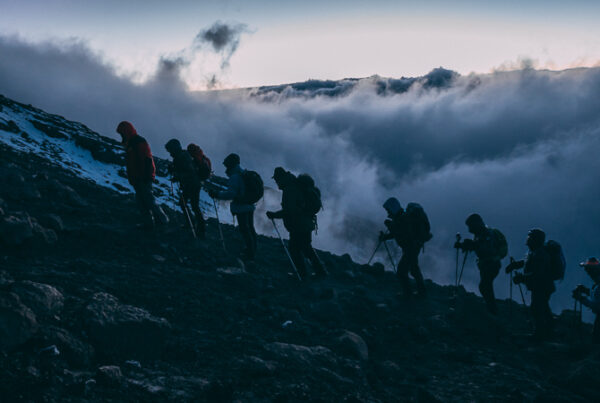
Summit night requires dedicated warm layers beyond the daily trekking kit. A balaclava that covers the face and neck is non-negotiable. So is a warm beanie hat that fits under the waterproof hood, a neck gaiter. And liner gloves under warm insulated outer gloves. Thermal sock liners under wool hiking socks are also essential for the midnight departure in sub-zero temperatures. Hand warmers activated and placed inside gloves before the summit push provide meaningful additional warmth during the coldest hours. Many climbers who have attempted the summit push without adequate face and hand protection name the cold as the defining difficulty. Not the altitude or exertion.
Footwear and Essential Kit
Footwear is the most critical single gear decision for Kilimanjaro. Cutting corners here has the most immediate and painful consequences.
Boots, Gaiters, and Trekking Poles
Kilimanjaro requires waterproof hiking boots with ankle support and stiff soles appropriate for rocky terrain. Trail running shoes and lightweight hiking trainers are insufficient for the mountain’s varied terrain. They are particularly inadequate for the Barranco Wall scrambling sections and the loose scree of the summit push. The most important qualification for Kilimanjaro boots is not brand or price. It is that you have worn them extensively—on multiple long training hikes—before arriving at the mountain. A brand-new pair of technically excellent boots worn for the first time on Kilimanjaro will cause blisters within two days. Those blisters worsen progressively and turn the summit night into a study in pain management.
Every experienced guide recommends gaiters, but first-time climbers often overlook them. The loose fine gravel on the upper Kilimanjaro slopes finds every gap between boot and leg during the summit push. A single gram of scree working against the ankle for several hours creates blisters and abrasion that compound existing footwear discomfort significantly. Trekking poles reduce knee and quadriceps stress during descent by approximately 25 percent. They also improve balance on loose terrain. Collapsible poles with comfortable wrist straps and carbide tips are ideal for Kilimanjaro’s varied terrain. You can rent them in Moshi if bringing them from home is impractical.
Sleeping Bag and Daypack
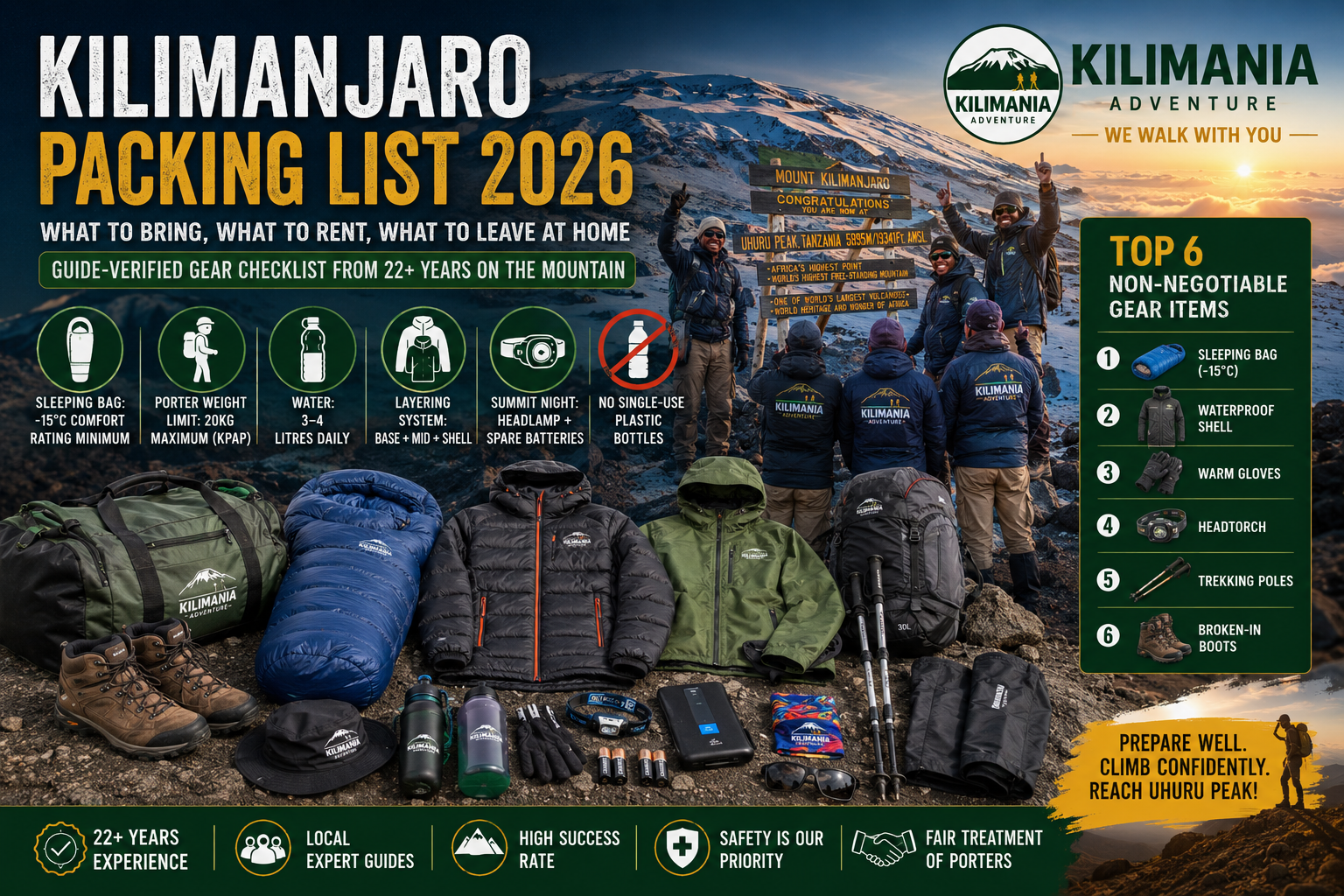
A sleeping bag rated to at least minus 10 degrees Celsius is essential for Kilimanjaro’s high camps. The Barafu and School Hut camps at 4,600 to 4,800 meters experience temperatures well below freezing at night. A sleeping bag rated to 0 degrees or designed for three seasons is insufficient for comfortable sleep at these elevations. Sleeping well on the mountain significantly affects summit success. Cumulative sleep deprivation from inadequate warmth across multiple nights at altitude erodes physical and mental performance precisely when the summit push demands it most.
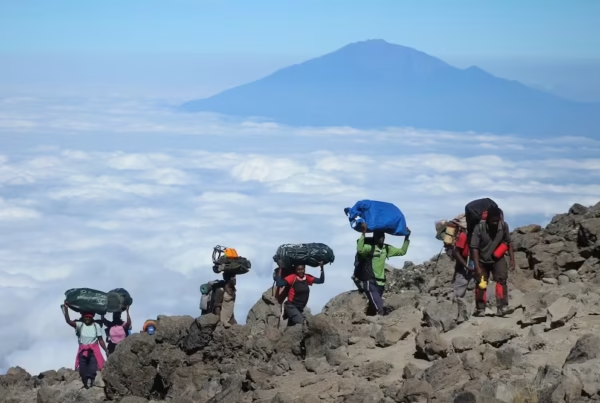
The daypack carried during trekking days should hold 20 to 30 liters. It should contain all items needed during the day: water (at least two liters), snacks, sun cream and lip balm, a camera and phone, a first aid kit, a headtorch, a rain jacket, and warm layers for unexpected weather. Porters carry the main duffel bag with overnight equipment, a tent, a sleeping bag, and non-essential items. The weight limit for porter duffel bags on Kilimanjaro is typically 15 kilograms. You must carry everything beyond that yourself. Plan the duffel pack to stay within this limit while containing all essential overnight gear. This requires deliberate packing discipline before the mountain begins.
What to Rent in Moshi
Several items for Kilimanjaro are available for rent from reputable outdoor gear shops in Moshi town. This allows international travelers to avoid checking oversized bags and paying excess luggage fees for specialist equipment used on a single trip. Sleeping bags, trekking poles, gaiters, and in some cases waterproof jackets and trousers are all available at reasonable daily rates. Inspect any rented sleeping bag for warmth rating and general condition before accepting it. Rental quality varies significantly between suppliers.
Do not rent boots, base layers, or gloves. These categories require proper fit and personal comfort testing that you cannot complete on the mountain after a rental transaction. The consequences of ill-fitting boots or inadequate personal thermals on Kilimanjaro are immediate and serious. Your boots in particular must be your own equipment, broken in fully. There is no substitute regardless of how well-fitted a rented pair might appear in a Moshi shop.
Plan Your Safari
African Wild Trekkers provides a detailed gear checklist and comprehensive pre-climb briefing to every Kilimanjaro client. The briefing covers exactly what to bring and what is available on the mountain. And what conditions to expect at each stage of the route. Questions about specific gear choices, whether particular items meet the mountain’s requirements. And what the operator provides versus what climbers must supply are all answered before the climb begins.
Every African Wild Trekkers Kilimanjaro package includes quality camping equipment. Tents, dining tents, cooking equipment. And experienced guides who carry emergency oxygen and first aid equipment. You can combine Kilimanjaro climbs with Tanzania safari extensions and Zanzibar beach stays as part of a single integrated East Africa itinerary.
Contact African Wild Trekkers at africanwildtrekkers.com/contact with your preferred climb dates and any gear questions, and we will provide a complete equipment list and cost breakdown within 24 hours.