East Africa vs. South Africa Safari: Which Should Be Your First Africa Trip?
East Africa or South Africa: How to Choose Your First African Safari
. Choosing between them for a first Africa trip is the question most prospective safari travelers face when they begin planning. Both contain destinations that are world-famous for good reason. But they deliver fundamentally different safari experiences shaped by different ecosystems and different wildlife assemblages. And very different approaches to the safari product. The right choice depends on what you want most from an African trip. Understanding what each region genuinely offers. Without the marketing glossiness, it gives you the information to make that choice clearly.
Wildlife: The Core Comparison
The wildlife differences between East and South Africa are significant enough that experienced travelers who have visited both regions describe them as distinct experiences rather than variations on the same theme.
East Africa’s Wildlife Strengths
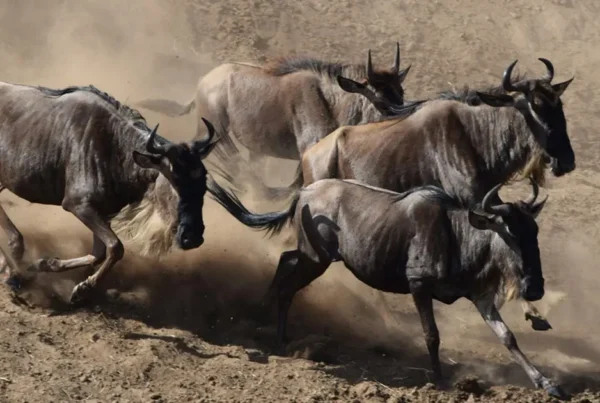
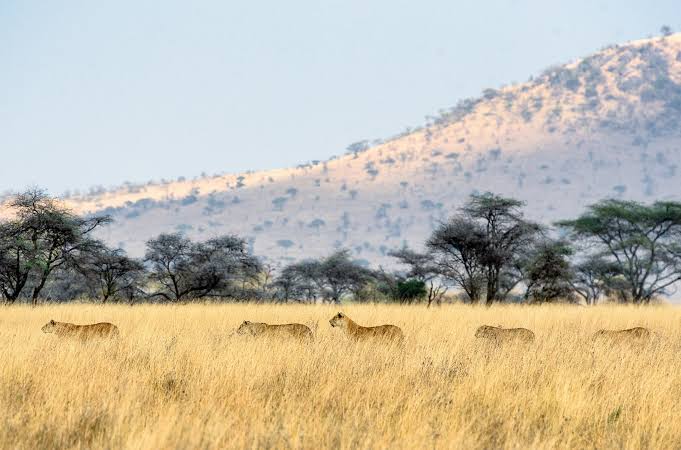
East Africa’s wildlife advantage lies in volume, spectacle, and uniqueness. The wildebeest migration — over 1.5 million animals moving between Tanzania’s Serengeti and Kenya’s Masai Mara — is the world’s largest mammal migration. It has no equivalent in Southern Africa. The open savannah ecosystems of East Africa support the highest densities of large mammals on earth. The Serengeti and Masai Mara in particular deliver big cat encounters. Lion prides, cheetahs, and leopards. With a frequency and accessibility that South Africa’s bush habitats cannot consistently match. East Africa is also the only place on earth where mountain gorillas and chimpanzees can be trekked in their natural habitat. This adds a primate dimension entirely absent from the Southern Africa safari product.
The scale of East Africa’s landscapes adds a distinct visual quality to the safari experience. The Serengeti’s open horizon, the Ngorongoro Crater’s bowl-shaped ecosystem, the Masai Mara’s vast grasslands — these are panoramic environments. They produce a sense of being inside a functioning wilderness at a scale that most South African reserves do. Which tend to be more enclosed and operationally managed, do not replicate. For first-time Africa visitors seeking the classic “Africa as imagined” experience of vast open plains with enormous wildlife herds, East Africa delivers this more completely than any Southern African destination.
South Africa’s Wildlife Strengths
South Africa’s wildlife advantage lies in diversity, accessibility, and the quality of the bush infrastructure. Kruger National Park and its surrounding private reserves hold all of Africa’s Big Five in excellent numbers. The private Sabi Sand and Timbavati reserves that border Kruger deliver leopard and lion encounters of extraordinary frequency and proximity. Animals are so habituated to vehicles that they allow approach to within a few meters without flinching. South Africa also holds the continent’s best white rhino populations. This makes rhino encounters in South Africa more reliably achieved than in East Africa, where rhino numbers remain low following severe historical poaching.
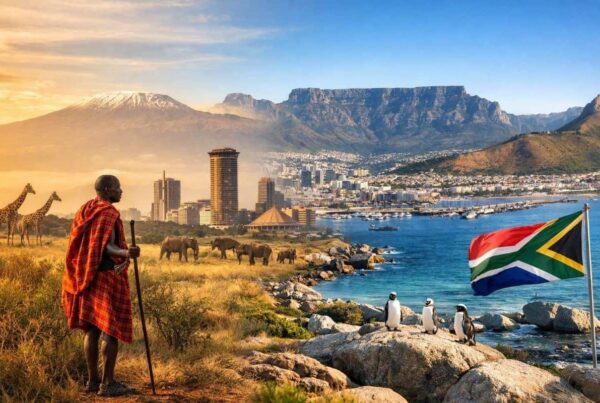
South Africa’s combination of safari and non-safari experiences within a single trip is also a significant advantage over East Africa for some traveler profiles. Cape Town and the Western Cape. With their world-class wine country, dramatic coastal scenery, and whale watching. And sophisticated urban culture. Are among the world’s great travel destinations. They sit within a few hours’ flight of Kruger. The Garden Route provides a scenic overland option between Cape Town and Kruger that adds a third dimension to a South Africa safari trip. No East Africa city approaches Cape Town’s stature as a standalone destination. This means the South Africa experience offers more diversification within a single country than East Africa can provide.
Cost, Access, and Logistics
Practical considerations including cost, flight connections, and logistics infrastructure affect the real-world experience of both regions. They should be part of the comparison for any first-time traveler making a budget-constrained decision.
Cost Comparison
South Africa is generally less expensive than East Africa for equivalent-quality safari experiences. This is primarily because South Africa’s local economy and domestic safari infrastructure support a competitive market that keeps lodge prices lower than East Africa’s more globally priced top-tier properties. Kruger’s public camps and the budget safari market in the greater Kruger ecosystem make self-drive safaris in South Africa genuinely affordable. This is a mode of travel that does not exist in the same form in East Africa’s national parks. East Africa’s premier experiences—particularly gorilla trekking in Uganda and Rwanda and luxury camps in the Serengeti’s private concessions—carry price premiums. These reflect both their exclusivity and the high cost of operating in remote wilderness areas.
International flights to South Africa are typically less expensive from most European and North American source markets than flights to East Africa’s Nairobi or Kilimanjaro. This adds a meaningful cost advantage to South Africa at the outset. Johannesburg’s OR Tambo International Airport is one of Africa’s best-connected hubs with frequent direct flights from major global cities. Nairobi’s Jomo Kenyatta Airport, while well-connected, serves a smaller number of direct international routes. For cost-sensitive first-time travelers, South Africa’s lower entry cost makes it the more accessible first African experience even when lodge prices are comparable.
Logistics and Travel Experience
South Africa is the easier African country to navigate independently. Car hire, paved roads, English signage, and well-marked self-drive routes through Kruger National Park make South Africa genuinely accessible to travelers comfortable driving in a right-hand-traffic country. It also suits those who prefer the flexibility of independent travel over guided safari packages. East Africa’s parks—the Serengeti, Masai Mara, and Ngorongoro—require guided safari vehicles rather than private car access. The road infrastructure in remote park areas makes independent driving impractical for most international visitors. East Africa’s guided safari model is more immersive in terms of guide expertise. But it is less flexible in terms of pace and decision-making than South Africa’s self-drive option.
Malaria risk is present in both East Africa and South Africa’s wildlife areas. But South Africa has malaria-free safari destinations. Primarily in the Eastern and Northern Cape provinces. That allows a Big Five safari experience without the medication commitment that East Africa requires for all its major parks. This is a meaningful consideration for families with young children and for pregnant people. And for travelers with medical sensitivities to malaria prophylaxis. East Africa has no equivalent malaria-free major safari destination. All its key parks require consistent prophylaxis use.
Which Region for Which Traveler
The honest answer to which region is better for a first Africa trip is that it depends almost entirely on what the individual traveler values most. East Africa delivers the most spectacular large-scale wildlife experiences on earth. It also offers the unique primate trekking that exists nowhere else and the landscapes that best match most people’s pre-formed image of Africa. South Africa delivers more accessible logistics, lower entry costs, and better urban and non-safari experiences. And consistent Big Five viewing in the best private reserves. Either region provides an outstanding first Africa safari. Make the decision based on which specific combination of wildlife, logistics, and cost. And experienced complexity best matches your priorities and constraints.
Many experienced Africa travelers recommend East Africa for first-time visitors specifically interested in the wildebeest migration, gorilla trekking, or the classic open plains safari of the Serengeti and Masai Mara. They recommend South Africa for travelers who want the Big Five combined with broader country experiences, prefer self-drive flexibility, or are working within a tighter budget. Both choices are excellent. Neither is wrong for the right traveler with clear priorities.
Plan Your Safari
African Wild Trekkers specializes in East Africa safari itineraries across Uganda, Rwanda, Kenya, and Tanzania. For travelers who have decided that East Africa’s gorilla trekking, wildebeest migration, or open savannah spectacle is the right first African experience, we design and operate fully inclusive safari packages. These cover every component of the itinerary from international airport arrival to departure.
Every East Africa package includes experienced guides, quality accommodation at every price point, all park fees and permits, and complete logistics handling. Itineraries range from gorilla-focused Uganda and Rwanda trips to classic Northern Tanzania safari circuits and multi-country East Africa combinations.
Contact African Wild Trekkers at africanwildtrekkers.com/contact with your travel dates and priorities, and we will design the right East Africa itinerary for your first Africa trip within 24 hours.