Africa Dry Season Safari: The Best Countries to Visit June to October
Africa’s Dry Season Safari: June Through October in East Africa’s Best Parks
June through October is Africa’s peak dry season across most of East and Southern Africa. The combination of factors that make this period outstanding for wildlife viewing creates a safari season that consistently delivers the best combination of encounter quality, landscape character, and species diversity available across the year. Animals concentrate around permanent water. Vegetation clearance maximizes visibility. The wildebeest migration’s most dramatic Kenya phase also coincides with this period. Understanding which specific parks and countries perform best during the dry season months. And why the dry season advantages in each location are distinct helps travelers maximize their safari experience during what most operators and experienced Africa visitors regard as the continent’s finest wildlife period.
Why the Dry Season Produces the Best Safari
The dry season’s advantages for wildlife viewing are rooted in basic ecological dynamics. These produce more reliable, more concentrated, and more visible wildlife encounters than the green season’s dispersed, vegetation-obscured distribution.
Water Concentration and Wildlife Density
In the dry season, surface water becomes scarce across East Africa’s savannah zones. Wildlife concentrates at rivers, permanent waterholes, and seasonal swamps that retain water through the dry months. This water concentration compresses what might be a dispersed population across a large area into predictable gathering points. Guides can locate these efficiently. The density of animals creates multi-species encounter opportunities within a small area. A single waterhole in Tarangire National Park during October can attract elephants, lions, leopards, cheetahs, zebras, wildebeest, impalas, and buffalo. And numerous bird species within a single morning’s observation. Replicating this species density across a dispersed green season distribution would require a full day’s driving.
The Tarangire River in Tanzania is one of East Africa’s finest dry season wildlife concentrations. Enormous elephant herds move between the river and the surrounding woodland in daily circuits. Hundreds of animals pass through the same areas repeatedly. Tarangire in September and October holds what may be the highest elephant density of any park in Tanzania’s Northern Circuit. The baobab and acacia landscape through which these herds move provides photographic context of exceptional quality. The river also attracts predators and their prey in the evening hours before nightfall. This creates sustained predator-watching opportunities from fixed viewpoints that guests at the riverside lodges can access without leaving the property.
Vegetation Clearance and Visibility
Dry season vegetation die-off reduces the grass height and leaf density that obscures wildlife during the green season. In the Serengeti’s woodland zones, the difference in vegetation density between the peak green season and the July through October dry period is dramatic. Predators that are virtually invisible in dense grass or leaf canopy become easily visible in the open, low grass, and leafless woodland of the dry months. Lion pride spotting success rates from safari vehicles improve substantially in dry-season conditions. Spotting animals at a distance allows for better composition of approach and more extended observation before the subject moves on. In the green season, animals are often discovered only when the vehicle is within a few meters.
The dry season’s reduced vegetation also improves road conditions across East Africa’s park networks. The laterite and dirt tracks that become churned mud traps in heavy rain are firm and fast in the dry months. Guides can cover greater areas in each drive and reach the more remote corners of large parks. These corners become inaccessible to standard safari vehicles during the rains. Kidepo Valley National Park in Uganda’s remote northeast is practically inaccessible for weeks at a time during the heaviest rainy periods. It is most reliably visited from June through October, when the approaches are firm and the park’s wildlife concentrates around permanent water sources.
Best Dry Season Destinations by Country
Each East Africa country offers specific dry season experiences that peak at different moments within the June through October window.
Kenya: Migration Crossings July Through October
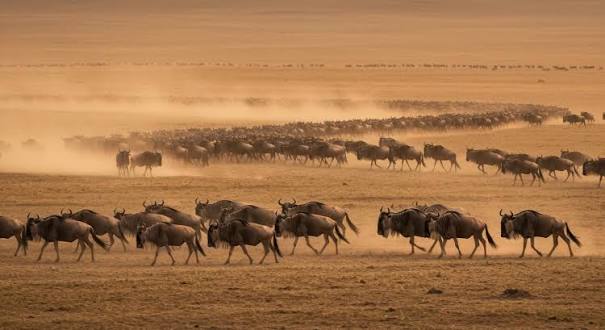
Kenya’s dry season peak coincides exactly with the wildebeest migration’s Kenya phase. This makes July through October the country’s most compelling safari months. The Masai Mara fills with wildebeest and zebra between July and October as the herds push north from Tanzania. They follow the dry season’s green grass retreating northward before the long rains. The Mara River crossing sequences can occur multiple times per day—or in multi-day lulls depending on herd behavior. They define the period and attract wildlife photographers and safari travelers from around the world specifically for this spectacle. Kenya’s accommodation prices peak during August and September when demand is at its highest. Early booking of six to twelve months is essential for premium camps in the private conservancies. These deliver off-road access and the best crossing viewpoints.
June is an excellent month for Kenya that combines dry season conditions and good wildlife. And somewhat lower visitor numbers than the peak August weeks. Prices are also lower than the August peak. The migration herds are building their northward movement in June and may cross the Mara River from late June onward. The confirmed crossing spectacle typically intensifies through July and August. June in the Mara provides a quieter version of the peak season experience that many experienced safari travelers prefer to the crowded August weeks. The accommodation savings available in June relative to August can be substantial at the best properties.
Tanzania: Serengeti Dry Season and Tarangire
Tanzania’s July through October dry season creates outstanding wildlife conditions across the Northern Circuit. The Serengeti’s central zone maintains excellent big cat populations year-round. But the dry season’s reduced vegetation and concentrated prey distribution around permanent water make predator hunting sequences more visible. They are also more frequently observed from safari vehicles. The northern Serengeti’s Mara River crossing zone reaches its peak visitor and wildlife intensity in August and September. The migration crossings reach their most frequent and dramatic phase on the Tanzania side of the ecosystem during these months.
Tarangire National Park’s dry season from June through October is the park’s absolute peak period. Elephant herds are extraordinary in number and accessibility. Tarangire in September and October, when water in surrounding areas is at its most scarce, sees elephant concentration around the river at maximum. It is one of East Africa’s finest and most underrated dry season safari experiences. For elephant photography, quality is comparable to any Serengeti season. And surpasses it for the sheer number of animals visible in a single day’s drive. Tarangire’s lower visitor numbers relative to the Serengeti make it a particularly rewarding dry season choice for travelers who value exclusivity alongside wildlife quality.
Plan Your Safari
Dry season safari bookings require the most advance planning of any East Africa safari period. Peak months in Kenya and Tanzania are the most sought-after on the calendar. Premium lodges and tented camps in the Masai Mara and northern Serengeti. And Tarangire books out for August and September twelve months ahead. This applies to the best properties and most coveted river crossing locations. Confirming your dry season safari itinerary by November or December of the year before travel is strongly recommended for any premium camp preference.
African Wild Trekkers designs and operates dry season safari itineraries across Kenya, Tanzania, Uganda, and Rwanda with full logistical support. We have the deep camp knowledge needed to secure the right properties in the right locations. This delivers the specific dry season wildlife experiences that make June through October East Africa’s finest wildlife period.
Contact African Wild Trekkers at africanwildtrekkers.com/contact with your preferred dry season travel dates, and we will design the right East Africa itinerary and secure availability within 24 hours.